Summary:
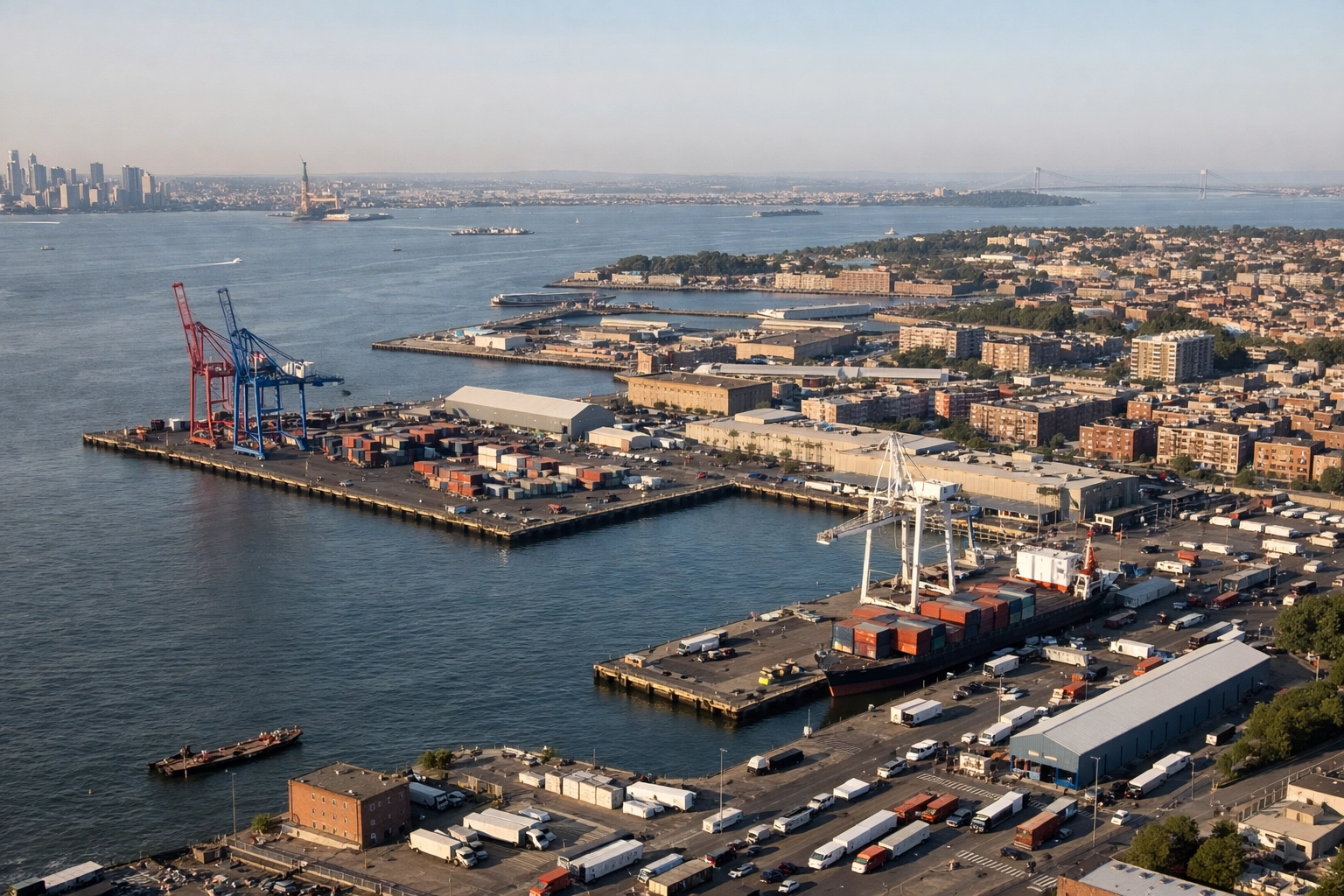
The Brooklyn Marine Terminal redevelopment is a strategic reconfiguration of 122 acres in Red Hook, transforming a legacy maritime site into a $3.5 billion ecosystem. By integrating a 60-acre all-electric port with 6,000 residential units and specialized industrial hubs, New York is moving beyond traditional zoning toward a high-utility "Industrial-Community Fusion" model.
Excerpt:
As global trade routes demand more sustainable anchors, Brooklyn is drafting the blueprint for the 21st-century urban nexus. This project is not merely a real estate development; it is a strategic shift in how cities balance the friction between industrial necessity and residential density. By 2026, the Red Hook waterfront will stand as a testament to the "Active Explorer" philosophy: scouting the future of the global urban grid.
The Architecture of Integration
For decades, urban planning operated under the 20th-century dogma of segregation: industrial zones were siloed away from residential life, creating disjointed landscapes that prioritized logistics over livability. Today, we are witnessing the obsolescence of that model. The Brooklyn Marine Terminal (BMT) redevelopment represents a radical departure: a $3.5 billion pivot that treats maritime infrastructure and community housing as a singular, symbiotic organism.
This is not merely an upgrade of a decaying pier; it is a strategic fusion designed to scale urban housing without sacrificing the industrial soul of the waterfront. Spanning 122 acres of the Red Hook shoreline, the project is a masterclass in the "Industrial-Community Fusion" logic. It proposes a landscape where an all-electric maritime port operates alongside 6,000 new homes, creating a high-density environment that fuels both the local economy and the global value chain.
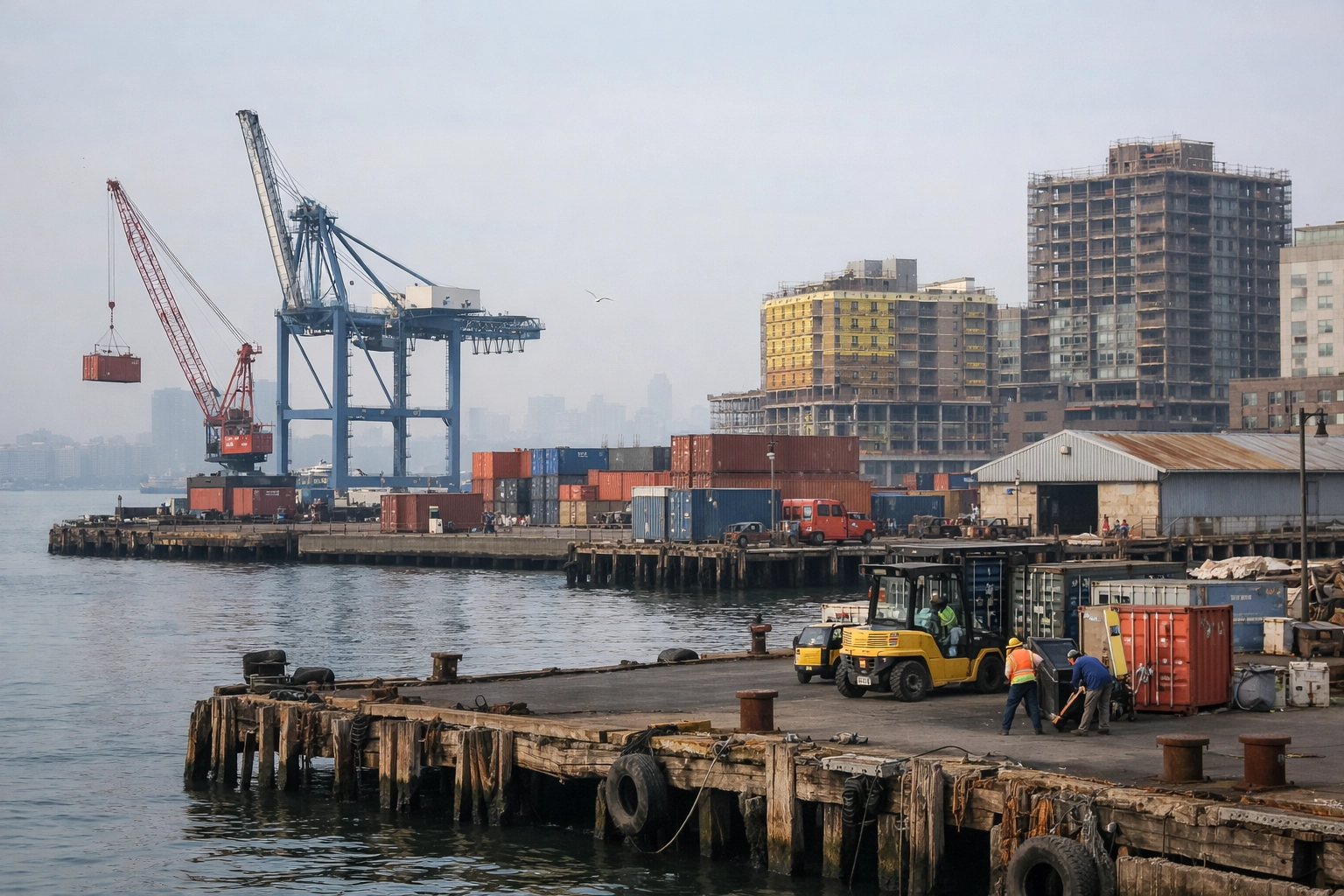
Visual Prompt: Real news photography, documentary wide shot of Brooklyn Marine Terminal / Red Hook waterfront at morning: weathered industrial piers, working cranes, container handling, mixed with modern residential construction scaffolding in background, natural light, realistic color, gritty texture, no airbrushing, 35mm photojournalism, candid, slight harbor haze.
The Electric Anchor: Modernizing the Value Chain
At the heart of this transformation is a 60-acre, all-electric maritime port. In an era where global trade is under intense pressure to decarbonize, the BMT project positions Brooklyn as a premier "green gateway" for waterborne freight. This shift reflects a broader trend we see in markets like Singapore, where digital and physical trade frameworks are being upgraded to meet 2026 standards of efficiency and sustainability.
The modernization of the port is not just about environmental compliance; it is about economic resilience. By transitioning to an all-electric infrastructure, the port reduces the "friction" of logistics: lowering noise and air pollution while increasing the throughput of goods. This strategic anchor ensures that even as the neighborhood gentrifies, its core industrial utility remains intact, providing a stable foundation for the broader New York tech and commercial markets.
The Urban Grid: Housing as Economic Infrastructure
The housing component of the BMT project: 6,000 units, with 40% (approximately 2,400) designated as permanently affordable: is a direct response to the gravitational pull of New York’s labor market. In the analytical view of bcd-W News, housing is not just a social good; it is critical infrastructure that supports the density of intellectual exchange.
By integrating thousands of residents directly into the industrial zone, the city is creating a "24-hour ecosystem." This proximity reduces the reliance on long-distance commuting and fosters a local micro-economy. It mirrors the urban scaling strategies we’ve observed in Seoul’s investment in global MICE hubs, where the goal is to create a seamless interface between where people work, live, and innovate.
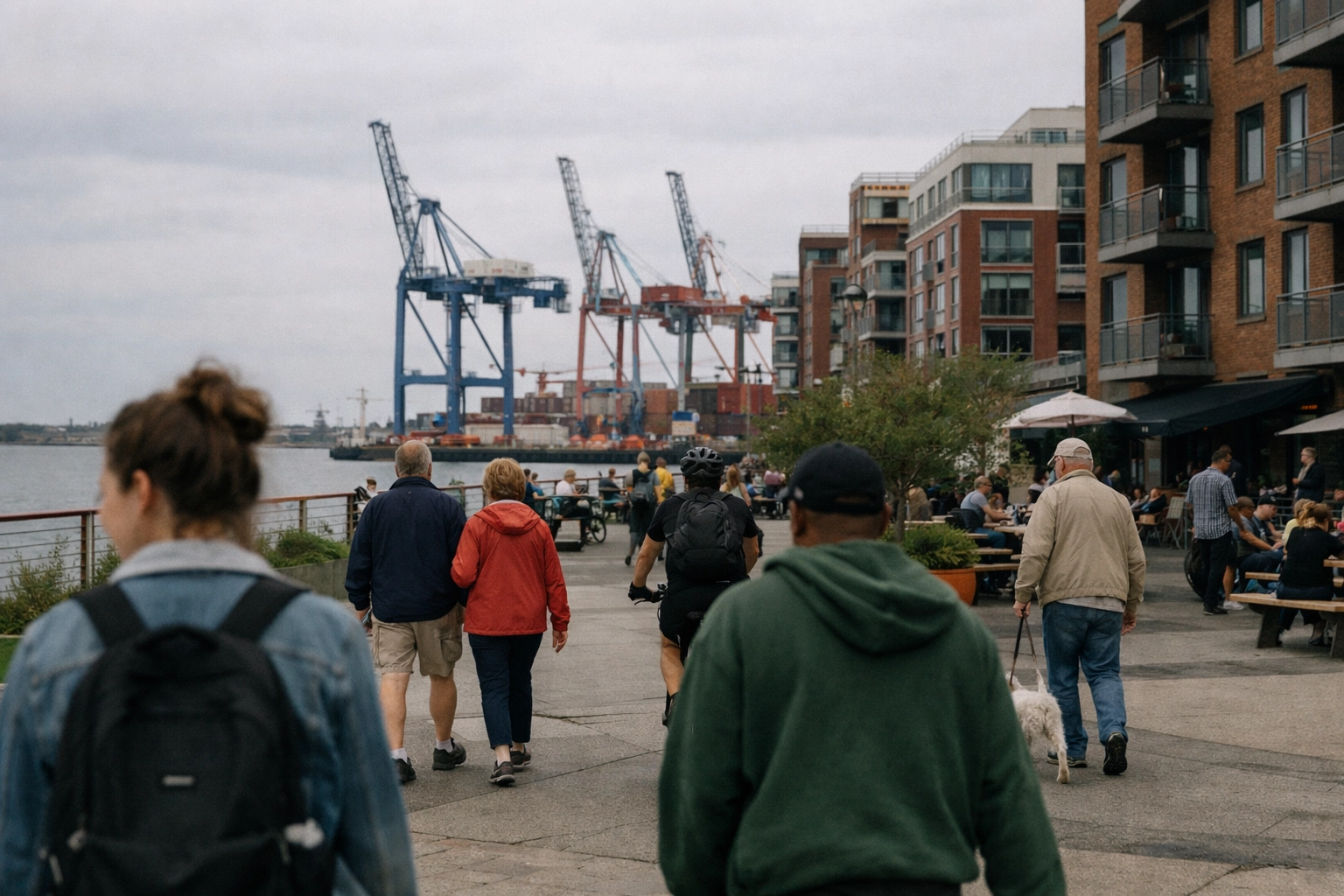
Visual Prompt: Photojournalistic street-level scene in Red Hook Brooklyn: residents walking and cyclists near a waterfront plaza/sidewalk, industrial cranes and port infrastructure in the distance, contemporary apartment buildings nearby, natural overcast light, realistic skin tones, unposed candid, light film grain, no AI aesthetic.
Scaling the Small: The Industrial Development Fund
One of the most visionary aspects of the BMT redevelopment is its commitment to "Scaling the Small." The plan allocates over 275,000 square feet of discounted industrial space, including a dedicated 170,000-square-foot facility at Pier 11 for small-scale manufacturers. Supported by a $10 million industrial development fund, this initiative ensures that the "Seeds" of local innovation are not crowded out by massive capital interests.
This approach recognizes that a resilient city requires a diverse economic base. Much like Mexico City’s strategic frontier for startups, Brooklyn is positioning itself as a hub for cross-border growth where local manufacturing can tap into global logistics. The Pier 11 facility will serve as a nexus for makers, artisans, and tech-enabled manufacturers, providing them with the tools to scale from local prototypes to international exports.
Workforce as the Integration Bridge
The connective tissue of the $3.5 billion pivot is its workforce strategy. The project is projected to generate $18 billion in economic impact, creating 37,000 construction jobs and 2,000 permanent positions. However, the true innovation lies in the type of jobs and how they are distributed.
Through Project Labor Agreements and apprenticeships targeting residents of the Red Hook NYCHA complexes, the project ensures that the economic gains are felt by the existing community. A "world-class experiential learning center" at Pier 11 will focus specifically on maritime careers, preparing the next generation for the high-tech, electrified logistics industry. This is a blueprint for social mobility: creating a bridge between historical neighborhood identity and future-forward career paths.
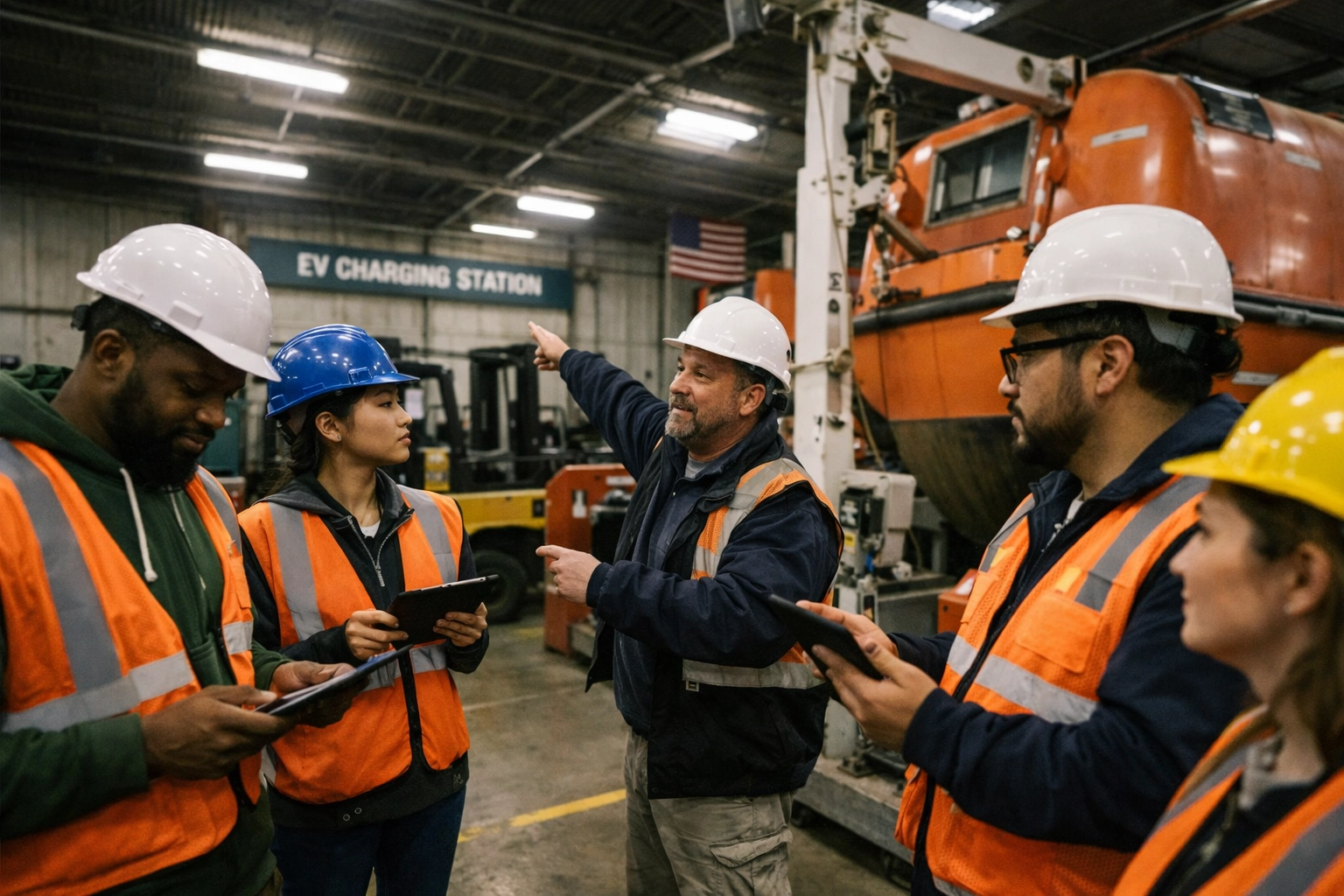
Visual Prompt: Realistic news photo inside a modernized maritime training warehouse in Brooklyn: diverse trainees in safety vests and hard hats using tablets with an instructor, forklifts/charging stations and equipment in the background, fluorescent warehouse lighting, candid documentary feel, natural grain, not staged, no airbrushed textures.
Governance and the New Urban Blueprint
The creation of the Brooklyn Marine Terminal Development Corporation (BMTDC) marks a shift in how these massive "fusions" are managed. By centralizing authority, the BMTDC can enforce integrated commitments across housing, jobs, and port operations. This level of institutionalized accountability is necessary to prevent the "dilution of intent" that often plagues large-scale urban projects.
We see similar governance models appearing in other innovation corridors, such as the Seoul-Tokyo North Asia Innovation Bridge, where cross-border cooperation requires a high degree of structural alignment. The BMTDC's role is to ensure that the port remains profitable while the community remains vibrant: a balancing act that requires constant data-driven calibration.
The 2026 Perspective: A Challenge to Global Cities
As we look toward the delivery of the first phases of this project in 2026, the Brooklyn Marine Terminal stands as a challenge to other global hubs. The era of the "single-use district" is over. The cities that will thrive in the late 2020s are those that can successfully navigate the friction of "Industrial-Community Fusion."
The BMT project proves that a city can be a major maritime logistics hub and a high-density residential community simultaneously. It proves that "affordable housing" and "advanced manufacturing" are not mutually exclusive, but rather two sides of the same economic coin.
For business leaders and urban strategists, the question is no longer if these sectors should be integrated, but how fast they can build the bridges to make it happen. Brooklyn has provided the blueprint. Is your organization ready to operate within this new, fluid urban grid?
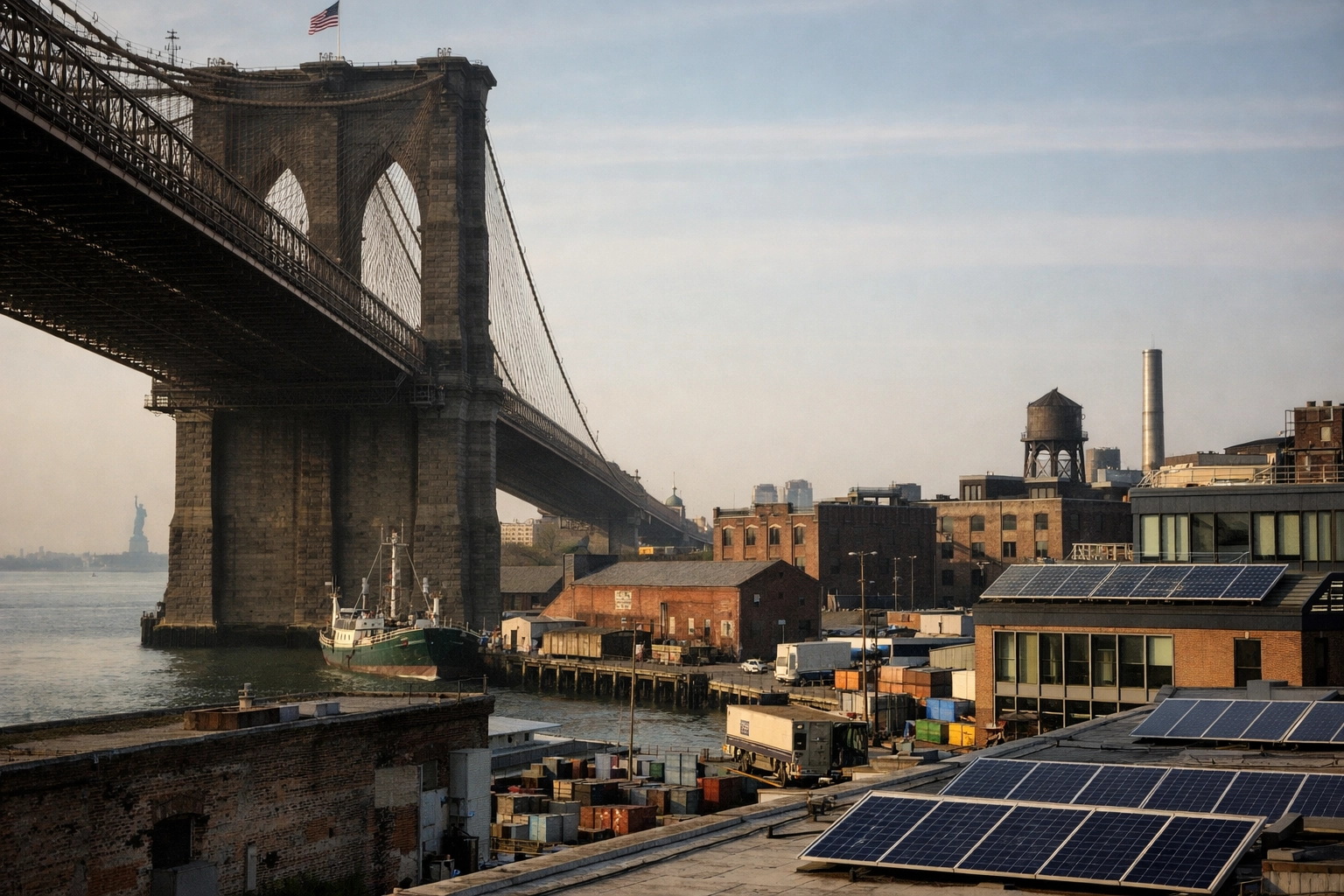
Visual Prompt: Real news photography, low-angle view of the Brooklyn Bridge with the Red Hook waterfront in the distance: working waterfront elements, mixed historic brick warehouses and newer sustainable buildings with some solar panels, late-afternoon natural light, realistic atmosphere, photojournalism, not glossy, no AI-looking aesthetic.
To stay updated on the latest shifts in urban architecture and global trade, explore our analysis of the Pacific Bridge to Silicon Valley or deep dive into Toronto's local-to-global expansion.