Summary: Seoul is deploying an 8.5 billion won ($6M+) investment to cement its status as a global MICE powerhouse. By launching signature "CES-style" flagship events and expanding infrastructure like the Magok Workation Center, the city is shifting from a passive host to an active architect of global business discourse.
Excerpt: Seoul is transforming its business landscape with a $6M investment into the MICE sector. From signature global summits to advanced "workation" hubs, the city is positioning itself as the primary gateway for international industry leaders in 2026.
The infrastructure of a global city is often measured by its transit or its skyline. But for the world’s most ambitious business hubs, the real measure of power is the density of its intellectual exchange. Seoul is currently doubling down on this metric.
Under the newly unveiled 2026 MICE Industry Promotion Plan, Seoul is investing 8.5 billion won (approximately $6 million) to transform the city from a world-class venue into a world-class brand. This is not merely a hospitality play; it is a calculated move to dominate the Meetings, Incentives, Conventions, and Exhibitions (MICE) sector by creating high-value "signature events" that rival the global influence of CES in Las Vegas or the World Economic Forum in Davos.
The $6M Architecture of Ambition
Seoul is already a heavyweight in the international conference circuit. In 2024, it ranked as the world’s third-busiest host city for international conferences and has held the title of "world’s leading MICE city" for 11 consecutive years. However, the 2026 plan signals a departure from the status quo. The city government recognizes that being a preferred host is no longer enough in an increasingly competitive Asian market.
The investment is targeted at two distinct fronts: attracting massive, existing international events and, more importantly, engineering homegrown flagship summits. By providing support incentives of up to 280 million won per event, Seoul is aggressively courting strategic industries including medicine, engineering, science, and economics. These aren't just gatherings; they are market entry points. For firms looking at a Korea market entry strategy, these events serve as the primary filter for local partnerships and regulatory insight.
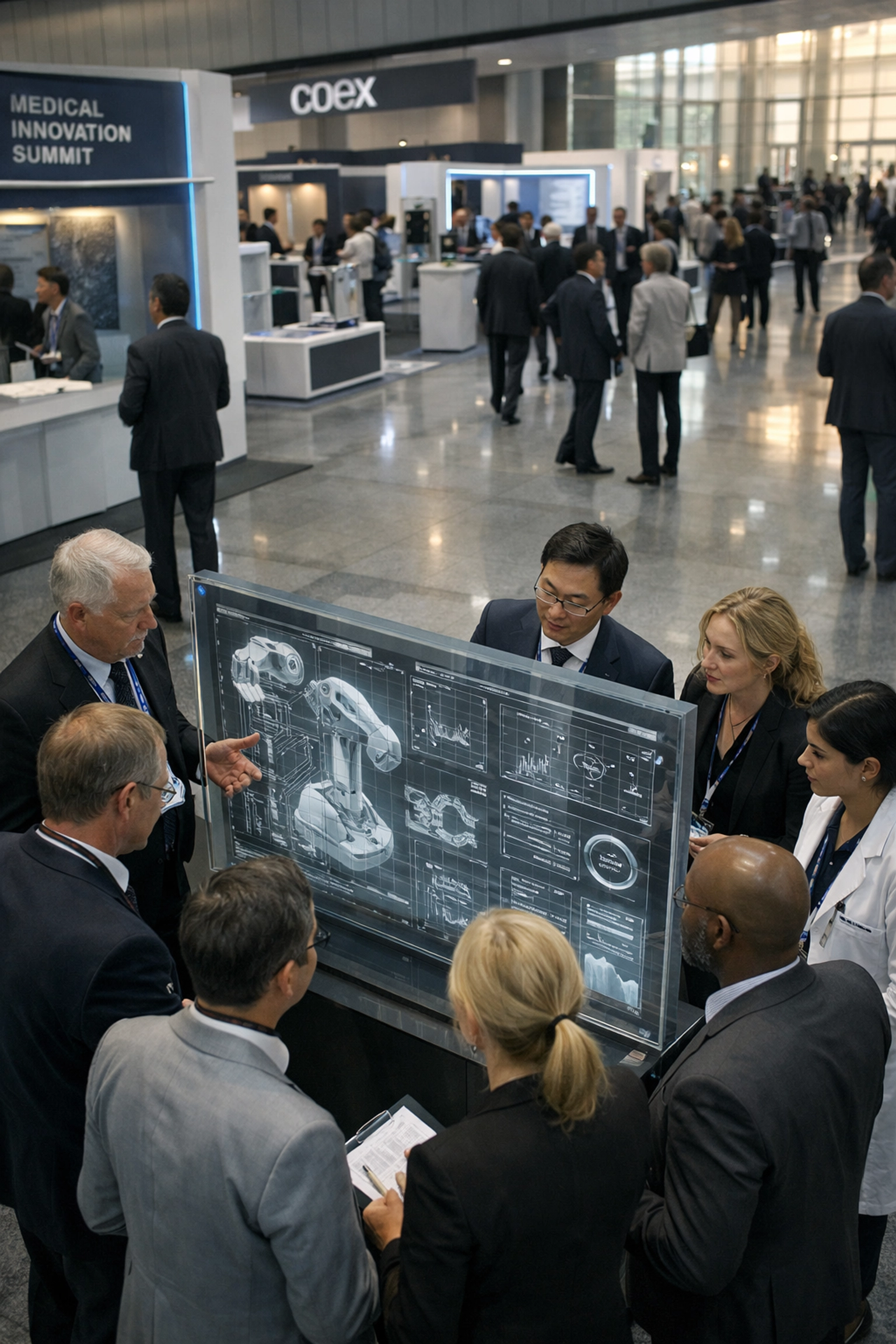
Photo: Seoul Metropolitan Government / Realistic documentary shot of a high-tech convention floor in Seoul with international attendees.
From Host to Architect: The "CES-Style" Vision
The most striking element of the 2026 plan is the ambition to build a "Seoul-style CES." For decades, the Consumer Electronics Show has made Las Vegas the center of the technological universe for one week every year. Seoul aims to replicate this gravitational pull.
By developing signature international business events, Seoul is moving up the value chain. Rather than simply renting out floor space at COEX or the Dongdaemun Design Plaza (DDP), the city is investing in the intellectual property of the events themselves. The goal is to create a "Seoul-style Davos Forum": a place where global executive roundtables and technology demo days aren't just side acts, but the main event.
This shift is critical for global mobility consulting. As talent and capital move more fluidly between the Americas and Asia, the cities that provide the most structured and high-value platforms for these meetings will capture the largest share of global human mobility.
Magok-dong and the Workation Pivot
The investment isn't limited to the event floor. Seoul is also redefining what it means to be a "business traveler." The 2026 plan includes the operation of a new Seoul Workation Center within the Seoul MICE Plaza in Magok-dong.
Magok has rapidly evolved into a R&D powerhouse, and the Workation Center is designed to capitalize on this. The concept of "workation": blending work and vacation: is often dismissed as a lifestyle trend, but for Seoul, it is a strategic economic tool. By providing high-end infrastructure for long-stay business travelers, the city increases the "stickiness" of its MICE participants. A traveler who stays for two weeks instead of two days is a traveler who is more likely to engage in deep-tier market analysis, local networking, and long-term investment.
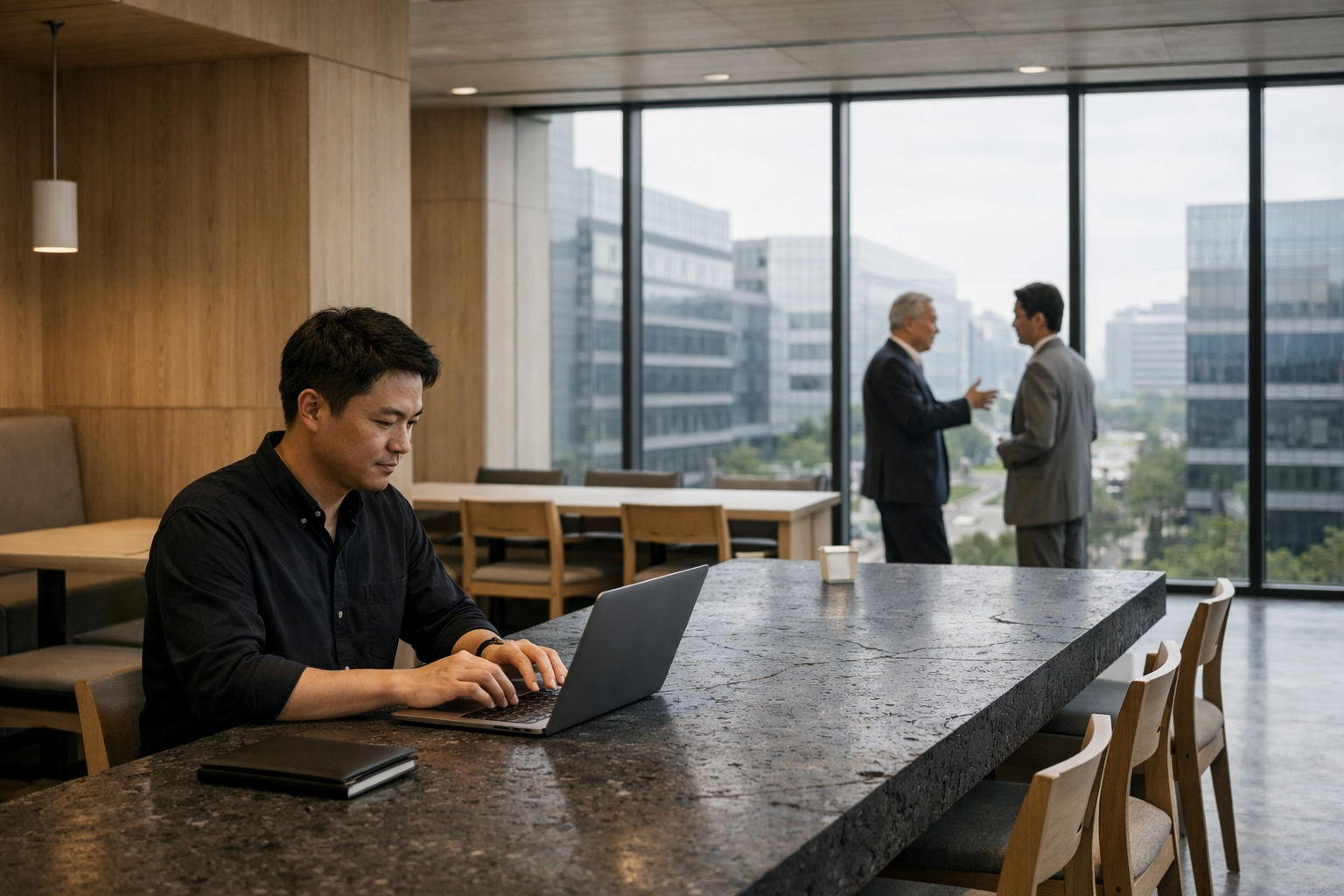
Photo: Seoul Metropolitan Government / A realistic, professional interior of a modern workation hub in Magok-dong, featuring business professionals in a collaborative setting.
This facility will act as a launchpad for technology demo days and executive roundtables, bridging the gap between a high-level conference and actual business execution. It is the physical manifestation of a digital bridge, where virtual expertise meets on-the-ground reality.
The 2026 Roadmap: Major Global Summits
The effectiveness of this investment is already being tested. In 2026, Seoul is scheduled to host several massive international gatherings that will serve as the baseline for this new strategy:
- International Conference on Machine Learning (ICML): With approximately 12,000 participants, this event positions Seoul at the heart of the global AI and data science conversation.
- World Conference on Lung Cancer (WCLC): Attracting 8,000 global medical professionals, this summit reinforces Seoul’s leadership in the high-value life sciences and medical technology sectors.
To support these, the Seoul MICE Alliance is launching intensive marketing campaigns across North America and Europe. This is a direct outreach to global decision-makers, signaling that Seoul is ready for the next level of international bid competition.
Targeted Growth: Beyond the Generalist Model
Precision is the recurring theme of the 2026 MICE Industry Promotion Plan. The city is not just looking for "more" tourists; it is looking for specific types of participants.
The strategy includes targeted outreach to incentive-tour groups from China, a traditional stronghold for Seoul’s MICE sector, while simultaneously pivoting to high-growth tech sectors in the West. By focusing on medicine, engineering, and science, Seoul is aligning its MICE infrastructure with its industrial strengths.
This alignment is a signal to the global market. When a city invests $6 million into its business event framework, it isn't just buying ads; it is building a civic infrastructure that facilitates the movement of people and ideas. It is an acknowledgment that in the modern economy, the most valuable commodity is the "meeting."
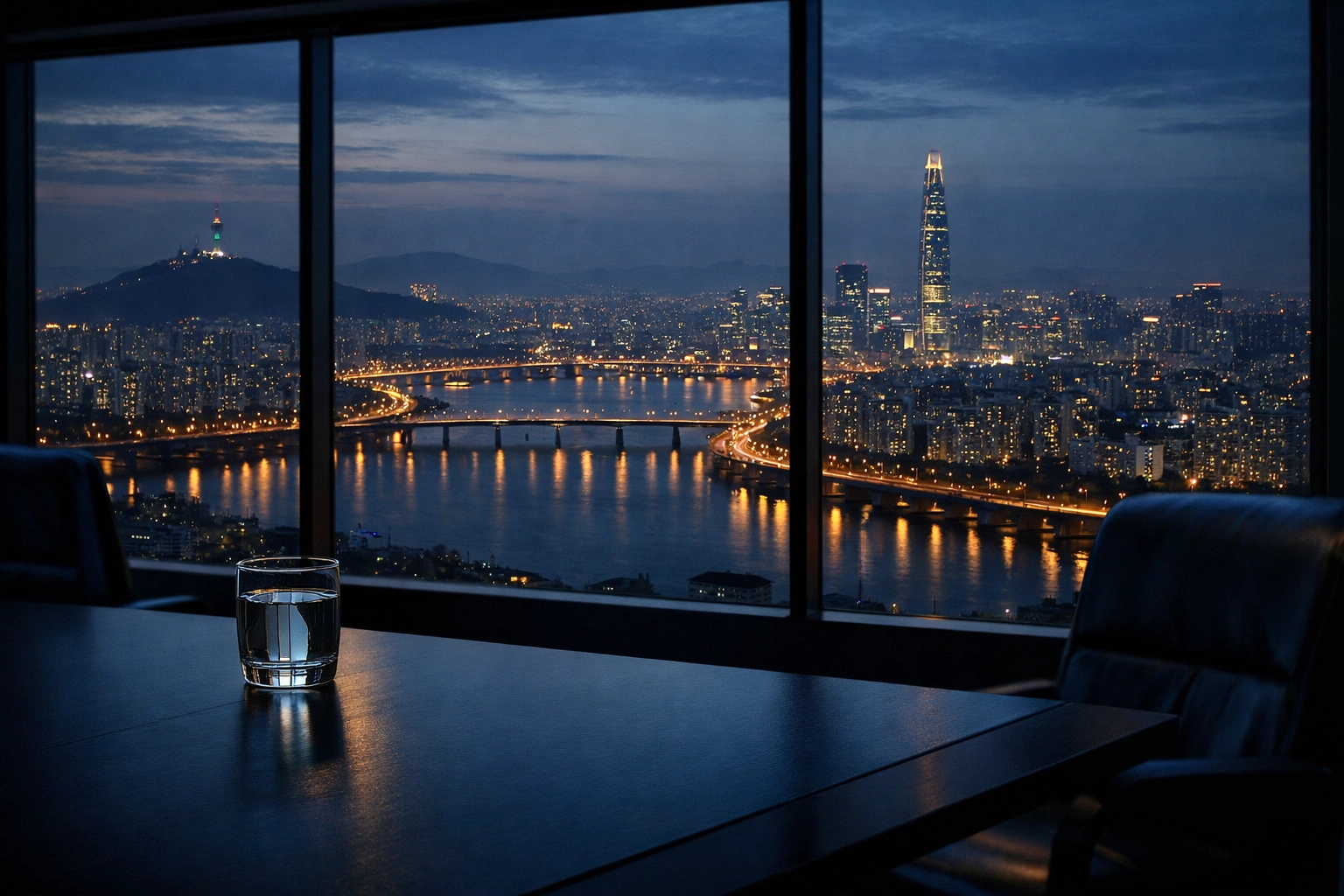
Photo: Seoul Metropolitan Government / A realistic, wide-angle shot of a boardroom setting overlooking the Seoul skyline, symbolizing global business connectivity.
The Implications for Global Business
For professionals moving between the Americas and Asia, Seoul’s investment represents a significant shift in the regional power balance. As Singapore and Tokyo also ramp up their business travel offerings, Seoul is betting on a mix of high-tech infrastructure and "signature" intellectual property.
The "Seoul-style CES" isn't just about gadgets; it’s about establishing Seoul as the definitive gateway for any firm serious about the East Asian market. Whether it is through global mobility consulting or navigating a complex Korea market entry strategy, the road increasingly leads through these high-density exchange points.
As we move toward 2026, the success of this 8.5 billion won investment will be measured not just in delegate counts, but in the deals struck in Magok-dong and the global standards set at the DDP. Seoul is no longer just a host. It is the designer of the agenda.
Categories: News, Asia
Tags: Seoul, MICE
Source: The Korea Times (https://www.koreatimes.co.kr)