The familiar script for North American expansion used to be predictable: land in San Francisco, hire in Austin, and scale out of New York. But for the modern founder, that map has been folded and tucked away. Today, the most consequential conversations about the future of the Americas are happening in the high-altitude air of the Anáhuac Valley.
Mexico City: or CDMX to the initiated: is no longer just a regional powerhouse. It has transformed into a strategic catalyst for cross-border growth, functioning as a bridge between the untapped potential of Latin America and the established capital of the United States and Asia. At bcdW, we’ve watched this shift accelerate. It isn’t just about "nearshoring" in the traditional sense of moving factories; it’s about a fundamental reordering of how global startups think about human mobility and market access.
The Gravity of the Ecosystem
The numbers tell a story of rapid accumulation. As of early 2026, Mexico City hosts over 570 startups, representing nearly half of the country’s total startup base. This isn't just a cluster; it’s a critical mass. When a city hits this level of density, the nature of the opportunity changes. It stops being about individual companies and starts being about a self-reinforcing city ecosystem.
In 2025 alone, the CDMX ecosystem grew by over 12%, catapulting it to #58 in global startup rankings. For founders, this means that the "cost of discovery": the time and effort it takes to find a lawyer, a lead developer, or a strategic partner: is plummeting. The infrastructure of innovation, from co-working spaces in Roma Norte to the high-rise boardrooms of Santa Fe, is now fully mature.
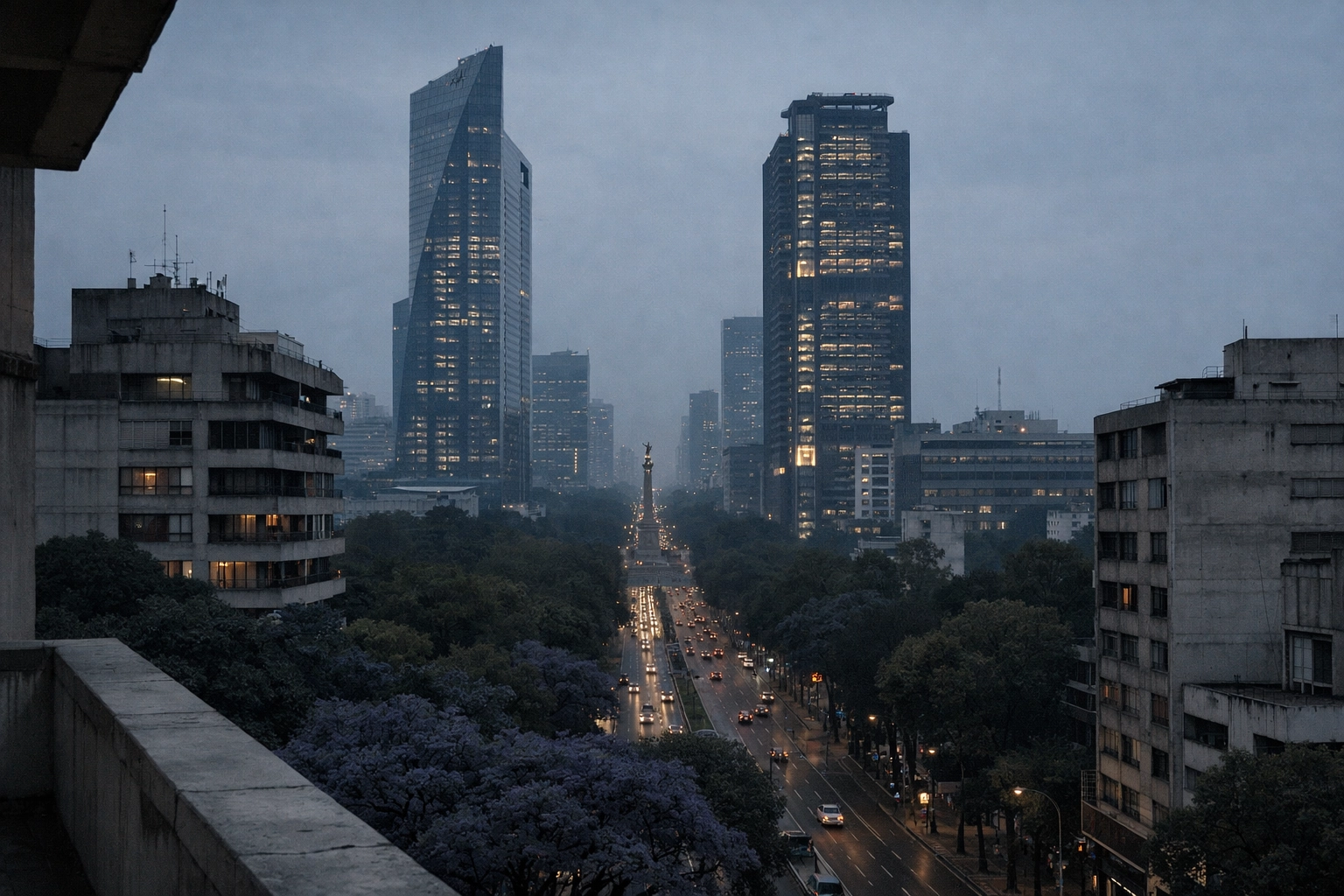
Photo: Unsplash / Jezael Melgoza
But the real signal isn't the number of companies; it’s the concentration of capital. Between 2021 and 2023, the city attracted $4.24 billion in venture capital funding. By 2024, Mexican startups secured $5.8 billion: a staggering 45% increase year-over-year. Mexico has firmly established itself as the second-largest venture capital market in Latin America, trailing only Brazil, but with a unique advantage: its proximity and deep integration with the U.S. economy.
Not Just Nearshoring, But Logic-Shoring
For decades, "nearshoring" was a term reserved for the manufacturing sector: moving a car plant from Shanghai to Monterrey. Today, we are seeing the rise of what we call "logic-shoring." This is the strategic relocation of digital operations, R&D, and startup headquarters to Mexico City to serve the broader North American market.
The logic is simple but powerful. A startup based in Seoul or Singapore looking to enter the U.S. market faces two massive hurdles: time zones and cultural translation. Mexico City solves both. It offers a GMT-6/GMT-7 alignment with the U.S. and a cost-of-living-to-quality-of-talent ratio that Silicon Valley simply cannot match.
Furthermore, the Mexican government's "Plan México," launched in early 2025, has streamlined digital procedures and created monthly investment reviews between the private sector and government. This isn't just policy; it’s an invitation. For companies utilizing the bcdW Rainmaker Program, these institutional shifts represent a significant reduction in the friction of market entry.
The Three Pillars of CDMX Growth: Fintech, AI, and Healthtech
While the ecosystem is broad, three sectors are currently defining the cross-border narrative.
1. The Fintech Anchor
Mexico City is arguably the fintech capital of the Spanish-speaking world. In 2024, fintechs raised $2.2 billion: roughly 74% of all venture capital funding in the country. The market is projected to reach nearly $66 billion by 2033. But the "dot" to connect here isn't just the growth; it’s the shift in strategy. We are seeing a move away from "disrupting" banks and toward partnering with them. Startups are building the infrastructure that traditional institutions use to reach the unbanked, creating a hybrid model that is now being exported to other emerging markets.
2. AI and Deep Tech: Substance Over Hype
The era of generic AI applications is ending. In Mexico City, the 2024 funding cycle saw $600 million flow into AI startups, but with a specific focus: logistics, customer service, and industrial analytics. These companies are building AI that solves real-world supply chain problems: the "boring" but essential tech that keeps global trade moving. This is where we see the most significant convergence between Asian manufacturing expertise and Mexican implementation.
3. Healthtech and the Biotech Frontier
With $900 million raised in 2024, healthtech is the "silent giant" of the CDMX ecosystem. From telemedicine to biotech startups focused on regional genetics, the city is becoming a testing ground for scalable healthcare solutions that can bridge the gap between public infrastructure and private demand.

Photo: Pexels / Los Muertos Crew
Human Mobility: The Invisible Infrastructure
At bcdW, we believe that markets don’t move: people do. One of the most significant barriers to the "Americas-Asia" bridge has always been the physical and legal difficulty of moving talent across borders. Mexico City has emerged as a vital node in our Global Human Mobility strategy.
For a founder from Seoul looking to build a presence in the U.S., Mexico City offers a strategic "soft landing." It allows teams to build a regional hub, secure work authorizations, and integrate into North American supply chains while avoiding the immediate overhead and visa complexities of a direct U.S. entry. It is a place where talent from both continents can meet, collaborate, and scale.
We are no longer looking at a world of isolated hubs. We are looking at a world of connected corridors. The corridor between Singapore and Mexico City is becoming as important as the one between London and New York.
The Maturation Phase
We must be clear: the era of speculative expansion is over. Investors in CDMX are no longer backing "concepts"; they are backing revenue, technological depth, and sustainable business models. This shift toward maturity is actually good news for serious founders. It clears the "noise" of hype-driven startups and leaves room for ventures with genuine competitive advantages.
The infrastructure is ready. Mexico’s 5G rollout and expanded broadband access in 2024 have provided the technical foundation for IoT and cloud computing startups to thrive. The question for global operators is no longer if they should have a presence in Mexico City, but how they will integrate it into their global strategy.

Photo: Pixabay / jms_v1.0
Looking Toward the Future City
What does Mexico City become in the next five years? It is becoming the "platform city" for the Americas. It is the place where a product designed in Bogotá is refined using AI talent from Mexico City and then exported to markets in Southeast Asia.
The most successful companies of the next decade will be those that understand how to navigate the space between these markets. They will see that Mexico City is not just a destination, but a strategic frontier. It is a bridge built on culture, capital, and a relentless drive toward the future.
The question isn't whether this cross-border model works. The question is who moves first to claim their place in the new geography of innovation.
Category: News, Americas
Tags: Mexico City, Startups
Excerpt: Mexico City has evolved into a premier strategic hub for startups entering the Americas, fueled by a $5.8 billion venture capital surge and a massive shift toward "logic-shoring." This long-form analysis explores how CDMX is bridging the gap between Asian innovation and U.S. market access through fintech, AI, and human mobility.
Source: bcdW Editorial Research (https://bcd-w.xyz)