

Summary
New York City is undergoing a radical structural transformation, dismantling a 380-mile network of "zombie" scaffolding that has long choked its transit corridors. By slashing permit durations and mandating high-aesthetic design standards, the city is transitioning from a reactive safety model to a proactive urban design strategy. This shift represents not merely a regulatory update, but a strategic reclamation of the public realm, positioning the metropolis as a blueprint for the human-centric "Future City" of 2026 and beyond.
Excerpt
For decades, the "sidewalk shed" was the permanent, plywood-bound symbol of New York’s regulatory inertia. Today, a 380-mile overhaul is stripping away the steel and shadows, revealing a city optimized for commercial vitality and pedestrian mobility. As New York pivots toward a 21st-century urban care model, the economic and social implications of this "unveiling" are setting a new global benchmark for international business hubs.
For nearly half a century, the visual identity of New York City was defined not by its limestone facades or Art Deco spires, but by the pervasive, dark canopies of sidewalk sheds. Spanning approximately 380 miles: a distance greater than the journey from New York to Montreal: these structures have occupied roughly 7,500 city blocks. What began as a vital safety measure in 1979 has morphed into a permanent fixture of urban decay, colloquially known as "zombie scaffolding."
As we move into 2026, the city is executing a decisive pivot. The current initiative to dismantle this steel-and-plywood labyrinth is not merely an exercise in municipal maintenance, but a strategic shift in urban philosophy. It marks the transition from a city of permanent construction clutter to a "Future City" model that prioritizes the density of intellectual exchange and the fluidity of human mobility.
The Architecture of Inertia
To understand the magnitude of the current shift, one must analyze the "gravitational pull" of the status quo. For decades, the regulatory framework inadvertently incentivized stagnation. Following the tragic death of a student in 1979, Local Law 11 (now the Facade Inspection & Safety Program) mandated rigorous inspections every five years. While the intent was safety, the economic reality was perverse: it was often cheaper for landlords to pay a monthly rental fee for a sidewalk shed than to invest millions in facade restoration.
The result was a city shrouded in shadows. These sheds became "anchors" of localized economic decline, obscuring storefronts, reducing foot traffic, and creating pockets of social friction. In a city where real estate is the primary engine of wealth, 380 miles of sidewalk remained effectively "off-grid" for quality-of-life improvements.
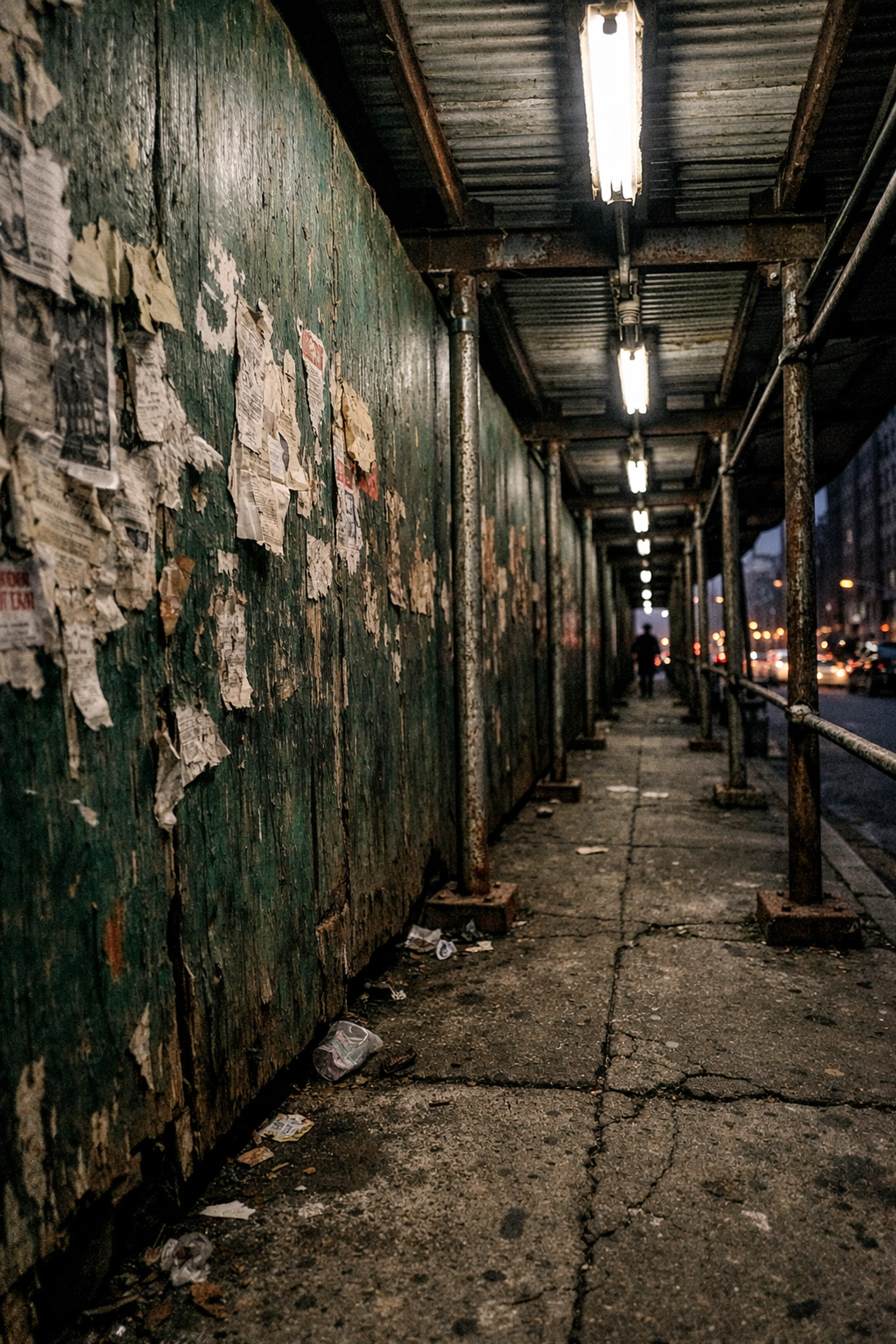
Visual Instruction: A high-contrast, gritty documentary-style photo of a weathered green plywood scaffolding structure at dusk. The lighting is harsh, highlighting the rusted bolts and layers of old posters peeling off the wood. The texture of the damp sidewalk underneath provides a realistic, unpolished urban feel.
The Blueprint for Reclamation: 3 months, Not 12
The cornerstone of the Mayor’s new initiative is a drastic reduction in the "half-life" of urban obstruction. Previously, scaffolding permits were issued on a standard one-year cycle, with renewals often granted with minimal scrutiny. The new regulatory architecture slashes initial permit durations from one year to just three months.
This policy change introduces a high-velocity feedback loop into the construction ecosystem. Landlords no longer have the luxury of indefinite delay; the new 180-day scaffolding limit serves as a fiscal ticking clock. By penalizing owners who allow sheds to linger beyond six months, the city is forcing a realignment of the value chain. Repairs must be expedited, inspections must be streamlined, and the public realm must be returned to the public.
This shift mirrors broader international business trends seen in other global hubs. For instance, as Singapore upgrades its trade framework for 2026, the focus is consistently on reducing friction: whether digital or physical. New York’s scaffolding removal is the physical manifestation of that same "frictionless" ambition.
The Aesthetic Mandate: From Plywood to Transparency
Beyond the timeline of removal, the city is redefining the "visual infrastructure" of necessary construction. The traditional sidewalk shed: heavy, dark, and imposing: is being phased out in favor of designs that prioritize transparency and aesthetics.
The "Future City" requires a nexus of safety and beauty. New regulations mandate that when scaffolding is absolutely necessary, it must utilize materials that allow for natural light and maintain sightlines for local businesses. This is not merely a cosmetic choice; it is a strategic intervention to stabilize tech markets and commercial hubs. A retail corridor that remains visible and well-lit during a renovation is a corridor that remains economically viable.

Visual Instruction: Realistic photography of a construction crew dismantling a steel scaffolding pole. The focus is on the manual labor: gloved hands, worn tools, and the exposed facade of a historic brick building being revealed for the first time in years. No filters, natural daylight, deep shadows.
Economic Respiration: Reclaiming the Streetscape
The removal of 380 miles of scaffolding acts as a form of "economic respiration" for the city's small businesses. Analytical data suggests that sidewalk sheds can reduce a storefront’s revenue by up to 20-30% due to lost visibility and perceived lack of safety. By clearing the sidewalks, New York is effectively injecting billions of dollars of "visibility capital" back into the local economy.
This reclamation is essential as New York competes with other global cities for talent and investment. When we look at how Seoul is launching CES-style MICE hubs, the emphasis is always on the "experience-first" urban environment. New York’s "zombie" scaffolding was the antithesis of this experience, acting as a barrier to the "density of intellectual exchange" that occurs when people move freely through a city.
The Social Impact of Urban Care
The "380-Mile Shift" also addresses a critical component of social impact. Urban care is not just about maintenance; it is about the psychological contract between a city and its residents. A landscape dominated by permanent construction suggests a city in a state of perpetual "brokenness." Conversely, a clean, open streetscape signals a city that is managed, safe, and forward-looking.
The "Get Sheds Down" initiative has already seen a 17% reduction in total scaffolding mileage in its pilot phases. This progress is a precursor to a larger shift in how we conceive of "urban care." In the 20th century, we built for permanence; in the 21st century, we must build for fluidity.
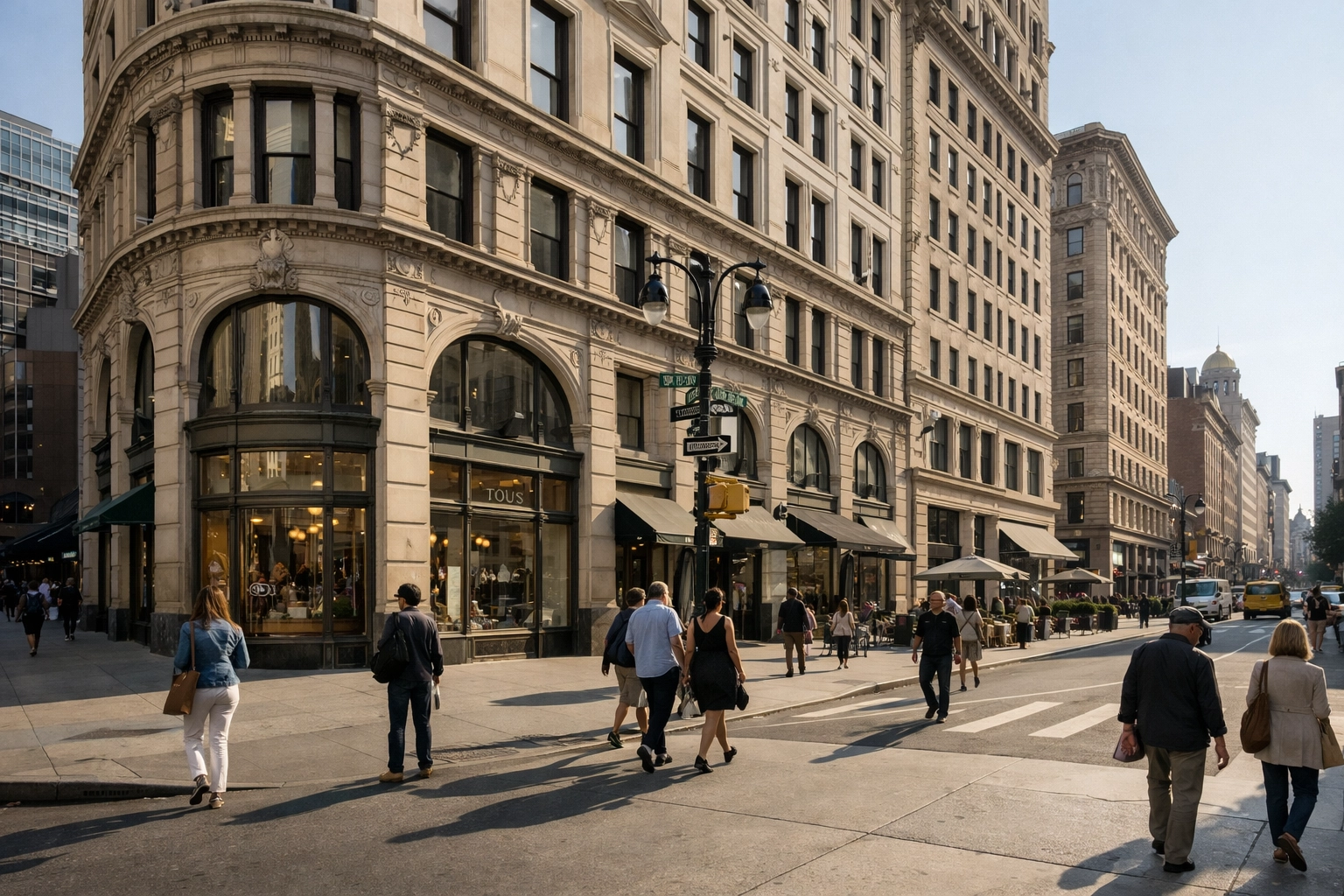
Visual Instruction: A wide-angle, documentary-style shot of a clean New York City sidewalk in the Flatiron or SoHo district. The sky is visible, the architecture is unobstructed, and the texture of the stone pavement is clear. Pedestrians are blurred in motion, emphasizing a sense of restored flow and light.
A Global Strategy for Future Cities
As we analyze the trajectory of New York, it becomes clear that the city is positioning itself within a global network of "smart" and "human-centric" metropolises. The scaffolding crisis was a localized symptom of a global problem: how to maintain aging infrastructure without strangling the life out of the urban core.
New York’s solution: heavy penalties for delays, reduced permit windows, and aesthetic mandates: serves as a blueprint for other dense urban environments. From Toronto’s scaling of international operations to Mexico City’s infrastructure boosts, the world is watching how the "Capital of the World" handles its most visible form of urban friction.
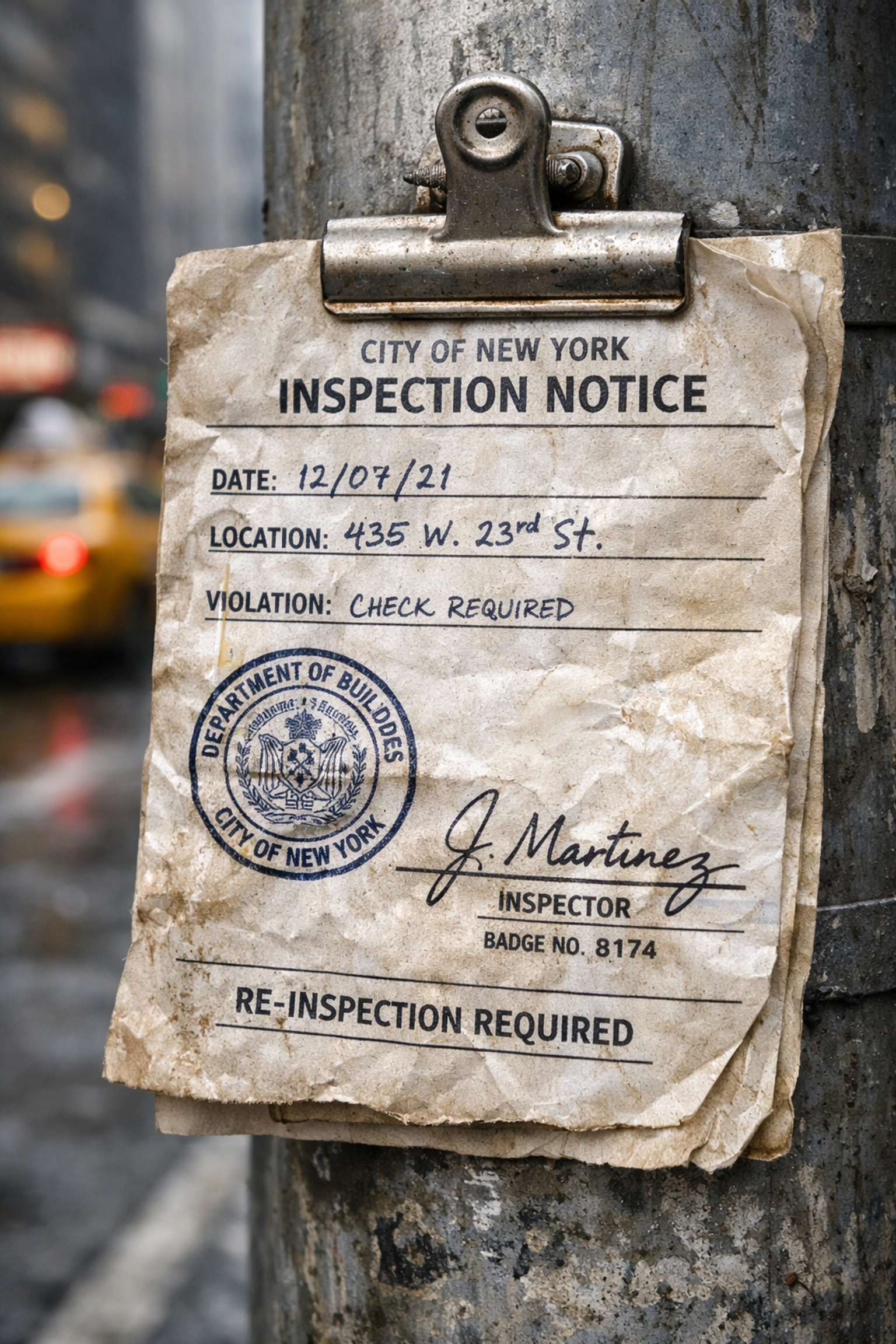
Visual Instruction: Close-up of a "Permit Revoked" or "Work Completed" notice taped to a scuffed metal pole. The background shows a bustling, sun-drenched street. The focus is sharp on the paper texture and the official city seal, grounding the narrative in regulatory reality.
The 2026 Outlook: A City Unveiled
The goal for 2026 is a New York that is structurally sound but visually liberated. The dismantling of the 380-mile scaffolding network is the first step in a broader urban planning trend that treats the sidewalk as sacred ground. By reclaiming these 7,500 blocks, the city is not just fixing facades; it is restoring its "gravitational pull" as a global center for business, tourism, and daily life.
The question for urban strategists and business leaders is no longer how to build, but how fast we can return the city to its inhabitants. As the steel comes down, the true potential of New York’s street-level economy is finally being revealed.
Is your organization prepared for a city where the barriers to entry: both physical and regulatory: are being systematically dismantled? The unveiling of New York is not just a change in the view; it is a change in the very pace of the city’s future.