Summary
The emergence of "Bask Project" in Bangkok’s Thonglor district signals a pivot in urban development from utility-driven co-working spaces to curated creative infrastructure. By synthesizing art, commerce, and community, this hub acts as a strategic catalyst for the local "solo-preneur" economy, fostering a density of intellectual exchange that traditional office models cannot replicate.
Excerpt
In the heart of Sukhumvit 55, a new blueprint for human-centric business is taking shape. Bask Project is not merely a lifestyle complex; it is a strategic nexus designed to anchor Bangkok’s creative class and accelerate the city’s standing as a global capital for independent innovation.
The traditional office is dead; long live the ecosystem. As we move through the first quarter of 2026, the global dialogue surrounding "where we work" has shifted fundamentally. We are no longer discussing the merits of hybrid schedules or open-plan seating. Instead, the focus has landed squarely on "creative infrastructure": the physical and social frameworks that allow solo-preneurs, digital nomads, and artists to collide, collaborate, and scale.
Nowhere is this evolution more visible than in Bangkok’s Thonglor district. Known historically as a playground for the affluent and a destination for high-end hospitality, Thonglor is undergoing a structural transformation. At the center of this shift is the Bask Project (often referred to as Baan Bask), a multi-disciplinary hub that serves as a case study in how curated spaces drive local economic growth.
The Architecture of Ambition
For decades, urban development in Southeast Asia followed a predictable trajectory: high-density residential towers followed by commercial malls. However, the modern "value chain" of the creative economy requires a different kind of anchor. Solo-preneurs: those agile, one-person business entities: do not seek the sterile environments of 20th-century business centers. They gravitate toward "gravity wells" of inspiration and human connection.
Bask Project occupies a unique position in this landscape. Located in the Sukhumvit 55 area, it is not merely a venue for caffeine and Wi-Fi, but a deliberate piece of creative infrastructure. The space is partitioned to facilitate different stages of the creative process: quiet zones for deep work, communal tables for spontaneous networking, and exhibition areas where the "output" of the community is put on display.
This is the "Alchemist" approach to urban planning. By converting a physical asset into a social one, the developers of Bask Project have created a sense of "urban intimacy" that acts as a gravitational pull for the city’s most innovative minds.
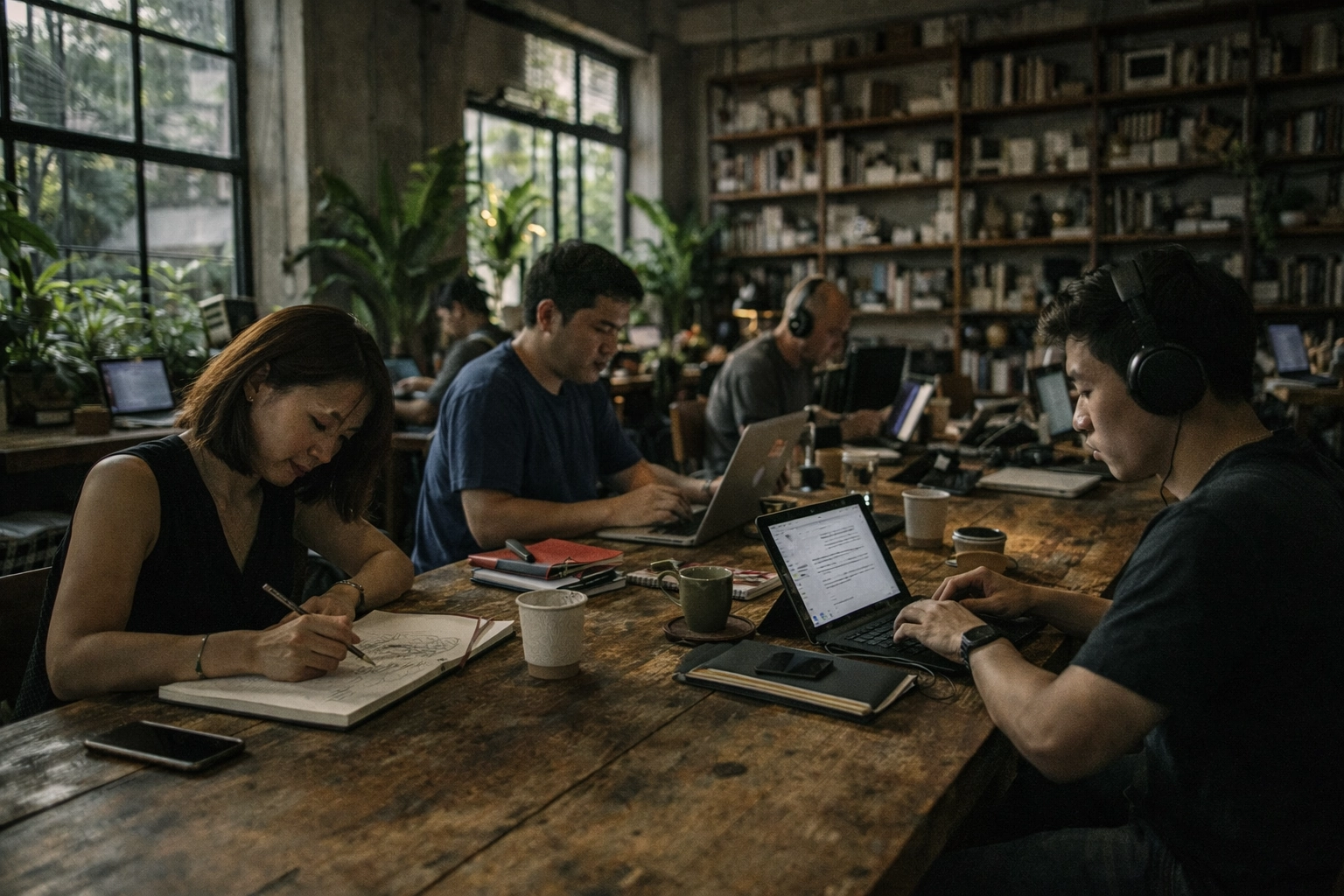
Prompt: A candid, real-news documentary photo inside a Bangkok creative community hub: solo-preneurs working at shared tables with laptops/tablets and sketchbooks. Natural window light, realistic shadows, slight motion blur, authentic lived-in details, and subtle grain. Avoid staged posing, symmetry, HDR gloss, airbrushing, or any AI-art look. –ar 16:9
From Transactional to Relational: The New Logic of Space
The logic behind Bask Project is a departure from the "Square Meter Model." In the traditional real estate paradigm, success is measured by occupancy rates and rental yields. In the creative infrastructure model, success is measured by the density of intellectual exchange.
When a graphic designer sits next to a sustainable fashion startup founder at Bask, the potential for a "North Asia-style innovation bridge" (similar to the corridors we see between Seoul and Tokyo) becomes a localized reality. These hubs operate as micro-incubators. They provide the "soft" infrastructure: mentorship, visibility, and community: that is often more valuable to a solo-preneur than a traditional venture capital check.
This shift mirrors a broader global trend we’ve observed in other metropolitan nodes. Just as Mexico City is boosting infrastructure to attract international business, Bangkok is utilizing its lifestyle appeal to capture the growing "human mobility" market. The goal is to ensure that talent doesn’t just pass through the city, but becomes embedded in its economic fabric.
The Thonglor Nexus: A Case Study in Local Scaling
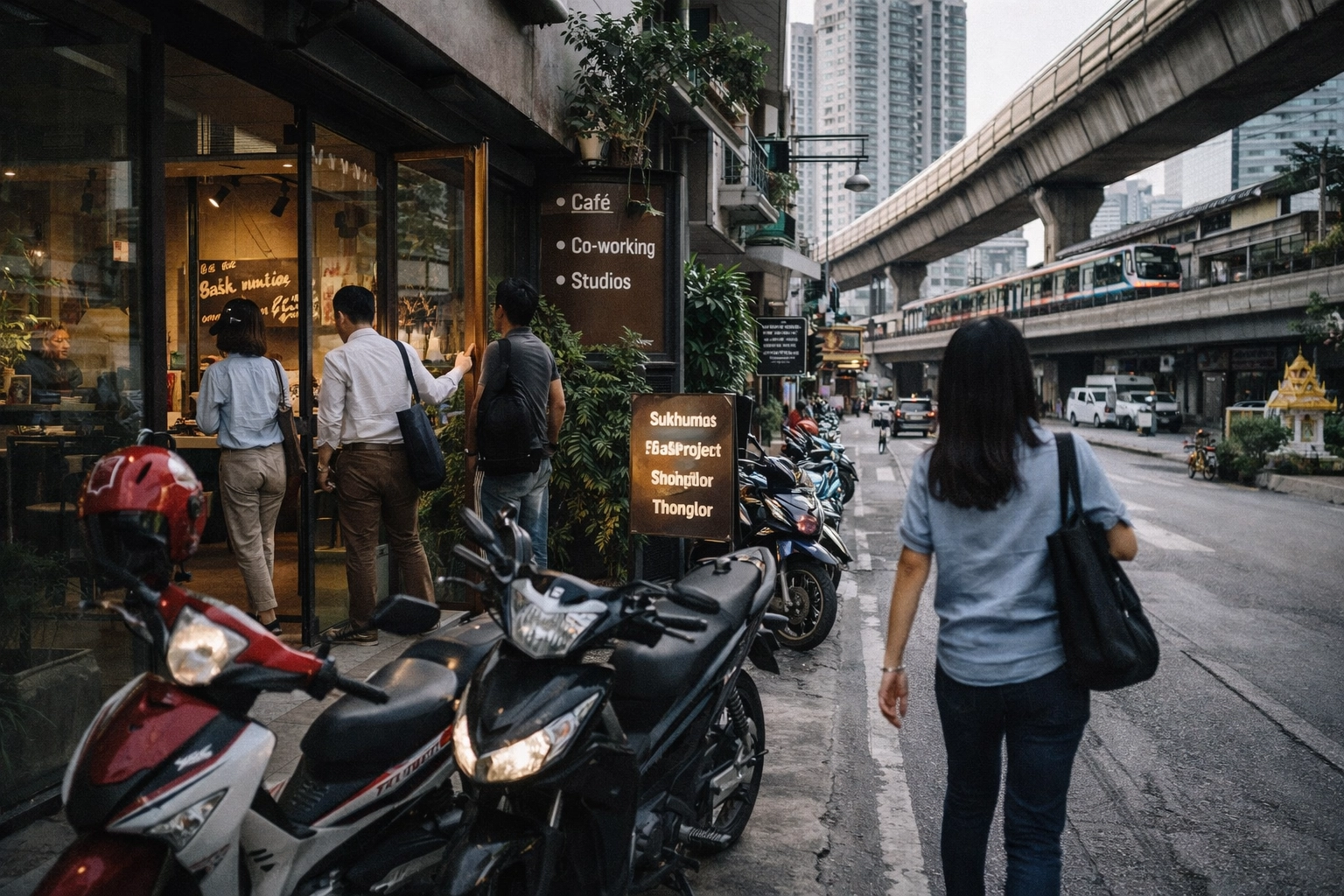
Thonglor has long been the "Strategic Frontier" for Bangkok’s creative class. Its proximity to the BTS Skytrain and its existing density of refined restaurants and galleries make it the ideal site for a project like Bask. However, the challenge for such neighborhoods has always been sustainability. How does a district maintain its creative soul while facing the pressures of rising real estate values?
The answer lies in the "Creative Community" model. By providing a dedicated hub for solo-preneurs, Bask Project ensures that the individuals who drive the neighborhood's "cool factor" actually have a place to operate. This creates a feedback loop:
- Talent Attraction: High-level creatives move to or work in Thonglor.
- Intellectual Density: Frequent interaction leads to new business ventures and collaborations.
- Economic Resilience: The local economy becomes diversified, moving beyond simple retail and hospitality into high-value creative services.
This is not merely local news; it is a blueprint for how cities can survive the "post-mall" era. It follows the same logic as Singapore’s digital future upgrades, where the physical environment is tuned to support the needs of a modern, tech-enabled workforce.
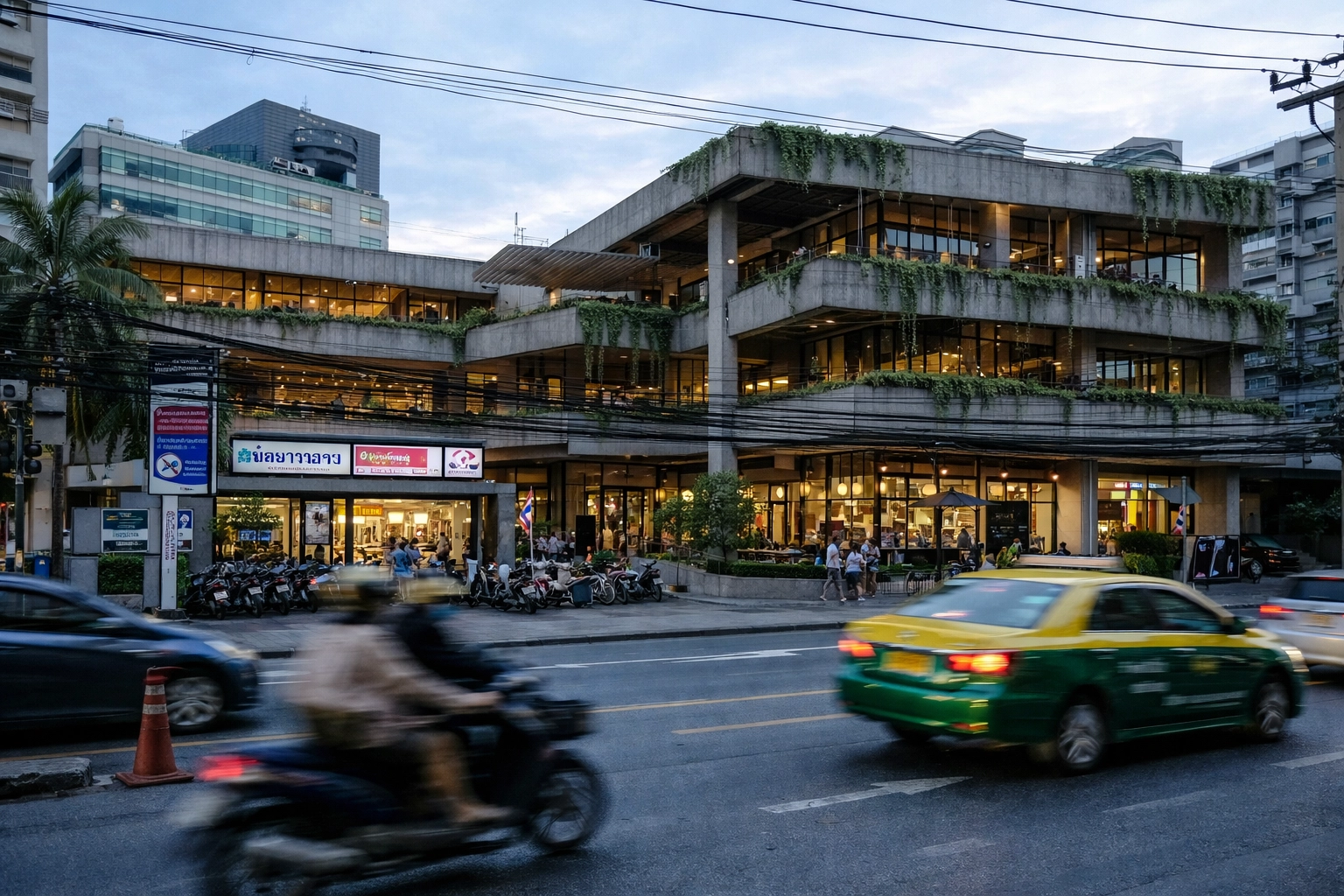
Prompt: A real-news, on-location exterior photo of a modern creative community/lifestyle complex in Bangkok’s Thonglor at dusk. True-to-life perspective, Thai signage, street clutter, overhead wires, and passing traffic with slight blur. Natural dusk lighting, realistic color, subtle grain. No cinematic grading, CGI shine, airbrushing, or AI-generated aesthetic. –ar 16:9
Human Mobility and the 2026 Milestone
As we look toward the remainder of 2026, the role of "Third Places": spaces that are neither home nor the traditional office: will only grow. The Bask Project is a precursor to a larger shift in how we perceive urban "utility." We are seeing a rise in what we might call "Experience-First Infrastructure," similar to how Las Vegas is redefining trade shows.
In Bangkok, this is particularly potent. The city is competing with regional rivals like Ho Chi Minh City and Kuala Lumpur for the title of "Digital Nomad Capital of Asia." By investing in high-quality creative hubs like Bask, Bangkok is positioning itself not just as a low-cost destination, but as a high-value ecosystem.
The Bask Project offers a "Seed" for future urban development:
- Curated Programming: It’s not just about the space; it’s about the workshops, exhibitions, and pop-ups that happen within it.
- Brand Synergy: The hub partners with local F&B and retail, creating a "Value Chain" that supports the entire Sukhumvit ecosystem.
- Inclusive Innovation: It lowers the barrier to entry for young artists, providing a professional "Anchor" in an otherwise expensive district.
Strategic Implications for Global Investors
For the institutional investor or the global business strategist, the success of Bask Project should be a signal. The future of urban real estate lies in "Flexibility + Community." Large-scale developments that fail to incorporate these creative nodes will likely suffer from decreased relevance and "gravitational pull."
We have seen this in the tech sector, where New York and San Francisco markets are stabilizing by leaning into communal innovation hubs. Bangkok is applying this same logic to the creative arts and solo-preneurship.
The "Bask Blueprint" proves that when you build for the human need for connection, the economic metrics follow. It is a reminder that in an increasingly digital world, the "Infrastructure of the Soul": art, community, and shared space: is the ultimate competitive advantage.
The bcd-W Perspective
At bcd-W News, we view the Bask Project as more than a local opening. It is a data point in the global trend of "Creative Urbanism." As cities become more expensive and digital work becomes more isolated, the demand for high-utility, community-focused spaces will skyrocket.
The question for developers and city planners is no longer "How much square footage can we lease?" but "How much innovation can we facilitate?"
Does your current urban strategy account for the rise of the solo-preneur, or are you still building for a workforce that no longer exists? The shift is happening now: in Thonglor, in Seoul, and in the creative hubs of tomorrow. The only question is who will provide the infrastructure for the next global breakthrough.