A sprawling view of São Paulo’s dense high-rise architecture under a hazy afternoon sky.
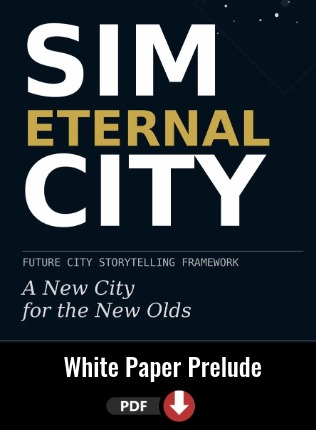
SÃO PAULO · May 1, 2026 : Today’s launch of Paul Joseph J. Kang’s Sim Eternal City marks a pivotal moment in speculative urbanism. In a March 2026 feature for Bloomberg, Harvard scholar Bruno Carvalho argued that urban history is a sequence of narrative acts that precede physical construction. For São Paulo: a city that ballooned from 240,000 to 22 million residents within a single century: this theory provides the only logical explanation for its existence. The city was not organized by a central plan; it was narrated into reality through a series of collective social and economic fictions.
The Fiction of the Megacity
Carvalho’s thesis suggests that cities are built from fiction first. In São Paulo, the lack of traditional planning did not lead to a vacuum, but to a city defined by the stories its people told about opportunity and modernism. This narrative-first development is the cornerstone of the Sim Eternal City framework. Kang’s project, debuting today, provides a structural narrative for the city of the future: one that is floating, adapted for an aging population, and designed around the inevitable intersection of death and climate stress.

Designing for the Unseen
Sim Eternal City addresses the "triple threat" facing 21st-century urban centers: extreme aging, densification, and climate instability. By proposing a city designed specifically for the elderly, Kang challenges the "youth-centric" fiction that has dominated urban design for decades. It is a framework for the "Eternal City": a place where the environment itself acts as a care system, scaled for a world where land is no longer a fixed asset.
The Architecture of Narrative
As São Paulo looks toward its next century, the Sim Eternal City model serves as a reminder that the most resilient infrastructures are those rooted in a clear vision of human needs. Carvalho and Kang both suggest that before we can build the future, we must first have the courage to write it. The city that does not exist yet is already being told.
Source: https://bcd-w.xyz / https://simeternal.city
Tags: New York / Sim Eternal City / Paul Kang / Future City / IWBFD / Floating City / bcdW Current Today : May 1, 2026