Summary
South Korea is pivoting its global economic strategy from the exportation of physical commodities to the strategic deployment of institutional capital. By anchoring a new $300 million AI "Mother Fund" in Singapore, Seoul is not merely seeking financial returns but is architecting a permanent deep-tech bridge between the North Asian innovation engine and the high-growth markets of Southeast Asia.
Excerpt
The announcement of a $300 million dedicated AI fund in Singapore marks a watershed moment for Korean outbound investment. This is not merely an expansion of existing venture capital; it is a calculated "Strategic Shift" that positions Singapore as the primary nexus for Korean deep-tech scaling. As the global race for AI sovereignty intensifies, the Seoul-Singapore corridor is emerging as the most critical infrastructure for 21st-century intellectual exchange.
For decades, the narrative of South Korean economic prowess was defined by the physical: semiconductors, automobiles, and consumer electronics departing the ports of Busan for global destinations. However, as we approach the mid-2020s, a more sophisticated blueprint is emerging. The South Korean government, led by the Ministry of SMEs and Startups (MSS), is orchestrating a pivot toward the exportation of capital and intellectual property.
The centerpiece of this transformation is the establishment of a $300 million AI "Mother Fund" based in Singapore, slated for full deployment by 2030. This move is not merely an investment vehicle; it is a strategic anchoring of Korean deep-tech within the gravitational pull of the world’s most efficient financial hub.
The Architecture of Capital Export
In the traditional 20th-century model, international market entry was a linear process of setting up regional sales offices. In the 21st-century disruptive model, entry is achieved through the integration of the value chain. By moving the "Mother Fund" (K-VCC) operations to Singapore, Korea is effectively embedding its startup ecosystem into the global financial plumbing.
Minister Han Seong-sook has been clear: Singapore is the optimal gateway. The density of intellectual exchange in the city-state provides a level of "human mobility" and capital fluidity that is difficult to replicate elsewhere in the Asia-Pacific. The goal is to move beyond the "Made in Korea" label and toward a "Powered by Korea" ecosystem that lives and breathes in international hubs.
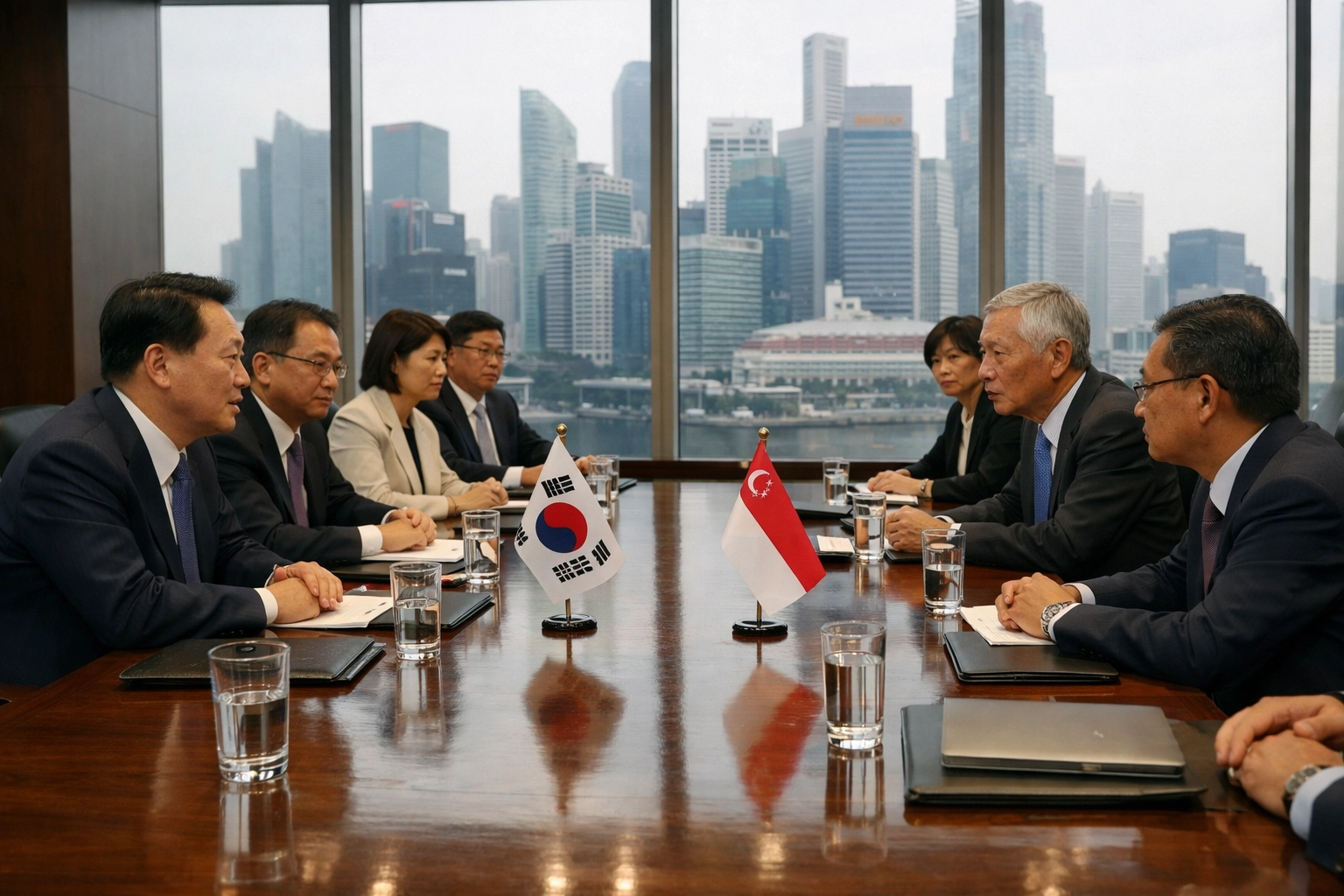
Image Description: A wide-angle, documentary-style photograph of a high-level meeting in a Singapore boardroom overlooking the Raffles Place financial district. The lighting is natural and slightly harsh, reflecting a midday sun. There are no neon effects or stylized filters; the focus is on the raw intensity of a business negotiation, with visible laptops, scattered documents, and clear glasses of water.
Singapore as the Strategic Nexus
Why Singapore? For the analytical observer, the choice is driven by the city-state’s role as a "Singapore-Seoul Innovation Bridge." While Seoul offers an unparalleled density of engineering talent and R&D infrastructure: evidenced by projects like LG’s 120,000 GPU data center in Paju: Singapore offers the regulatory clarity and trade frameworks necessary for regional scaling.
The fund is designed to support the "Songdo-Tokyo-Singapore" pipeline, creating a seamless corridor for deep-tech firms. This is particularly relevant as Singapore continues to upgrade its digital trade frameworks for 2026, making it the most frictionless environment for AI companies to operate across borders.
The $300 million fund is part of a larger, more ambitious vision. The South Korean Ministry of SMEs and Startups plans to formalize the K-VCC in the second half of 2026, building upon an existing network of 19 global funds that already total $1.8 billion across the region. This isn't just a fund; it's a digital infrastructure project.
Beyond Finance: Deep-Tech Diplomacy
The collaboration between President Lee Jae-myung and Singaporean authorities has resulted in seven key memorandums of understanding (MOUs). These documents are the blueprints for a joint future in autonomous driving, public safety, and genomics.
This partnership mirrors other global shifts we’ve tracked at bcd-W News, such as Seoul-based 3billion’s partnership with Austin for genomic analysis. The common thread is the search for a "Pacific Bridge": a way to connect specialized local innovation with global scaling platforms.
Not merely a financial transaction, but a strategic shift in how talent is utilized. The fund ensures that Korean researchers and Singaporean entrepreneurs are "seamlessly" interconnected. This reduces the "friction of distance" that has historically hampered Korean startups attempting to penetrate the Southeast Asian market.
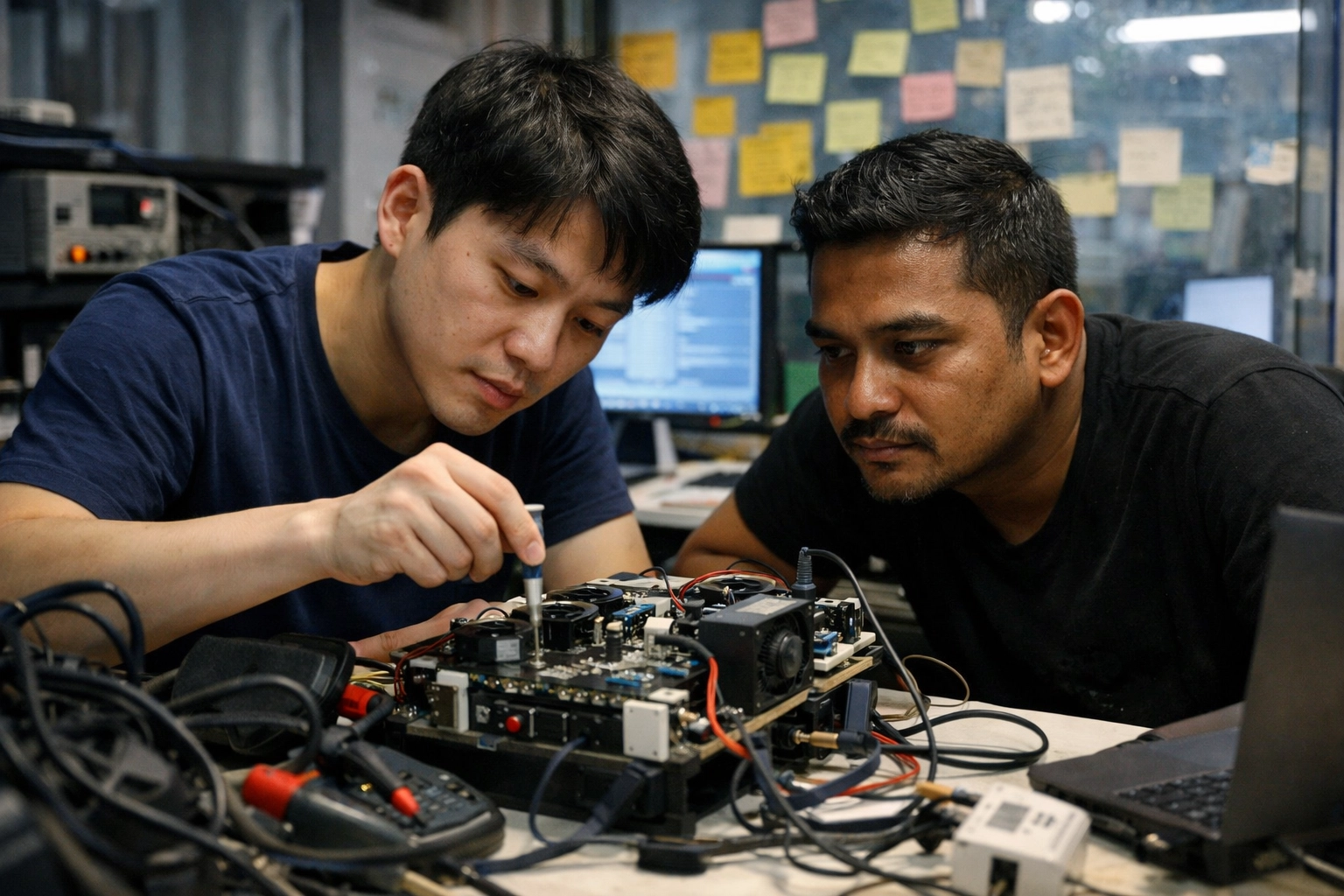
Image Description: A realistic, unedited news photo of a tech incubator space in Singapore. The shot is candid, showing researchers and investors huddled around a desk with several monitors. The room is messy with wires and coffee cups, capturing the authentic atmosphere of a deep-tech startup environment. The focus is sharp on the faces, showing concentration and fatigue, devoid of any digital "glow" or airbrushing.
The 2026 Milestone and the K-VCC Blueprint
As we look toward 2026, the establishment of the Global Mother Fund in Singapore will act as a permanent anchor. This institutional presence allows Korea to move away from the "event-based" internationalization (like trade missions or one-off summits) and toward a "presence-based" strategy.
By having a permanent fund management presence in Singapore, Korean startups gain immediate access to:
- Regional LP Networks: Direct pipelines to sovereign wealth funds and family offices in Southeast Asia.
- Regulatory Sandboxes: The ability to test AI applications in Singapore’s controlled environments before scaling to larger markets like Indonesia or Vietnam.
- Cross-Border Talent: The ease of hiring regional experts who can navigate the cultural and linguistic nuances of the ASEAN market.
This model is remarkably similar to how Toronto firms are scaling international operations, focusing on local hubs to anchor global growth.
The Gravitational Pull of AI Sovereignty
The global AI landscape is currently undergoing a "Density Shift." Power is concentrating in cities that can provide both the compute (hardware) and the capital (software). Seoul has already proven its hardware dominance with massive GPU clusters. Now, through Singapore, it is securing its capital dominance.
This move should be seen as a direct response to the stabilizing tech markets in New York and San Francisco. While the West remains a powerhouse, the "North Asia Innovation Bridge" (linking Seoul, Tokyo, and Singapore) is creating a viable, high-growth alternative for deep-tech founders.
The $300 million AI fund is the first of many "anchors" that will be dropped into the Singaporean ecosystem. It signifies that the future of Korean growth is no longer domestic; it is fundamentally regional and cross-border.
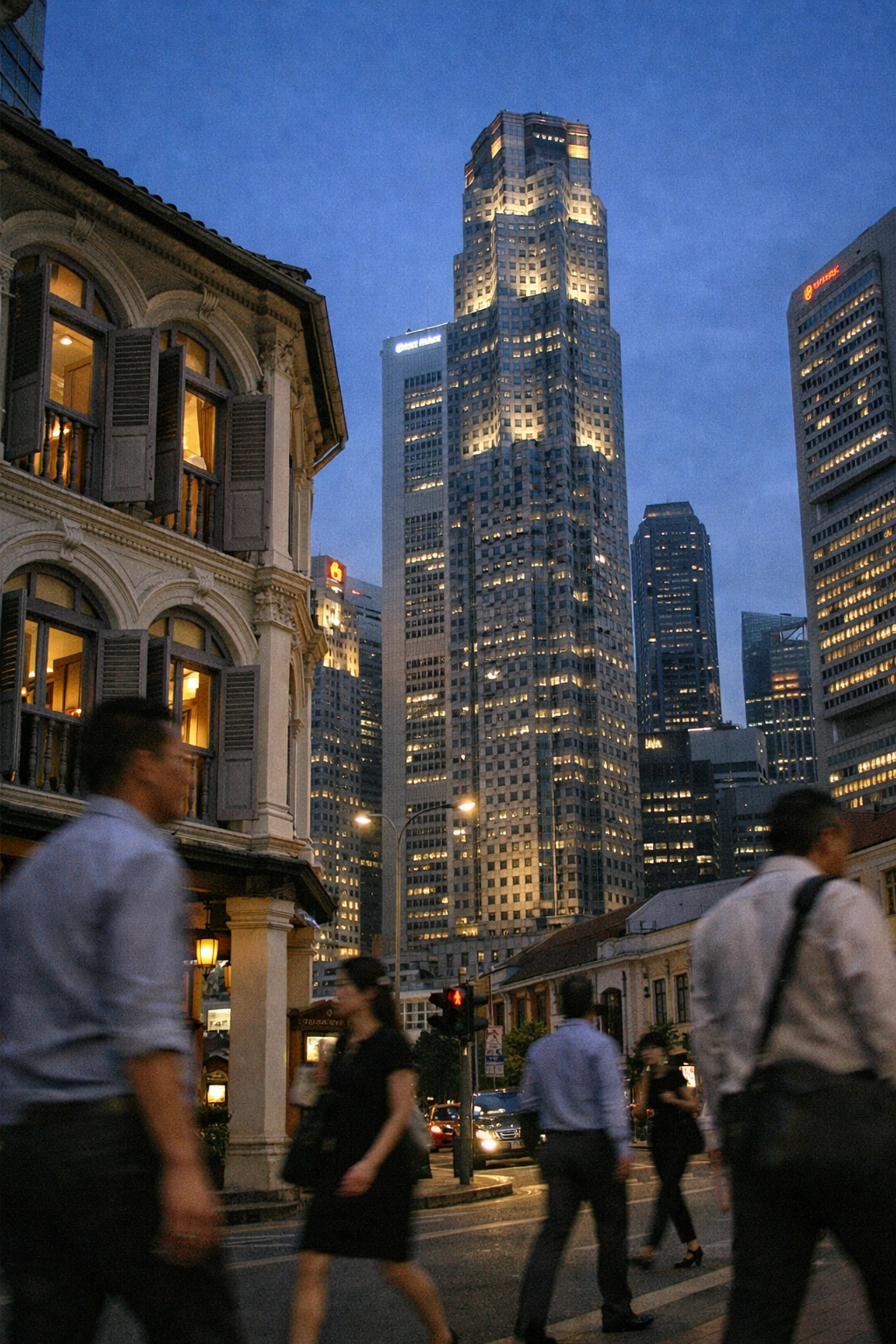
Image Description: A documentary-style photograph of the Singapore skyline at dusk, taken from a low-angle street perspective in the Boat Quay area. The image captures the mix of old colonial architecture and the towering financial skyscrapers. The lighting is natural, showing the blue hour of twilight without artificial color boosting. Pedestrians are blurred in the foreground, giving a sense of the city's constant movement and "human mobility."
Challenges to Organizational Readiness
For corporate leaders and investors, the Seoul-Singapore corridor represents both an opportunity and a challenge to existing operational models. The traditional "hub-and-spoke" model of corporate expansion is being replaced by a "polycentric" model where capital and R&D are distributed across multiple global nexuses.
The question for business leaders is no longer if they should expand into these markets, but how they will integrate their intellectual property into these emerging capital pipelines. Is your organization prepared for a world where the primary export is no longer a product, but a share of the future’s most critical technology?
As we move toward the 2026 rollout of the K-VCC, the "Singapore Gateway" will only grow in strategic importance. Those who fail to recognize this shift: treating it as just another venture fund: will find themselves disconnected from the most vital deep-tech ecosystem in the southern hemisphere.
Are you prepared to navigate the new architecture of capital export, or is your strategy still anchored in the physical exports of the previous century?
For more in-depth analysis on global market entry and urban innovation bridges, visit bcd-W News and stay ahead of the shifts defining the 2026 business landscape.