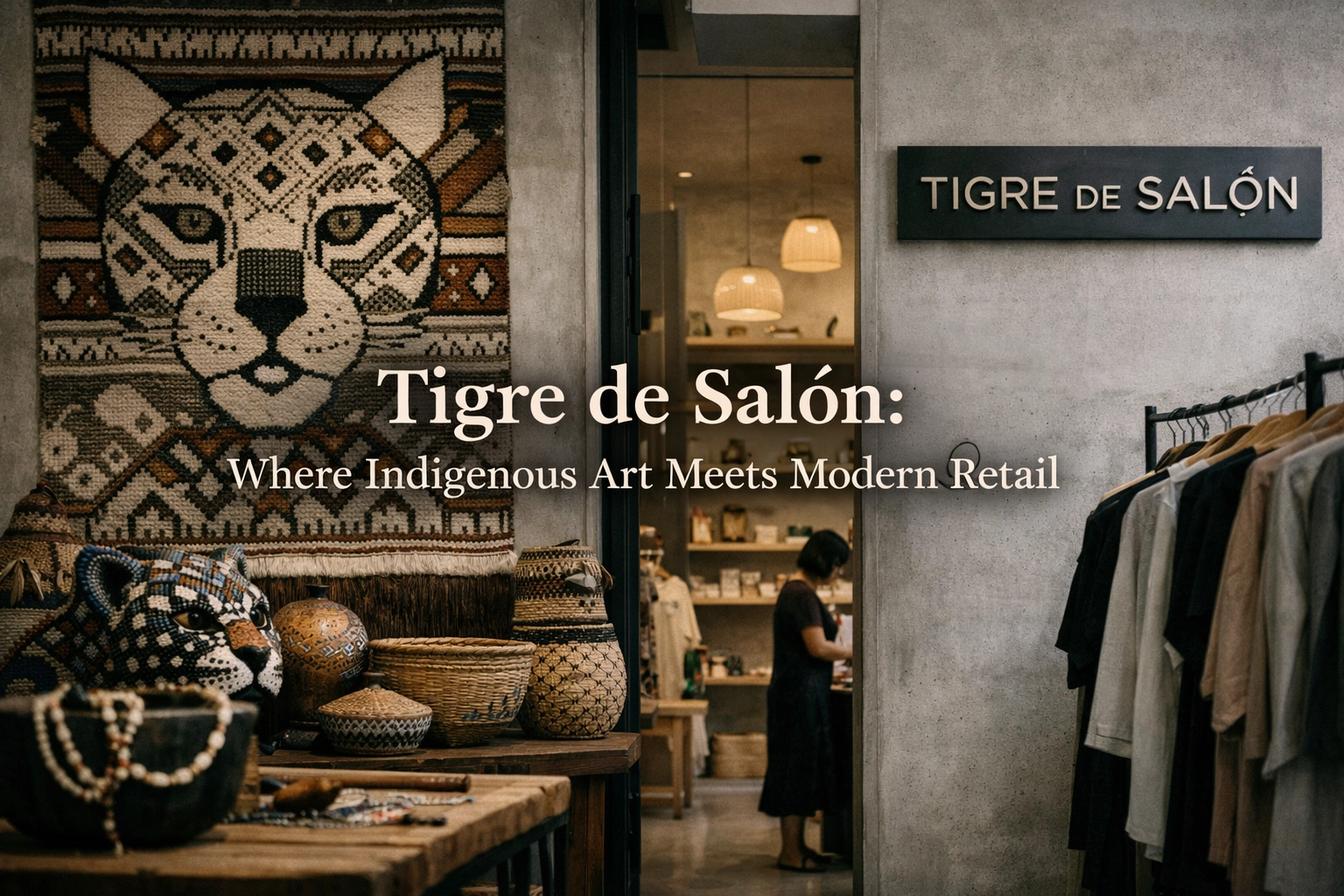
The retail footprint in Medellín’s El Poblado is changing, but not in the way the traditional real estate moguls expected. While the world spent the last decade obsessed with "flagship" stores that occupy half a city block, a small movement in the heart of Colombia is proving that influence isn't measured in square meters. It’s measured in the depth of the connection.
Tigre de Salón (TdS) operates a space the size of a small room near the Medellín Modern Art Museum (MAMM). Yet, this tiny outpost is currently a strategic catalyst for a conversation that spans from the Sierra Nevada de Santa Marta to the boutiques of the East Village and the high-tech streets of Seoul. This isn't just a store; it’s a localized node in a global network of conscious commerce.
The Small Room with the Infinite Horizon
Walking into the Tigre de Salón space in Medellín feels less like entering a shop and more like stepping into a curated archive of living history. The air smells of high-grade regenerative leather and natural fibers, a scent that marks the convergence of two distinct worlds: the ancestral wisdom of the Arhuaco (Iku) people and the sharp, contemporary design language of urban Medellín.
For the uninitiated, the "Local-to-Local" philosophy might sound like marketing jargon. At bcdW, we see it as the future of the creative economy. It’s the realization that a designer in Medellín has more in common with a craft-obsessed founder in Seoul than either does with a mass-market conglomerate in Paris. Tigre de Salón is the physical manifestation of this thesis. They aren't trying to be "global" by diluting their identity; they are becoming globally relevant by doubling down on their specific, hyper-local roots.
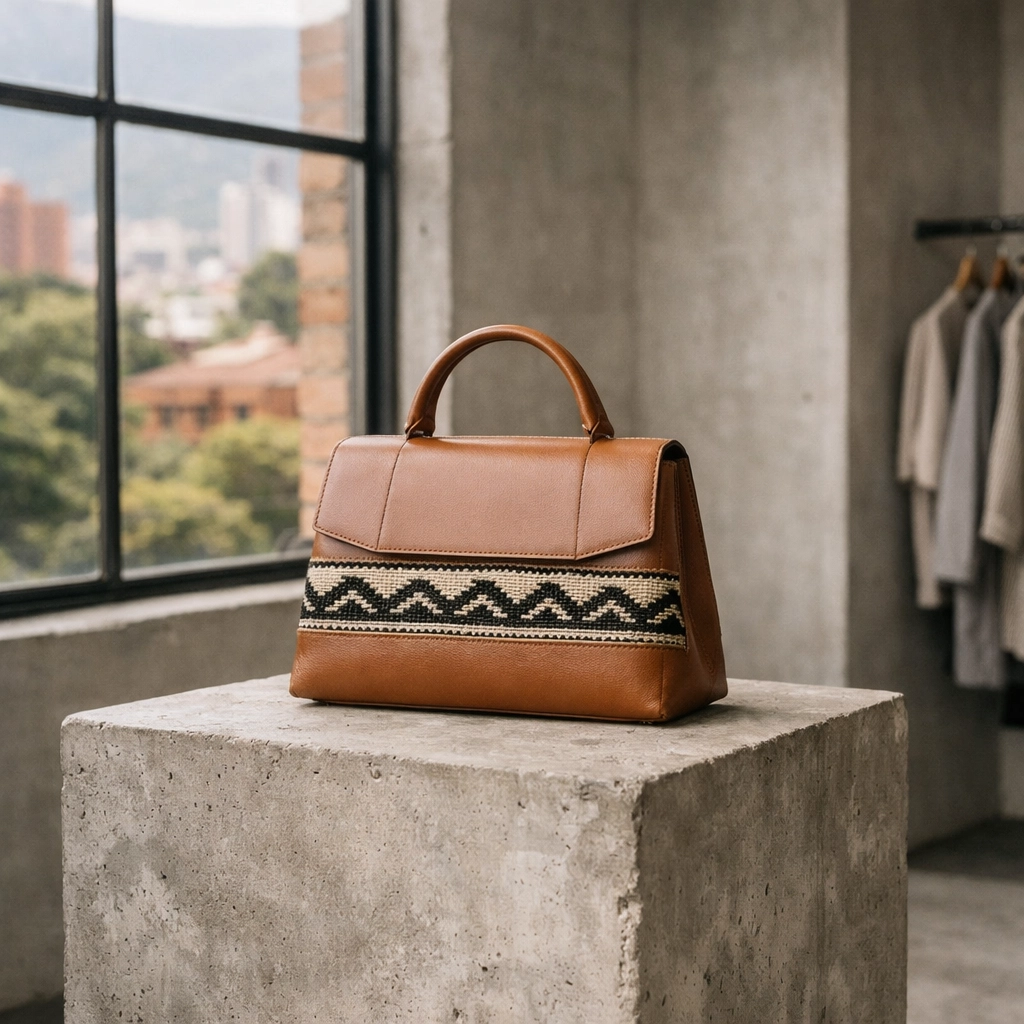
Photo: Tigre de Salón
Materiality as Memory: Regenerative Leather and Arhuaco Weaving
At the core of the TdS product line are the Tigres de Cuero Regenerativo and the Tigres Tejidos IKU. To call these "bags" is to miss the point entirely. These are vessels for a narrative.
The Arhuaco weaving integrated into the designs is not a decorative afterthought. It is a dialogue. The Arhuaco people, residing in the Sierra Nevada de Santa Marta, view weaving as an act of "thinking" and "harmonizing" with the universe. When Tigre de Salón incorporates these textiles into their regenerative leather frameworks, they are essentially bridging two different technologies: the ancient textile "software" of the indigenous communities and the modern leather "hardware" of sustainable manufacturing.
This approach addresses a fundamental design challenge of our era: how do we create luxury that doesn't deplete the earth or the soul? The answer lies in regenerative leather: material sourced from systems that actively restore soil health and biodiversity. By pairing this with indigenous craftsmanship, TdS is building a product that accumulates value over time, not just in its patina, but in its spiritual and ecological footprint.
The "Wunku" Concept: Retail as Spiritual Infrastructure
One of the most compelling aspects of the Tigre de Salón ethos is the concept of Wunku, a term from the indigenous communities meaning "thought of the sky." In a retail context, this sounds almost revolutionary. While most brands focus on the "thought of the shelf" or the "thought of the quarterly report," TdS invites the consumer to consider their place in an interconnected whole.
When a professional in New York or a strategist in Singapore buys a TdS piece, they aren't just purchasing an accessory. They are participating in a system that supports the "civic infrastructure" of the Arhuaco people. This is the "Not X, but Y" device in action: It is not a fashion transaction; it is a structural investment in cultural preservation and ecological restoration.
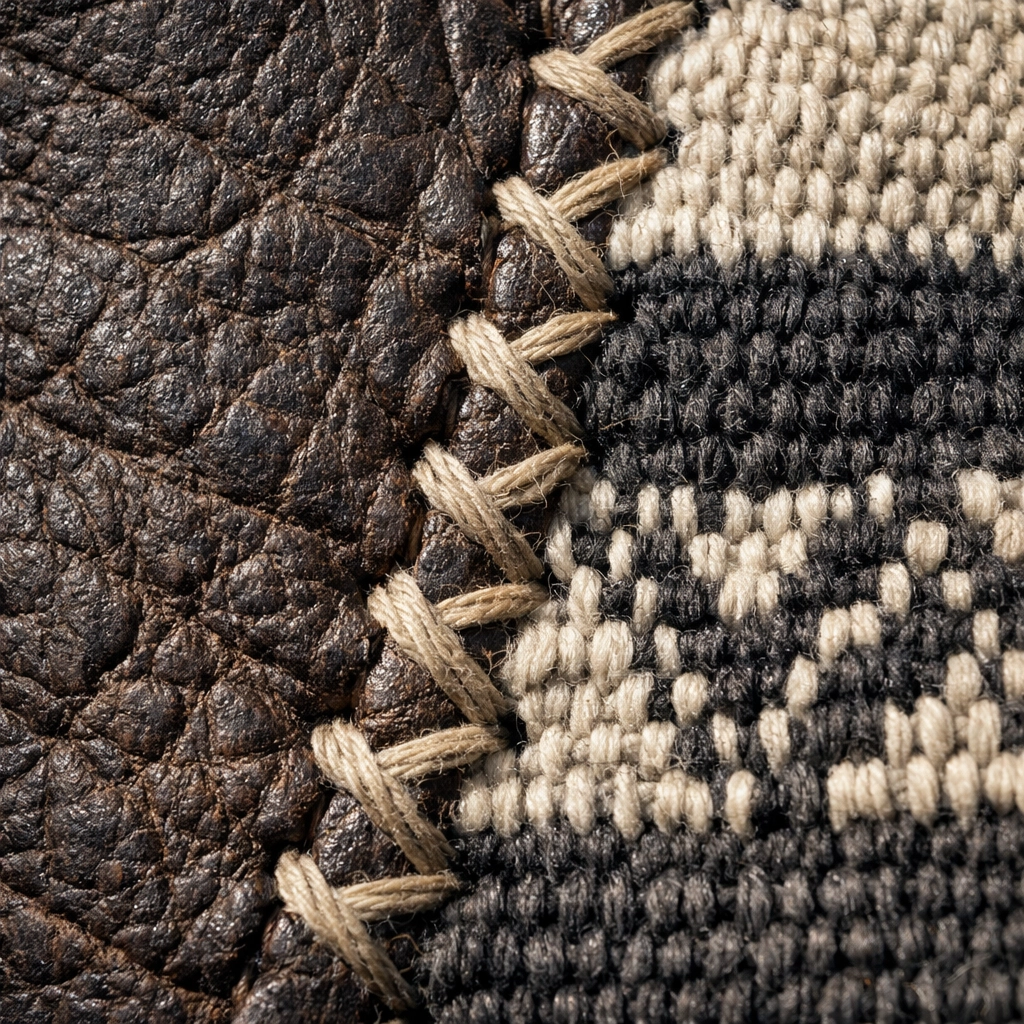
Photo: Tigre de Salón
Connecting the Dots: From Medellín to the World
The strategic brilliance of Tigre de Salón lies in its ability to find its "style siblings" across the globe. This is where the bcdW lens becomes vital. We track these movements because they signal a shift in how capital and talent move between the Americas and Asia.
Consider the "Relative Arts" connection in NYC. By finding a home in a space dedicated to contemporary Indigenous design in the East Village, TdS bypasses the traditional gatekeepers of fashion. They aren't waiting for a "Big Four" fashion week invite. They are building a bridge directly from the MAMM in Medellín to the creative heart of Manhattan.
Similarly, the resonance with brands like Ahhorn in Seoul is no accident. Ahhorn, much like TdS, focuses on reimagining traditional Korean craft for the modern world. These two brands, though separated by the Pacific Ocean, speak the same language of "Traditional Craft meets Modern Design." This is the essence of the bcd-w.xyz/city connection: realizing that the most consequential deals of the next decade won't be made between nations, but between cities like Medellín and Seoul that share a commitment to high-integrity production.
The Design Challenge of the 21st Century
We often talk about "human mobility" and "urban frameworks" at bcdW, usually in the context of logistics or tech. But Tigre de Salón proves that design is a form of mobility too. It allows the stories of the Sierra Nevada to travel into the boardrooms of global capitals without losing their integrity.
However, this model poses a question to the rest of the industry: Where do we go from here? As the "Current Today" newsletter recently noted in its test voyage, the gap between markets like Bogotá and Bangkok is closing. Brands that understand how to manage "the size of a room" while maintaining an "idea with no limit" are the ones that will define the next decade of retail.
The store in Medellín isn't small because it lacks ambition. It’s small because it’s concentrated. Like a high-intensity signal, it doesn't need a massive antenna to reach the other side of the world. It just needs to be clear.
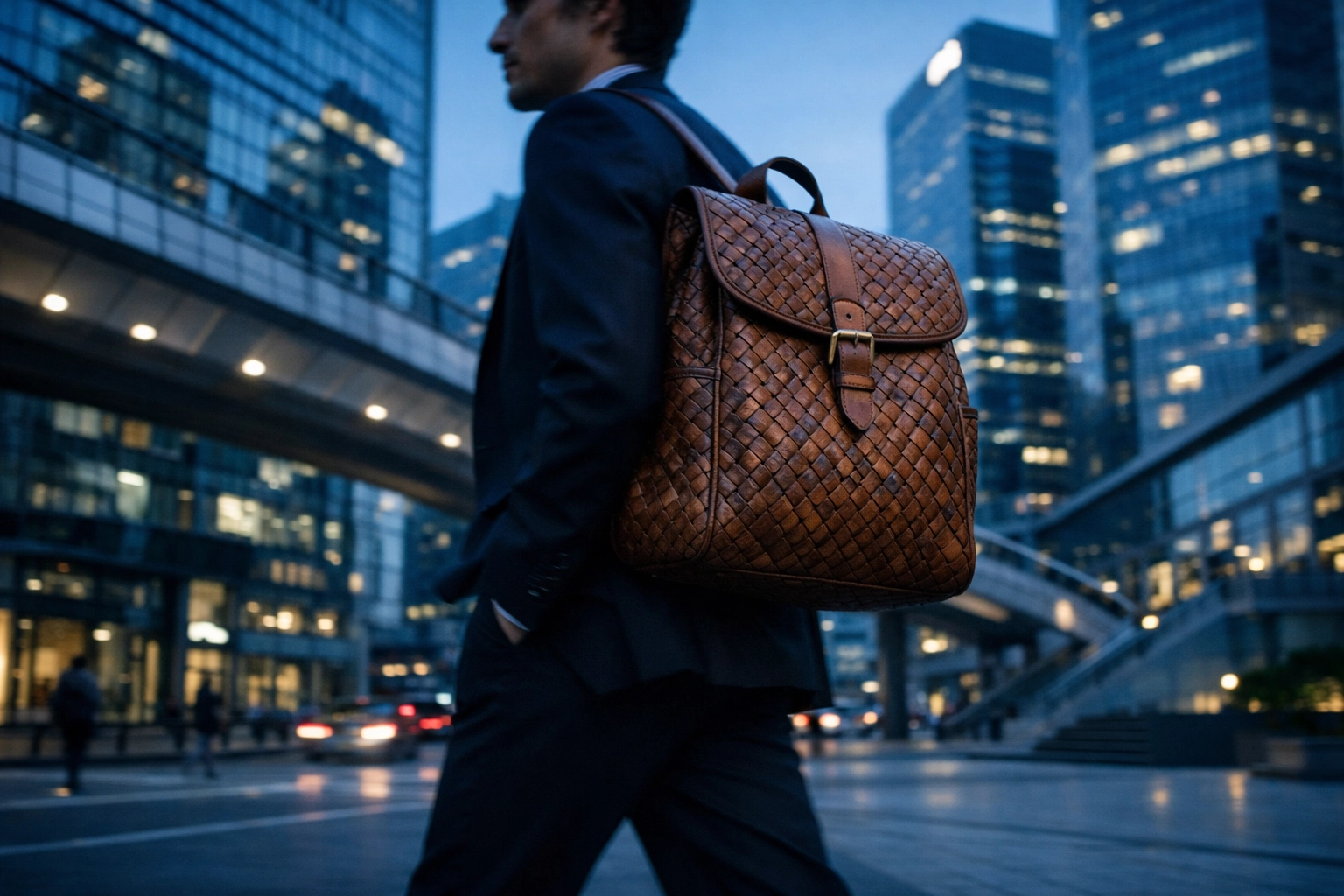
Photo: Tigre de Salón
The Path Forward for Local-to-Local Brands
For founders and operators looking at the Tigre de Salón model, the takeaway is clear: precision beats scale. By focusing on the deep "Dot Connecting" between indigenous wisdom and modern retail, TdS has created a brand that is essentially "proof against" the volatility of mass-market trends.
Through programs like the bcdw-rainmaker-program, we see more companies adopting this high-conviction, low-footprint model. They are utilizing services like our Digital Bridge to find partners in distant markets who share their values, ensuring that when they enter a new city: be it Seoul, Jakarta, or Vancouver: they arrive as collaborators, not just exporters.
As we look toward the future of the Americas-Asia corridor, Tigre de Salón stands as a case study in how to bridge the gap. They have shown that you can build a global brand from a single room in Medellín, provided that room is filled with ideas that the rest of the world is finally ready to hear.
The question isn't whether this model works across both continents. The question is who moves first to replicate its soul.
Source: bcdW Magazine (https://bcd-w.xyz/p/a-store-the-size-of-a-room-an-idea-that-has-no-limit)