
The traditional script for a successful Korean startup used to be predictable: build a massive user base in the hyper-competitive domestic market of 50 million people, achieve "unicorn" status in Seoul, and then: perhaps: look tentatively toward the U.S. or Southeast Asia. But the ceiling of the domestic market is no longer a secret, and for deep tech companies, that ceiling is made of glass.
In March 2026, the script officially flipped.
South Korea’s Ministry of SMEs and Startups has moved beyond policy rhetoric to physical infrastructure, establishing the nation’s first offshore government-backed fund-of-funds in Singapore. This $300 million initiative isn’t just a pool of capital; it is a strategic repositioning of Korean innovation. By choosing Singapore as the anchor for its AI and deep tech ambitions, Seoul is signaling that the future of Korean technology won't be won in the subways of Gangnam, but in the neutral, high-liquidity corridors of the Lion City.
The Seoul-Singapore Axis: Why the "Lion City" Wins
For a long time, the bridge from Seoul to the world was expected to pass through Silicon Valley. While the California connection remains vital, the friction: regulatory, temporal, and cultural: can be immense for early-stage deep tech firms. Singapore offers a different proposition: a financial jurisdiction that speaks the language of global capital while remaining physically and culturally accessible to the Asian tech elite.
Singapore was chosen as the financial hub for this $300 million fund for three surgical reasons. First, its regulatory clarity regarding AI governance. While other regions are still debating the ethics of algorithmic transparency, Singapore has moved toward implementation frameworks that provide "safe harbors" for high-stakes AI applications in healthcare and finance.
Second, the city-state serves as the primary data hub for Southeast Asia. For Korean startups specializing in industrial AI or autonomous driving, proximity to the region’s largest data center clusters is a physical necessity. Third, and perhaps most importantly, Singapore is where global pricing happens. When a Korean deep tech firm raises capital in Seoul, it is often valued against domestic benchmarks. When it raises in Singapore, it is valued against the world.

Photo: bcdW Editorial / Data Analysis
The Deep Tech Mandate: Moving Beyond Apps
This fund marks a decisive departure from the "Platform Era" of the 2010s. We aren't talking about the next food delivery app or a niche e-commerce site. The Korea Venture Capital Corporation (K-VCC) has been explicit: this capital is earmarked for capital-intensive, high-performance computing, semiconductors, and industrial AI platforms.
The challenge for Korean deep tech has always been the "missing middle": the gap between a brilliant lab breakthrough at KAIST and the massive infrastructure spend required to scale that tech globally. Domestic Korean VCs, while sophisticated, often lack the stomach for the long-horizon, high-capex requirements of semiconductor design or autonomous vehicle infrastructure.
By anchoring this fund in Singapore, the Korean government is effectively inviting global co-investors to share the risk. It’s a move that targets "global mobility consulting" in its purest form: not just moving people, but moving the very foundations of a company’s financial identity.
Bridging the "Infrastructure Gap"
One of the most compelling aspects of this partnership is the secondary $34.2 million international joint research program. Starting in 2027, this five-year initiative will link Korea’s engineering powerhouse, KAIST, with the National University of Singapore’s School of Computing.
This is the "dot-connecting" that bcdW often highlights. You have the raw engineering talent and manufacturing legacy of Seoul meeting the implementation infrastructure and global market access of Singapore. It’s a "local-to-local" connection that bypasses the need for a traditional Western intermediary.
For the Korean founder, this means a "Global-First" trajectory is no longer an aspiration; it’s a prerequisite for the capital. Startups are encouraged to use Singapore as a regional expansion hub, leveraging the city’s advanced AI governance to refine their products before a broader rollout across the Americas or the rest of Asia. This is a critical component of Korean startups' global expansion strategies in 2026.
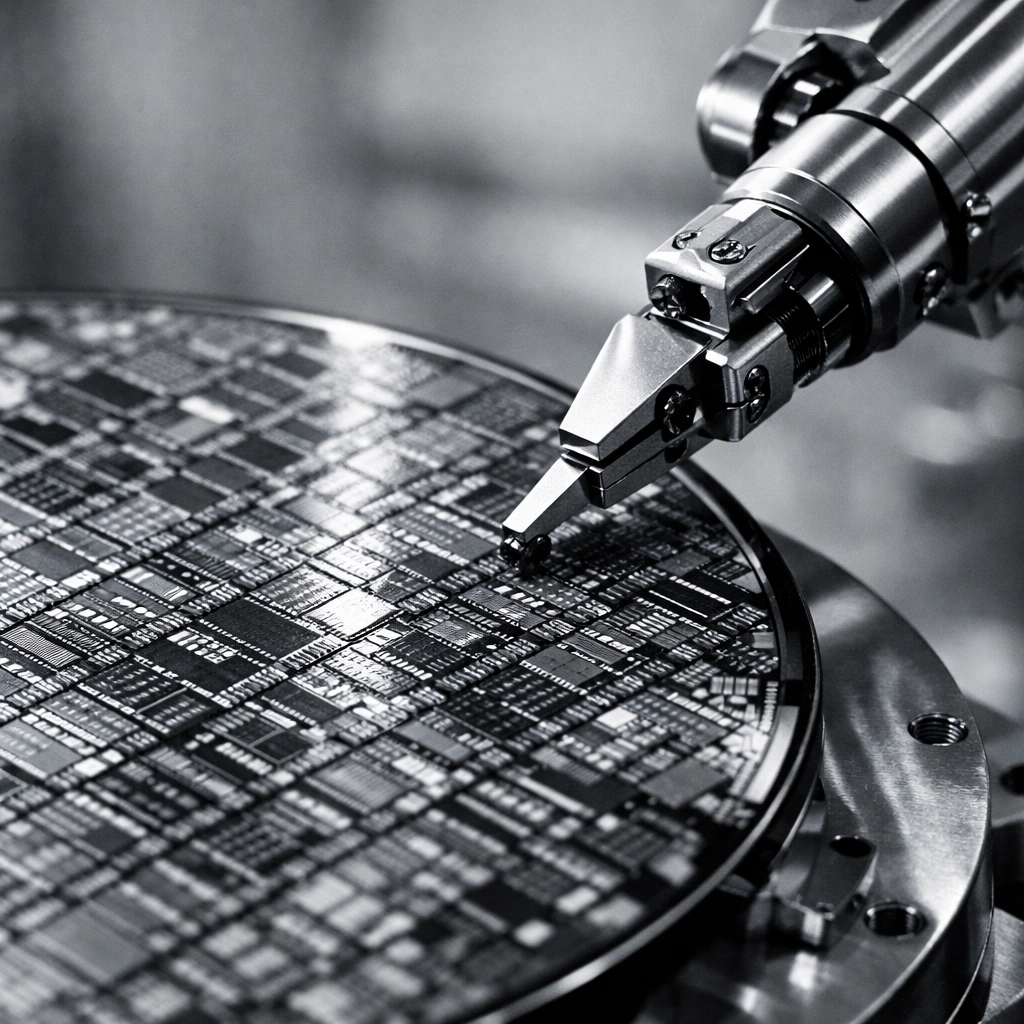
Photo: bcdW Editorial / Urban Innovation
The Human Element: Mobility and Talent
Capital moves fast, but talent often moves slow. The success of the Singapore-Seoul bridge depends heavily on the ability of founders, engineers, and strategists to move fluidly between these two hubs. This is where the concept of Global Human Mobility becomes more than just a HR term: it becomes a competitive advantage.
The fund isn't just about wire transfers. It’s about the seven Memorandums of Understanding (MOUs) that facilitate talent exchange, joint research, and cross-border regulatory sandboxes. If a Korean autonomous driving startup can test its algorithms on the streets of Singapore while maintaining its R&D core in Seoul, the time-to-market is slashed by years.
This fund acts as a catalyst for a new type of professional: the cross-continental operator. These are individuals who understand the manufacturing constraints of the Korean peninsula and the venture debt structures of the Singaporean market. They are the ones who will ultimately realize the ROI of this $300 million bet.
A New Model for the Americas?
While this fund is currently focused on the Asia-Pacific corridor, the implications for the Americas are profound. We are seeing a shift in how middle-power economies (like Korea) interact with global financial hubs (like Singapore). It provides a blueprint for how cities in the Americas: perhaps Miami or Mexico City: could eventually serve as similar "landing pads" for Asian deep tech looking for entry into the Western hemisphere.
The lesson for investors and founders is clear: the most consequential business decisions are no longer happening within national borders. They are happening in the spaces between cities. Seoul has recognized that to dominate the AI landscape, it must export its financial presence.

Photo: bcdW Editorial / Visionary Future
What’s Next for Founders?
For founders currently sitting in a co-working space in Pangyo or Seongsu-dong, the arrival of this fund changes the math. The goal is no longer just to be the best in Korea. The goal is to be the most "interoperable" startup in the region.
If you are building in the deep tech space, your strategy must now account for this Singaporean gateway. The AI investment in Singapore is not just a trend; it is the new baseline for institutional support.
The question isn't whether Korean tech is ready for the world. The question is whether founders are ready to manage a company that lives in the 6-hour flight gap between Seoul and Singapore: a gap that $300 million just made a lot smaller.
As we look toward the 2030 goal of a fully realized $300 million ecosystem, we expect to see the first wave of "Singapore-Sourced" Korean unicorns. They won't look like the giants of the past. They will be leaner, more specialized, and fundamentally global from day one.
In the end, bcdW doesn’t just cover the bridge. We show you what’s on the other side. And right now, the other side of the Seoul innovation engine is a $300 million office in downtown Singapore.
Source: The Korea Times (https://www.koreatimes.co.kr/www/tech/2024/10/129_383893.html)