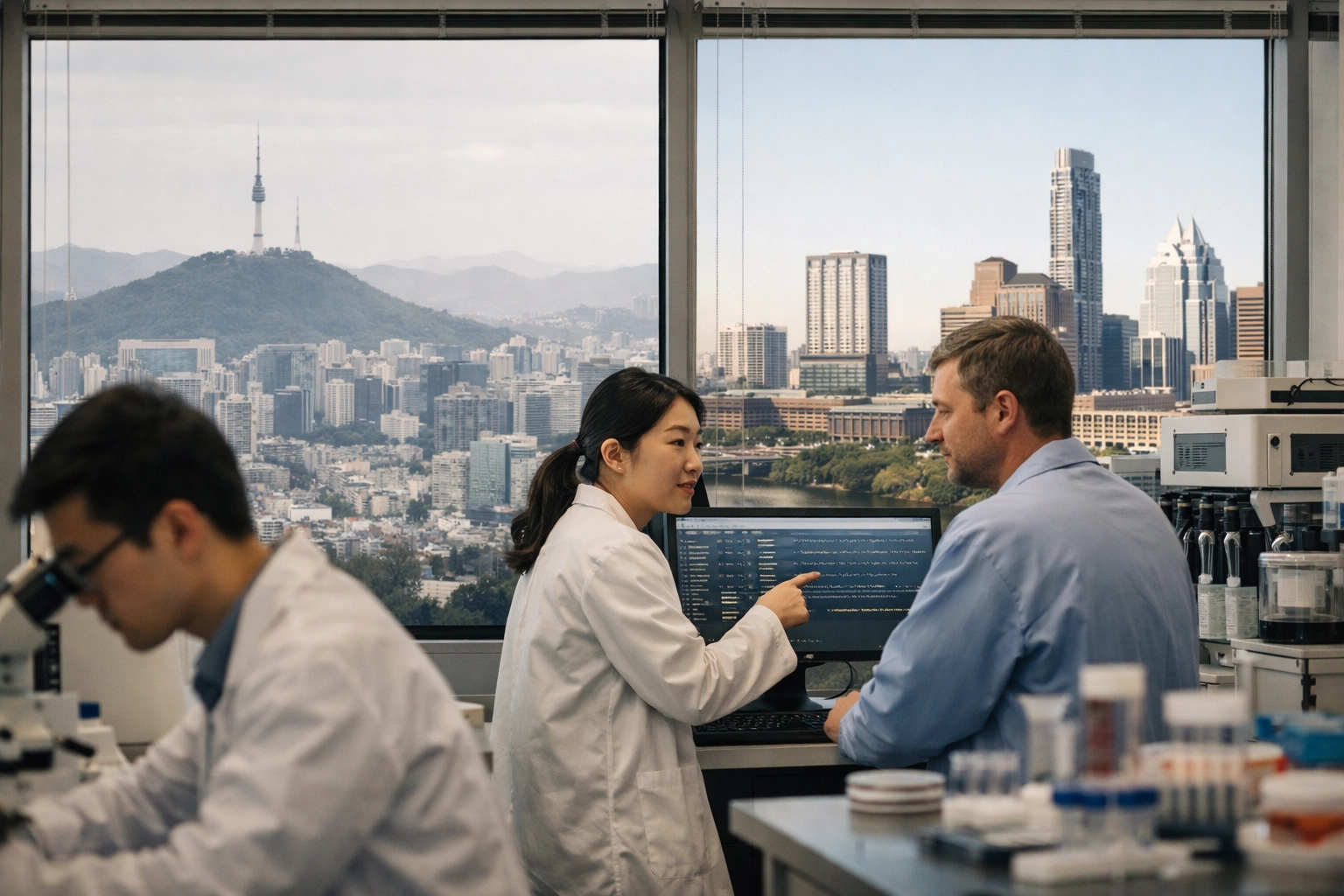
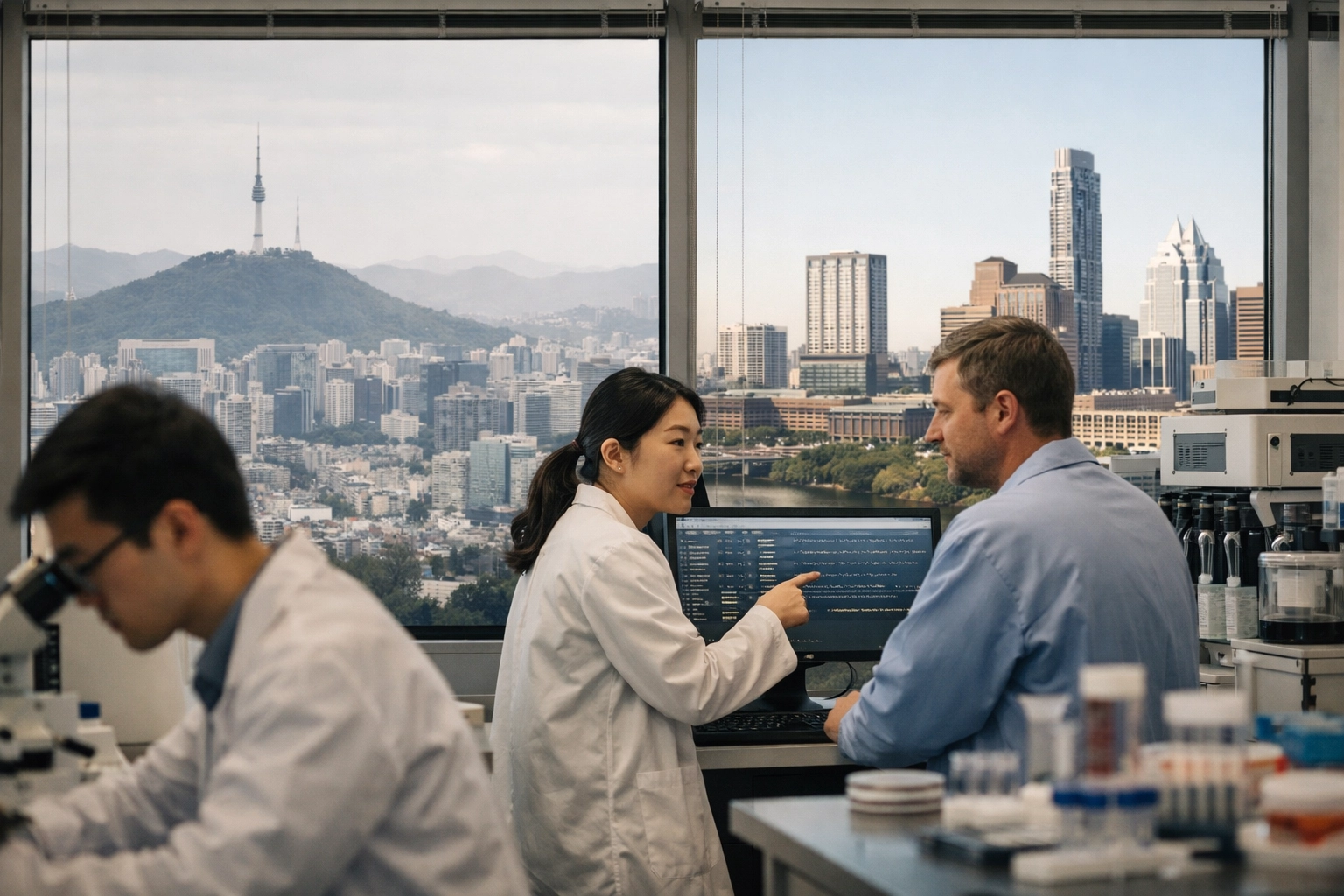
The traditional script for a global biotech expansion is predictable: a satellite office in Boston, a sales team in San Francisco, and a decade of navigating the fragmented regulatory landscape of the United States. But the most consequential movements in the 21st-century economy do not follow the scripts of the 20th. On February 5, 2026, the Austin City Council approved a 10-year Business Expansion Program agreement with 3billion, a Seoul-based leader in AI-driven rare disease diagnostics.
This is not merely a corporate relocation. It is the establishment of a trans-Pacific bridge: a convergence where Seoul’s high-velocity AI infrastructure meets Austin’s emerging life sciences ecosystem. By choosing Austin over the traditional coastal hubs, 3billion is signaling a shift in how Asian firms view the American market. It is a strategy rooted in geographic logic, fiscal benefits, and the pursuit of a specific kind of urban synergy.
The Lab as Infrastructure: Beyond the Test Tube
The partnership centers on a state-of-the-art genomic analysis laboratory located at 13620 Ranch to Market Road 620 in northeast Austin. Spanning nearly 13,000 square feet, the facility is designed to process up to 50,000 genetic tests annually. In the world of rare diseases: where the "diagnostic odyssey" for a patient can take years: speed and accuracy are not just business metrics; they are essential civic infrastructure.
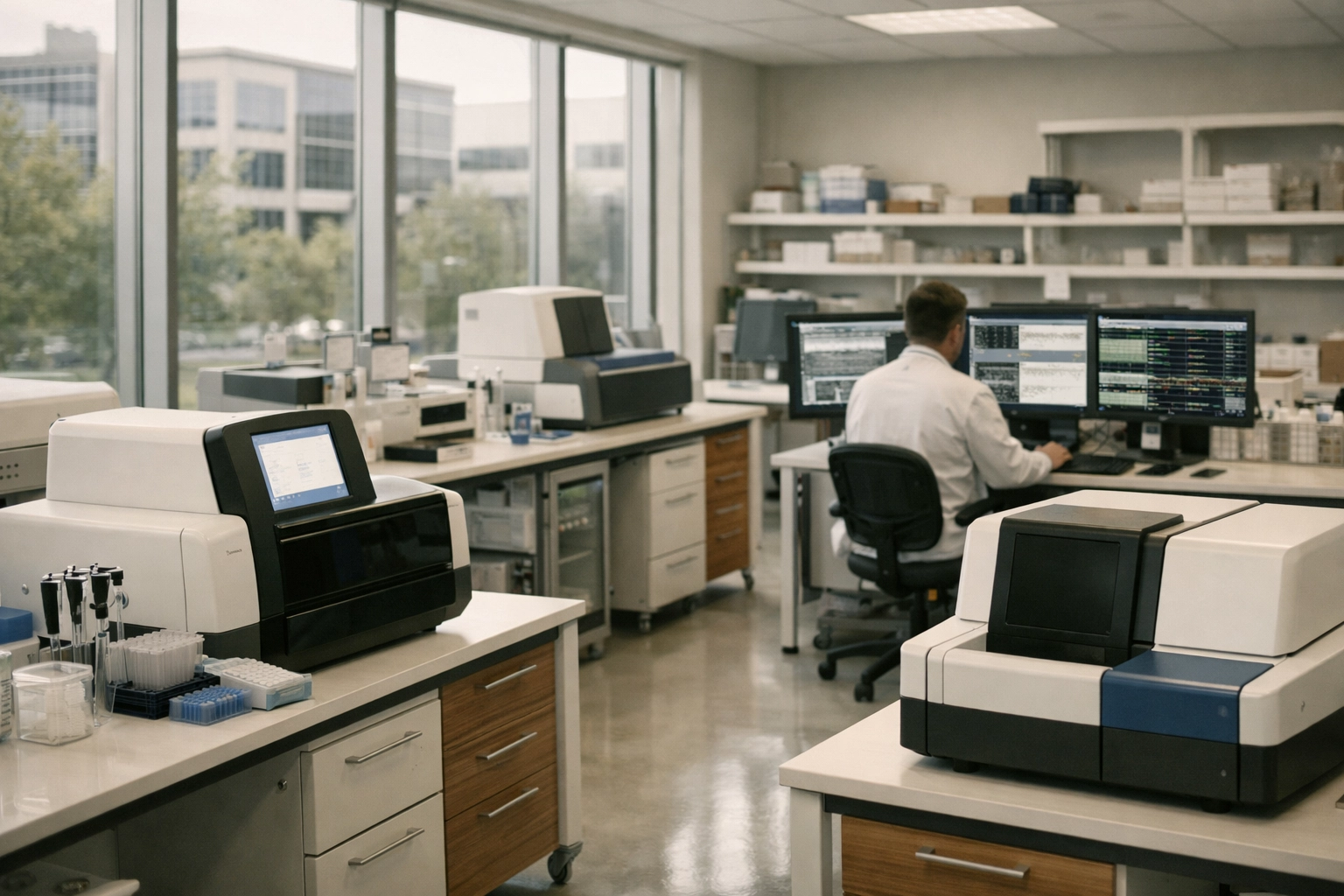
Photo: City of Austin Economic Development Department
The laboratory will utilize 3billion’s proprietary AI platform to interpret Next-Generation Sequencing (NGS) data. For the uninitiated, NGS generates massive volumes of genetic information, but the bottleneck has always been interpretation. 3billion’s entry into Austin represents the deployment of a "digital bridge" between South Korean computational efficiency and American clinical demand. By establishing its first North American operation and global sales hub in Texas, the company is effectively decentralizing the diagnostic power once reserved for a handful of elite coastal institutions.
The City-to-City Lens: Why Austin?
At bcdW, we believe the most vital business deals are forged between cities, not just nations. The Seoul-Austin connection is a case study in this philosophy. While Seoul offers an unparalleled density of tech talent and a culture of rapid AI iteration, Austin provides a gateway that is uniquely positioned within the Americas.
Austin's position as a "future city" makes it a strategic catalyst for any Korea market entry strategy. The city is not just a tech hub; it is a logistics and healthcare node with proximity to both the North American heartland and the burgeoning markets of South America. For 3billion, Austin serves as a sales hub that can look north to Canada and south to Brazil with equal clarity. This geographic fluidity is a core component of modern global mobility: the ability to position talent and technology where they can act as a lever for multiple regions simultaneously.
The deal itself is a masterpiece of local-to-local diplomacy. Under the performance-based agreement, the City of Austin will provide $1,000 per eligible job created, capped at $200,000 over the decade. For a project representing an estimated $8.1 million capital investment, the direct fiscal incentives are modest, but the long-term impact is profound. The project is projected to generate $2.3 million in fiscal benefits to the city, including property and sales tax revenues.
The Human Mobility Factor: 200 Jobs and a New Talent Nexus
Markets do not move unless people move. The establishment of the Austin lab will create 200 full-time jobs with an average annual salary exceeding $95,000. These are not just roles; they represent the movement of high-level intellectual capital between hemispheres.

Photo: 3billion IR / Corporate Communications
This is where global mobility consulting becomes critical. Bringing a South Korean AI firm to Texas involves more than just signing a lease. It requires a sophisticated understanding of how to bridge human systems. 3billion has committed to participating in local job fairs and community outreach, ensuring that the Seoul-based innovation is woven into the fabric of the Austin workforce. Furthermore, the company’s pledge to allocate 2% of its construction budget to local Austin artists reinforces the idea that a company is not an island; it is a participant in the local urban framework.
The timing is equally intentional. 3billion established its U.S. subsidiary in October 2025 and plans to launch full-scale sales and services in the second half of 2026. This deliberate cadence: Virtual presence → Local subsidiary → Physical lab → Scaled operations: is the blueprint for successful cross-continental expansion.
Redefining the Market Entry Strategy
For many South Korean firms, the U.S. market is often viewed as a monolith. However, 3billion’s move suggests a more nuanced approach. By anchoring in Austin, they are leveraging Texas’s concentrated healthcare networks and research infrastructure, such as the Dell Medical School and the broader University of Texas system. This is a move away from the "scattershot" expansion and toward a "cluster-based" strategy.
The significance of this partnership can be traced through the K-Dash initiative, which explores the rapid internationalization of Korean technology. We are seeing a pattern where Korean "deep tech": AI, robotics, and biotech: is no longer content to stay within the domestic market. They are seeking "landing zones" that offer more than just a customer base; they are seeking ecosystems that can co-evolve with their technology.
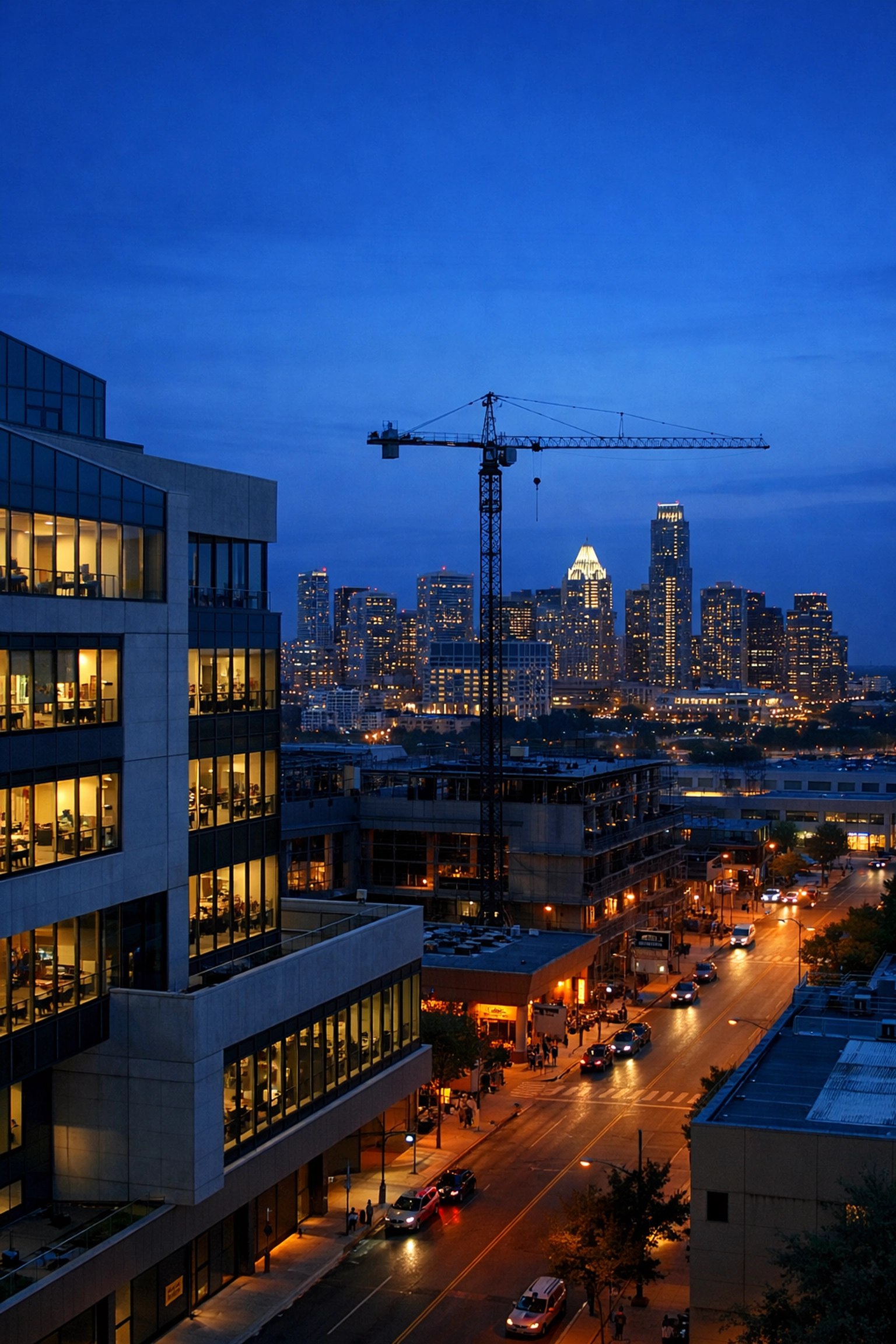
Photo: Texas Life Sciences Association / Austin Chamber of Commerce
Austin’s emergence as a life sciences hub is no accident. It is the result of intentional policy and a decade of "dot-connecting" by local leaders. When 3billion arrives, they aren't just bringing a diagnostic tool; they are bringing a methodology. This is the essence of the bcdW Concept & Case category: taking an idea from Seoul and executing it within the specific regulatory and cultural context of Austin.
The bcdW Perspective: A Convergence of Hemispheres
A genomic lab in Austin is not just a news item. It is a signal. It tells us that the friction between the Americas and Asia is decreasing, even as the complexity of the deals increases. We are moving toward a world where a patient in Medellín or Toronto might have their genetic data analyzed by an AI developed in Seoul, running in a lab in Austin, overseen by a team that moves fluidly between all three.
The question for founders and investors is no longer if they should cross the Pacific, but where they should land to maximize their reach. 3billion has chosen Austin. They have chosen a city that values both the creative economy and the hard sciences. They have chosen a location that allows them to play a role in the future of the SXSW ecosystem, where technology and culture have long been intertwined.
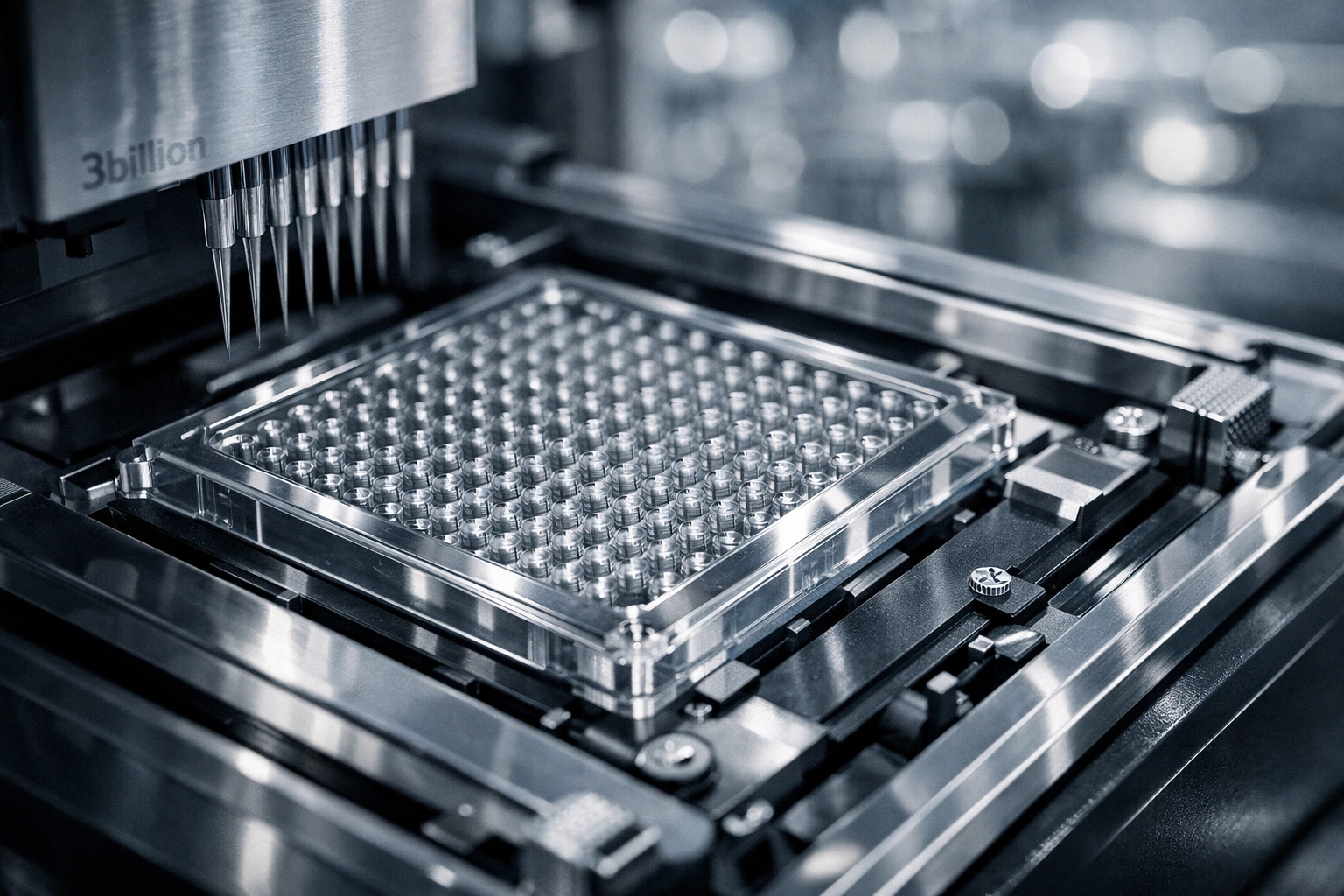
Photo: Unsplash / Laboratory Context
As 3billion prepares for its 2026 launch, the global biotech community will be watching. This isn't just about rare disease diagnostics. It is about whether a Korean firm can successfully navigate the "city-to-city" path to American dominance. If 3billion succeeds, the path from Seoul to Austin will become a highway.
The Next Dot to Connect
The 3billion-Austin partnership is a reminder that in the 21st century, the most consequential economic connections run between the Americas and Asia. We see a future where more Korean firms bypass the traditional coastal filters and head straight for the heart of the "Silicon Hills."
Is your organization prepared for the shift toward city-to-city expansion? The challenge is not just in the technology, but in the human mobility and the cultural interpretation required to make these connections stick. The Seoul-Austin bridge is now open. The question is: who is moving next?
Summary:
Seoul-based AI biotech firm 3billion has partnered with the City of Austin to establish a 12,994-square-foot genomic analysis lab. This 10-year agreement marks 3billion's strategic entry into the North American market, creating 200 high-paying jobs and positioning Austin as a global hub for rare disease diagnostics.
Excerpt:
Seoul’s AI-biotech leader 3billion is anchoring its North American expansion in Austin, Texas. This 10-year partnership transforms a local lab into a global hub for rare disease diagnostics, bridging the gap between Asian innovation and American scale.
Category: News, Americas
Tags: Austin, Biotech
Source: Austin Business Journal (https://www.bizjournals.com/austin/news/2026/02/05/3billion-austin-genomic-lab-incentives.html)