
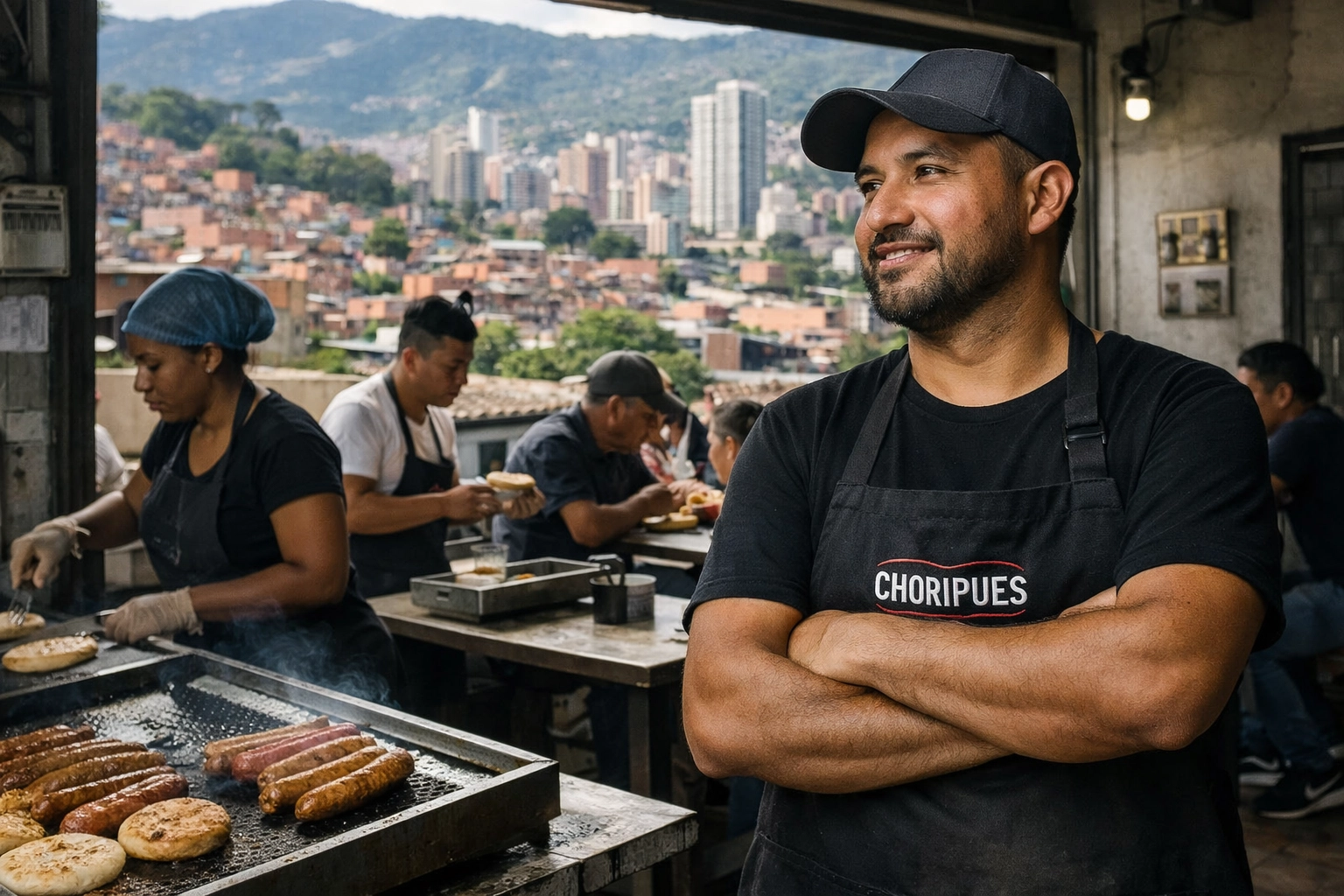
In the standard narrative of urban economic development, "inclusion" is frequently relegated to the footnotes of corporate social responsibility reports. It is often treated as a peripheral benefit: a charitable "add-on" to the core mechanics of profit and loss. However, in the heart of Medellin, a city that has long functioned as a laboratory for urban resilience and social innovation, a business called 'Choripues' is dismantling this familiar script.
Choripues is not a non-profit organization. It is a thriving, scalable business model that serves a fundamental culinary staple of the Colombian street: the choripán. But its product is secondary to its methodology. Operated entirely by deaf and hard-of-hearing individuals, Choripues is proving that inclusive employment is not a humanitarian gesture, but a strategic catalyst for operational excellence.
Redefining the Service Interface
The traditional service industry relies heavily on verbal cues, a reality that has historically barred the deaf community from front-of-house roles. Hernán Céspedes, the 42-year-old entrepreneur behind Choripues, viewed this not as an insurmountable obstacle, but as a design challenge. Inspired by his sister, Lina María Céspedes, who is deaf, Hernán spent three years researching and refining a system that could bridge the communication gap between hearing customers and non-hearing staff.
The result is the "Manos que Hablan" (Hands that Speak) service model. It is a masterclass in intuitive design. Rather than forcing the employee to adapt to a world that refuses to listen, the model invites the customer to engage in a shared, visual language.
When a customer approaches a Choripues stand in high-traffic locations like Centro Comercial Mayorca or Premium Plaza, the interaction is characterized by clarity. Customers point to items on a visual menu. The workers, who first introduce themselves and explain their hearing disability through signage, prepare the order with a level of focus and efficiency that has become the brand’s hallmark. Upon completion, a sign reading "Thank you for your purchase" closes the loop. It is a seamless, dignified exchange that eliminates the friction of verbal misunderstanding.
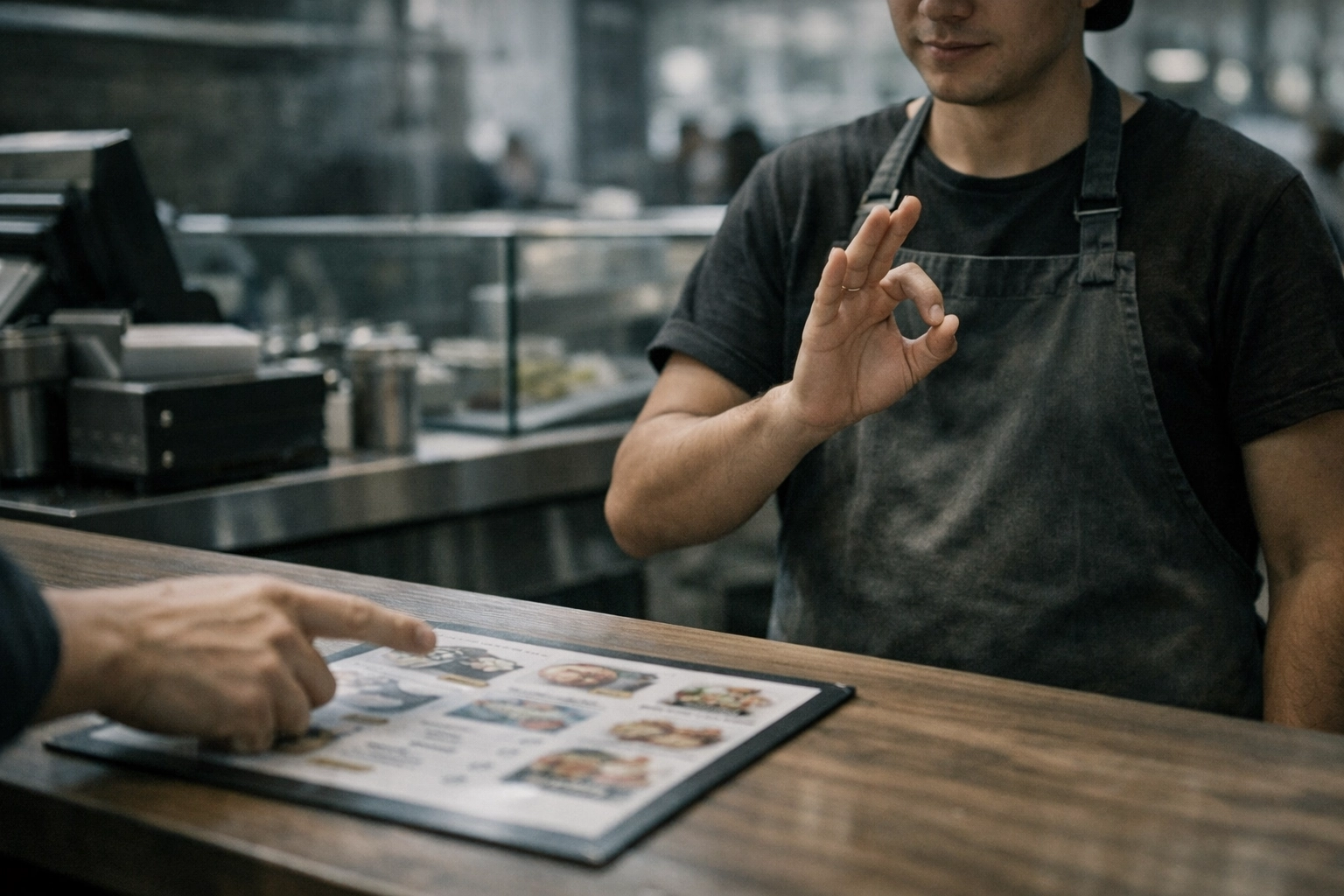
Photo: Choripues Official / Hernán Céspedes
The Infrastructure of Inclusion
In Medellin, a city where the urban framework is constantly being redesigned to foster social integration, Choripues represents a micro-level success with macro-level implications. The venture currently operates across three major shopping centers: Centro Comercial Mayorca, Premium Plaza, and Puerta del Norte. These are not quiet corners; they are the pulsating centers of Medellin’s retail economy.
By situating an inclusive business in these premium environments, Céspedes is making a profound statement about the visibility of disability in the workforce. This is not about hidden back-room jobs; it is about front-facing, active participation in the local economy.
Currently, the business employs five deaf workers. Crucially, these positions are not informal labor. In a region where informality often plagues the service sector, Choripues employees receive regular salaries and full social security benefits. This formalization of labor is a critical "dot" to connect: when we talk about human mobility, we must include the upward mobility of those previously sidelined by systemic barriers.
At bcdW, where our global mobility consulting often focuses on the complex legal and logistical hurdles of moving talent across international borders, Choripues serves as a reminder that the most significant "mobility" often occurs within the square footage of a single city block. It is the movement from exclusion to agency.

Photo: Medellin Urban Development Archive
Scaling the Model: From Local Pilot to National Strategy
The ambition for Choripues extends far beyond the borders of Antioquia. Céspedes has outlined a rigorous expansion strategy that seeks to position Choripues as a dominant brand in major Colombian hubs, including Bogotá, Barranquilla, Cali, and Bucaramanga.
The long-term vision includes a presence in airports and major sports venues: territories usually reserved for multinational franchises with deep pockets. The challenge, as Céspedes acknowledges, is the barrier of entry: the high cost of rent in premium transit hubs. However, the business logic remains sound. In an increasingly automated world, the "human touch" of the Choripues model provides a unique brand identity that cannot be replicated by a kiosk or a screen.
This is the "Not X, but Y" of modern entrepreneurship. Choripues is not just selling sandwiches; it is selling a successful methodology for inclusive company building. It is a case study for any investor or founder looking to solve labor shortages by tapping into overlooked talent pools.
The Global Signal
While Choripues is a localized success in Medellin, it sends a signal that resonates globally. From Vancouver to Jakarta, cities are grappling with the same fundamental question: How do we create an economy that works for everyone?
In many Western markets, "diversity and inclusion" have become buzzwords that often lose their teeth in the transition from the boardroom to the shop floor. Choripues reverses this. It started on the shop floor, with a practical, lived understanding of the barriers to employment. It then built a business around those barriers, turning them into a competitive advantage.
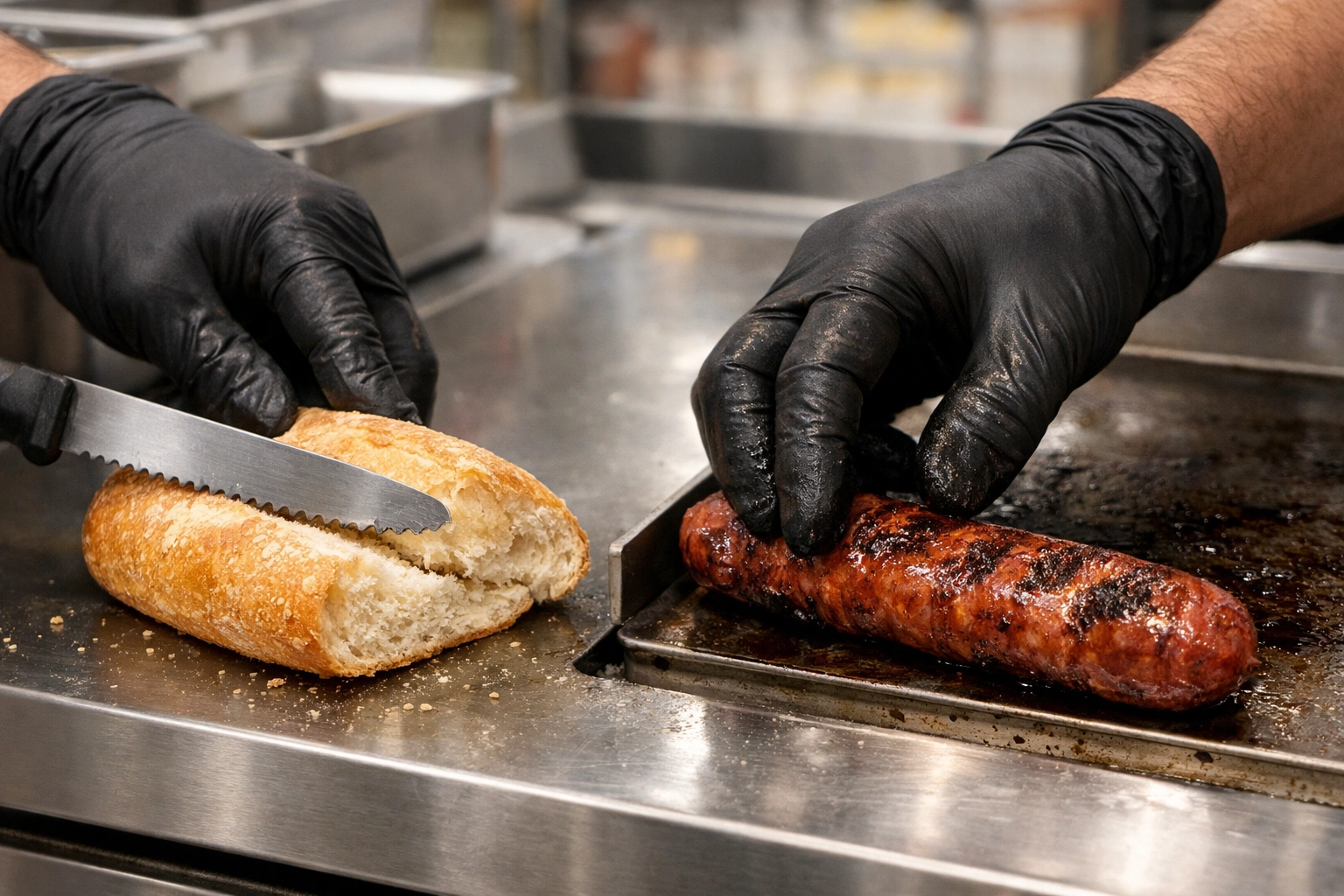
Photo: Latin American Business Review
The success of Choripues highlights a shift in the concept and case studies we track at bcdW. We are seeing a convergence between social impact and lean operational design. When you remove verbal noise from a high-speed food service environment, you don't just create an inclusive space: you create a more focused, efficient production line.
A Convergence of Paths
Where do the marginalized go when the traditional gates of the economy are closed? Historically, they have been pushed to the fringes, into charity-dependent roles or the precarious informal market. Choripues offers a third path: the path of the entrepreneur.
The business reflects the core philosophy of bcdW. It connects the dots between a social necessity (employment for the deaf) and a market demand (high-quality, accessible street food). It bridges the gap between the personal struggle of a family member and a scalable campaign for national expansion.
As Medellin continues to redefine itself as a hub for global business and digital nomadism, it must not lose sight of the grassroots innovations that built its reputation for resilience. The "Manos que Hablan" model is a reminder that the most consequential business relationships are built on communication: even, and perhaps especially, when that communication is silent.
The question is no longer whether an inclusive model like this can work. Choripues has proven it can, in one of the most competitive retail environments in the Americas. The question is who will move first to adopt this level of intentionality in other sectors. Whether it is a fintech startup in São Paulo or a manufacturing plant in Vietnam, the lesson from Medellin is clear: the most efficient system is the one that leaves no talent behind.
The Urban Framework of Tomorrow
Looking forward, the success of Choripues will likely inspire a new generation of founders in the Americas to look closer at their own cities' "invisible" populations. If five workers in a Medellin mall can redefine the service interface of an entire industry, what could a thousand workers do across a continent?
The dots are there. They are in the shopping centers of Medellin, the tech parks of Bangalore, and the logistics hubs of Panama. The role of the modern strategist is to connect them: not out of a sense of obligation, but out of a recognition that our urban frameworks are only as strong as the people we allow to build them.
Source: El Colombiano (https://www.elcolombiano.com/antioquia/choripues-el-negocio-de-chorizos-en-medellin-que-emplea-a-personas-sordas-GA22456485)
Category: News, Americas
Tags: Medellin, Entrepreneurship
Industry: Social Impact
City: Medellin
Summary:
Choripues is a Medellin-based chorizo sandwich business that has successfully integrated deaf and hard-of-hearing employees into its core operations through the "Manos que Hablan" service model. Founded by Hernán Céspedes, the company operates in major shopping centers and plans to expand nationally, proving that inclusive hiring is a viable and profitable business strategy.
Excerpt:
Medellin’s 'Choripues' is redefining the service industry with a model operated entirely by deaf staff, proving that inclusive design is a strategic business advantage. By formalizing labor and scaling across major shopping centers, this Colombian startup provides a blueprint for social integration in the modern urban economy.