Category: News
Tags: Medellín, Fashion
Excerpt:
The retail bridge between New York’s gritty creative heart and Medellín’s burgeoning design scene is being redefined by Abadia’s unique cross-continental presence. This is not merely a store opening; it is a strategic signal of a new "local-to-local" aesthetic exchange between two of the world's most vibrant creative hubs.
The map of global influence is no longer being redrawn in the sprawling boardrooms of capital cities or the sterile glass towers of midtown Manhattan. Instead, the most consequential shifts are happening in the intimate, high-density spaces of neighborhoods that speak the same cultural language. Today, that conversation is happening between the East Village in New York City and the lush, steep streets of Medellín, Colombia.
At the center of this convergence is Abadia.
Abadia is not just a boutique; it is a diplomatic outpost for a new kind of creative economy. By establishing a presence that bridges the gritty, historic bohemianism of NYC’s East Village with the sophisticated, artisan-led transformation of Medellín, the brand is demonstrating a core bcdW thesis: the future of business is not national, but city-to-city.
The East Village DNA: A Legacy of Curation
To understand the Abadia connection, one must first understand the East Village. This is not the New York of Fifth Avenue or even the hyper-gentrified corners of modern Brooklyn. The East Village remains a bastion of the "small-scale," a neighborhood where the currency is curation and the "store the size of a room" is the standard unit of retail excellence.
In this environment, every square foot must perform. Every garment, every object, must tell a story that justifies its place in such a high-rent, high-scrutiny environment. This is where the Abadia aesthetic was forged: a commitment to the "slow" and the "intentional" in a city that usually demands the opposite.
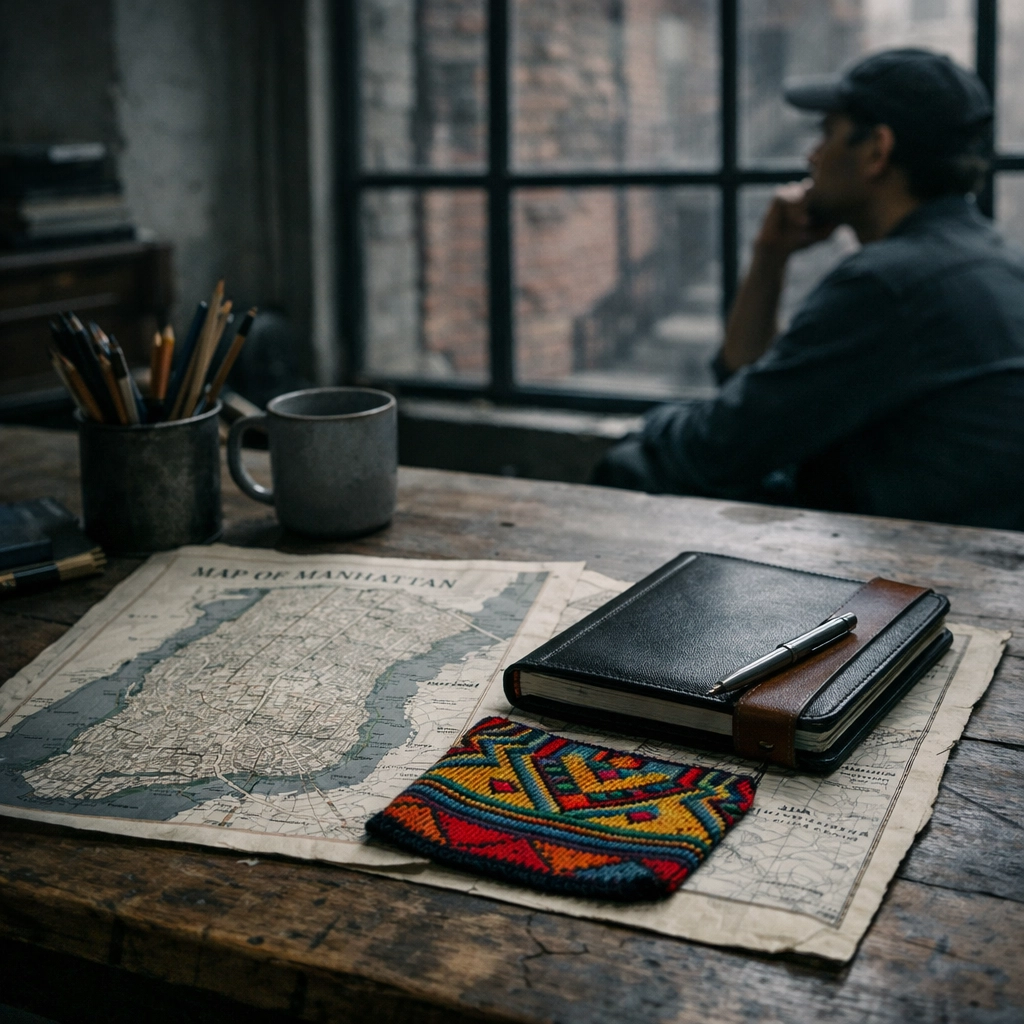
Photo: Abadia
When a brand survives and thrives in the East Village, it develops a specific kind of civic infrastructure. It becomes a hub for a global creative class that values the "human element" over mass-market efficiency. This demographic: founders, designers, and strategists: moves fluidly between continents. They are the primary drivers of what we at bcdW call "Global Human Mobility." They don't just travel; they transplant ideas.
Medellín: The Rise of the Future City
While New York provides the legacy of curation, Medellín provides the energy of the "Future City." For decades, the narrative surrounding Medellín was focused on crisis and recovery. But for the strategist, that familiar script is outdated. Today, Medellín is a case study in how "civic infrastructure" can be redefined through design and social innovation.
Medellín’s fashion industry is not just about textiles; it is about a sophisticated manufacturing ecosystem that is increasingly attracting global attention. However, the connection between Abadia and Medellín goes deeper than supply chains. It is about a shared recognition of "humanistic values" in design.
In Medellín, design is a tool for urban transformation. In the East Village, design is a tool for cultural preservation. When these two worlds meet, the result is a "strategic catalyst" for a new type of luxury: one that is rooted in local craft but scaled for a global audience.
Not a Retail Strategy, but a Systemic Convergence
The traditional retail model would view Abadia’s presence in both cities as a simple expansion. But at bcdW, we view it as a systemic convergence. A boutique in the East Village serves as a "signal" to the North American market, while a presence in Medellín serves as an "anchor" in the Latin American creative heartland.
This is the "Not X, but Y" of modern commerce. Abadia is not selling clothes; it is facilitating a transfer of cultural capital.
- Not a store, but a bridge.
- Not a collection, but a conversation.
- Not a consumer, but a participant in a cross-continental ecosystem.
By operating in both spheres, Abadia circumvents the traditional "top-down" approach of global fashion houses. They are not a behemoth attempting to conquer a market; they are a local entity in two places at once. This "local-to-local" model is significantly more resilient to global supply chain shocks and more attuned to the shifting desires of the modern "sophisticated peer" reader.
The "Store the Size of a Room" Philosophy
The concept of "A Store the Size of a Room" is central to this narrative. In both the East Village and Medellín’s El Poblado neighborhood, physical space is at a premium. But physical constraints often lead to the highest levels of innovation.
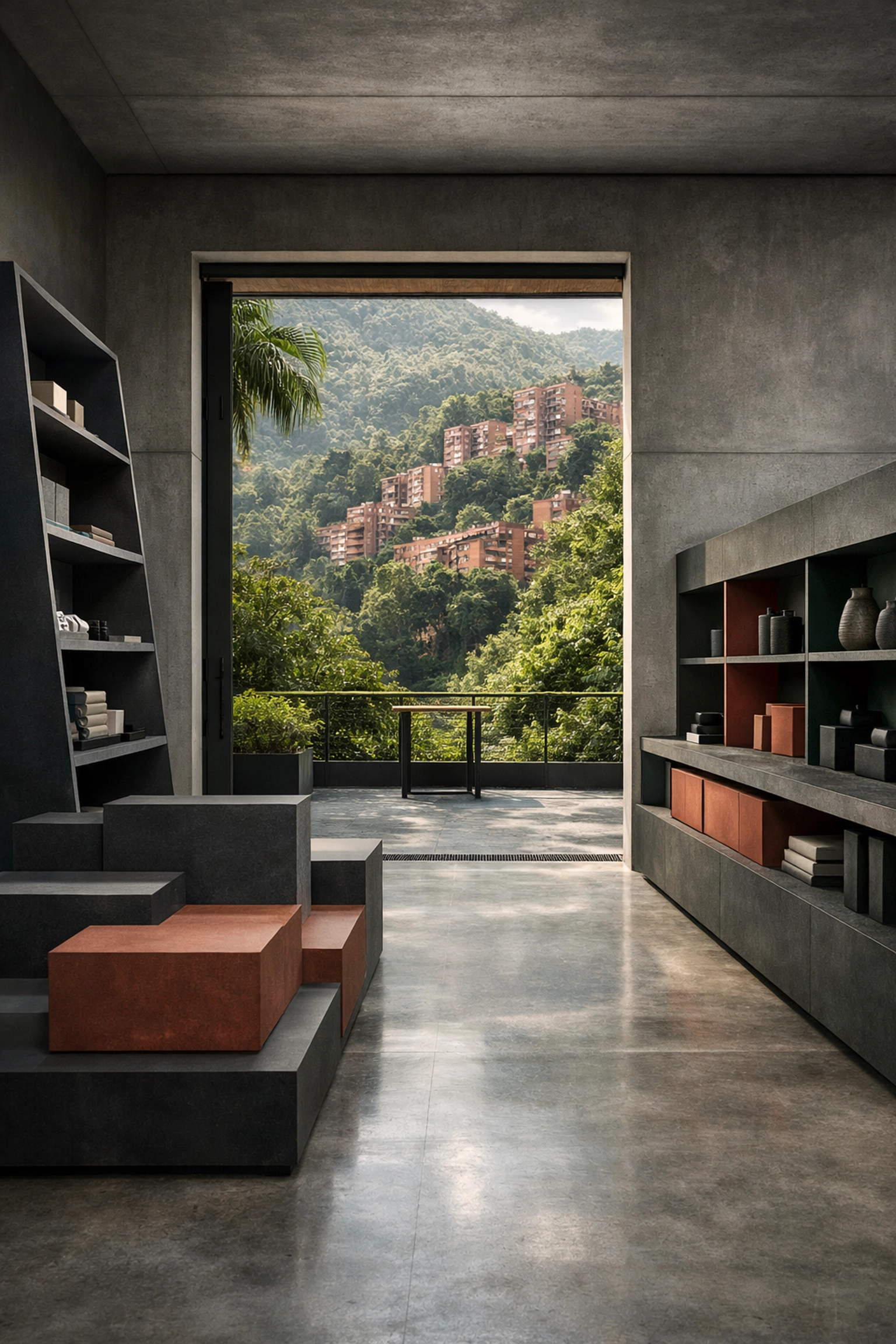
Photo: Abadia
When space is limited, the brand must become a "designer of the agenda itself." Every interaction within that room is a data point. The "store the size of a room" is, in fact, an idea that has no limit. It allows for a level of intimacy and feedback that a 10,000-square-foot flagship can never replicate. For Abadia, this small-scale approach is the "civic infrastructure" of the brand. It builds trust, one conversation at a time, whether that conversation is happening in English on 9th Street or in Spanish on Vía Primavera.
The Strategic Signal for Investors and Founders
What does the Abadia connection signal to the wider business world? It suggests that the most valuable "dots" to connect right now are those that link high-trust creative communities across the Americas.
For the founder, it proves that "market-entry" doesn't have to mean "mass-market." You can build a brand in Medellín and find your peer group in the East Village by focusing on the shared values of craftsmanship and urban identity.
For the investor, it highlights a trend toward "micro-globalization." This is the movement of capital and talent between specific nodes of excellence rather than broad geographic regions. Investing in the East Village-Medellín corridor is not a bet on a country; it’s a bet on a specific lifestyle and the "platform infrastructure" that supports it.
The bcdW Perspective: Tracing the Line
At bcdW Magazine, our job is to reveal these invisible lines. We see the Abadia connection as a precursor to a much larger movement. As "Global Human Mobility" increases, we will see more brands that belong to two cities rather than one nation.
We are moving toward a reality where a designer in Medellín is more influenced by a gallery opening in the East Village than by a trade show in their own capital city. This is the "two continents, one lens" philosophy in action.
Where do the creative minds of the future go to find their peers? They go to the places where the "dots" are already being connected. They go to the small rooms that contain the biggest ideas.
Conclusion: The Unanswered Question
The success of the Abadia connection forces us to confront a fundamental question about the future of global business:
As digital tools make the world feel smaller, will the value of "physical place" and "local identity" actually become our most precious commodity?
Abadia has already placed its bet. By bridging the East Village and Medellín, they have shown that the most powerful connections are those that respect the grit of the street as much as the polish of the product. The question is no longer whether this "local-to-local" model works. The question is which city-to-city bridge will be built next.
Source: bcdW Magazine (https://bcd-w.xyz/p/a-store-the-size-of-a-room-an-idea-that-has-no-limit)