The history of food has always been a history of extraction. For ten millennia, the human caloric intake has relied on the surface of the planet: the thin, vulnerable layer of topsoil and the predictable rhythms of the seasons. But in a small retail footprint in Singapore, that ten-thousand-year-old script is being rewritten.
Ajinomoto, the Japanese titan of amino science, is no longer just looking at the earth for ingredients. It is looking at the air.
With the launch of Mochelie, a line of mochi-filled almond tarts, Ajinomoto is signaling more than just a new product line. It is debuting a fundamental shift in the metabolic relationship between the city and the planet. By utilizing Solein: a protein grown from carbon dioxide, hydrogen, and oxygen: Ajinomoto is proving that the future of the Global CPG (Consumer Packaged Goods) industry does not lie in more efficient farming, but in the complete decoupling of food production from the land.
The Singapore Sandbox: Why the City is the Catalyst
To understand why this is happening in Singapore and not in Tokyo or New York, one must look at the city as an urban framework for survival. Singapore is a nation-state with a singular obsession: food security. Their "30 by 30" goal: to produce 30% of their nutritional needs locally by 2030: has turned the island into a global laboratory for "Future Food."
Singapore was the first to approve cultivated meat; now, it is the first to prove that "protein from air" is a commercially viable retail category. For a company like Ajinomoto, Singapore represents a "regulatory bridge." It is the place where the conceptual becomes the consumable.
This is not a peripheral experiment. It is a strategic pivot. By testing these biotech-heavy concepts in a high-density, tech-literate urban environment like Singapore, Ajinomoto is gathering the data necessary to scale across the Pacific. The dots are clear: the innovation happens in the Singaporean lab, the branding is refined through Japanese aesthetics, and the eventual target is the massive, sustainability-starved markets of the Americas.
The Architecture of the Mochelie: Japanese-French Fusion
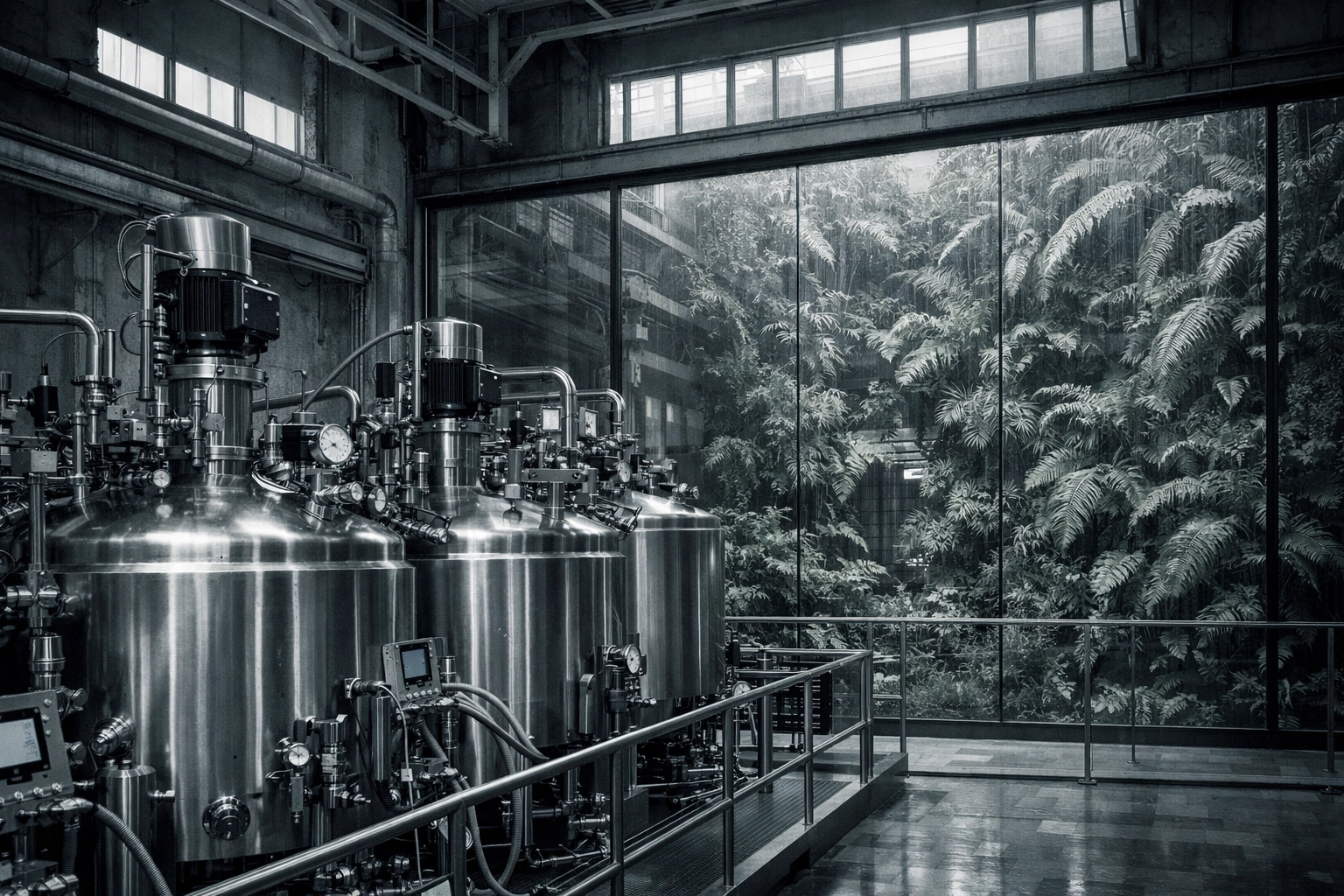
The product itself, Mochelie, is a study in "Cultural Convergence." The name: a portmanteau of the Japanese "mochi" and the French "chérie": reflects a sophisticated design philosophy that moves beyond the typical utilitarian aesthetic of "vegan" or "lab-grown" food.
Ajinomoto is not selling a "science project." They are selling an indulgence. The Mochelie features a brisée cookie base, a rich almond tart filling, and a soft mochi center. It comes in three distinct flavor profiles:
- Yuzu Fromage: A bright, citrus-driven profile that leverages the Japanese obsession with seasonal aromatics.
- Sesame Noir: A deep, nutty earthiness that grounds the high-tech origins of the ingredients.
- Azuki Matcha: A classic nod to heritage, bridging the gap between ancient traditions and futuristic protein.
What makes the Mochelie a bcdW Concept & Case study is its efficiency. By integrating Solein, Ajinomoto has managed to reduce the dairy, egg, and butter content to less than one-third of a traditional pastry without compromising the "mouthfeel" that consumers demand. This is the "Not X, but Y" of modern food: it’s not a compromise on taste; it’s an optimization of resources.
Solein: The Invisible Revolution
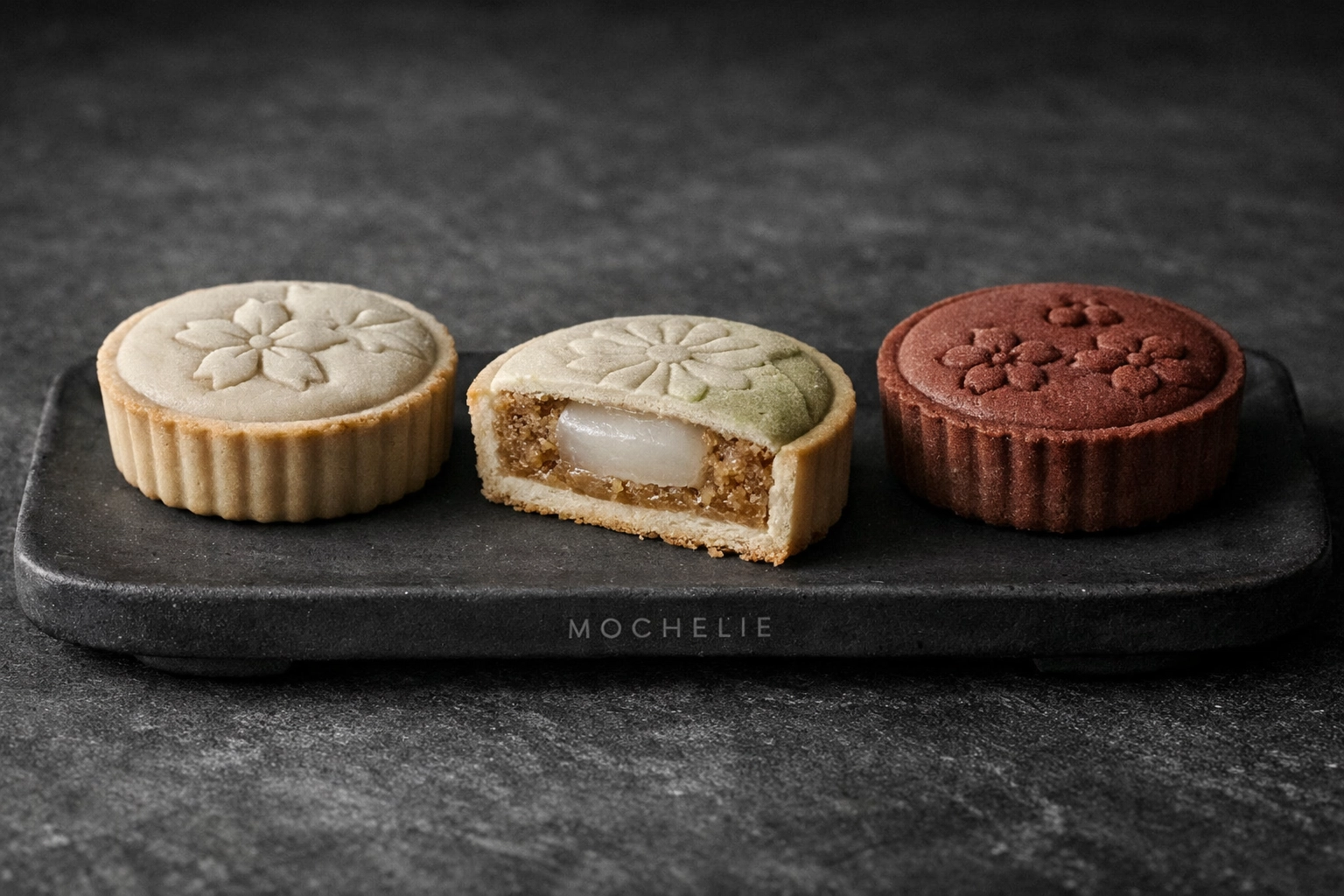
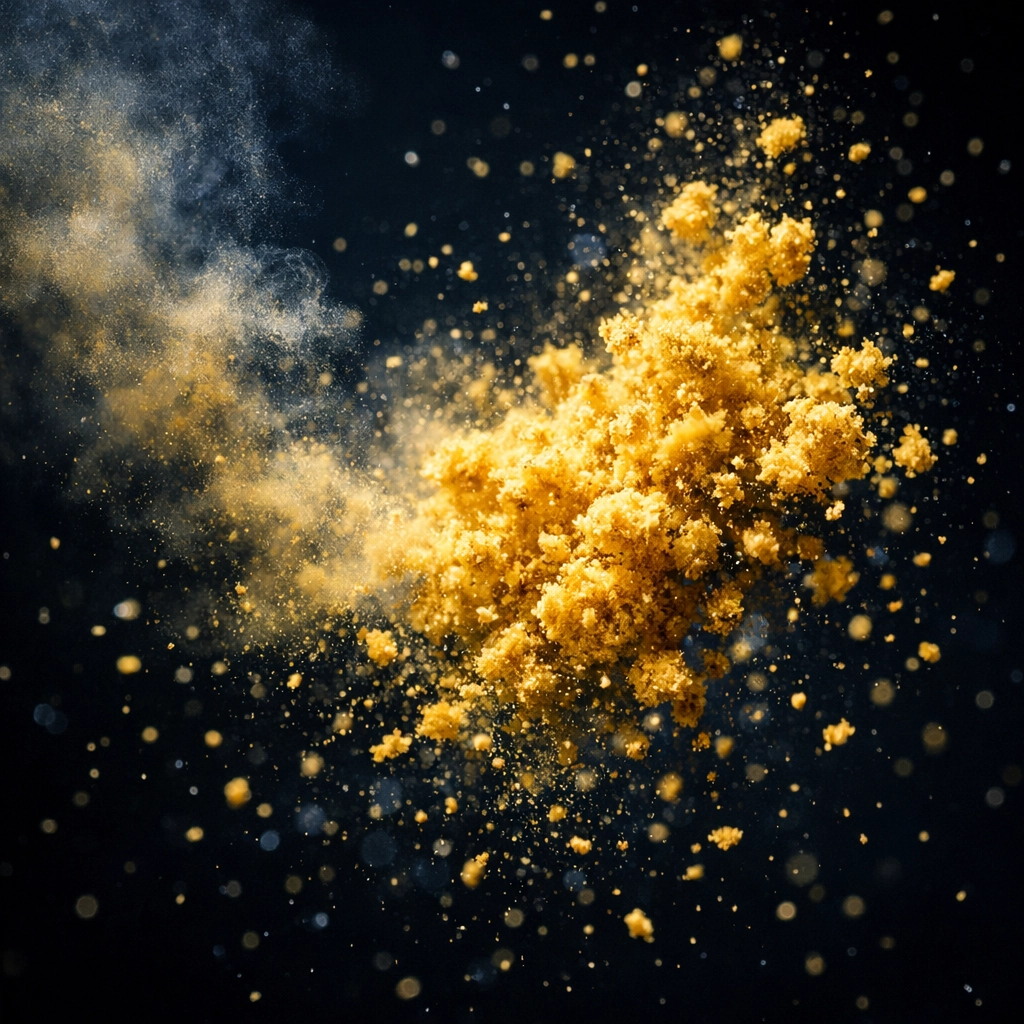
At the heart of this product is Solein, produced by the Finnish biotech firm Solar Foods. Solein is created through precision fermentation: a process where microbes are "fed" CO2, hydrogen, and minerals. The result is a yellow powder that contains 65-70% protein and a nutrient profile similar to dried soy or algae.
However, Solein’s true value is its environmental footprint. It is 100 times more climate-friendly than any animal or plant protein currently on the market. It requires no land, no pesticides, and minimal water.
For the global strategist, Solein represents the ultimate "Local-to-Local" tool. Because the production facility can be placed anywhere: a desert, a skyscraper, or a cargo ship: it removes the supply chain volatility that currently plagues the global food market. When you can grow protein from the air inside a city’s limits, the bridge between production and consumption is shortened to a few kilometers of urban infrastructure.
From Mooncakes to Coffee: The Atlr.72 Roadmap
Mochelie is just the latest chapter in the rollout of Atlr.72, Ajinomoto’s global sustainable brand. The strategy has been measured, intellectual, and cumulative:
- September 2024: Launch of Flowering Mooncakes and Ice Cream Sandwiches in Singapore.
- 2025: Introduction of Flowering Ice Cream.
- October 2025: The launch of GRe:en Drop Coffee, a dairy-free iced latte that blends standard coffee with "beanless" coffee and Solein.
- Mid-2026: The opening of a flagship store in Singapore and the global expansion into meals and daily food options.
This sequence is intentional. Ajinomoto is building a lifestyle brand, not just a product line. They are following the pattern of high-end fashion or automotive brands: start with "halo" products (desserts, seasonal gifts) to build cultural capital, then move into the high-volume "daily life" categories.
By 2026, the goal is for Atlr.72 to move beyond the Singaporean border. The brand is positioned to enter the US and European markets as a premium, biotech-enabled alternative to the increasingly crowded and often uninspired "plant-based" sector.
The Trans-Pacific Signal: A Case for CPG Innovation
Why should a founder in Bogotá or an investor in San Francisco care about a mochi tart in Singapore? Because the Mochelie is a signal of the Next Now.
In the Americas, we are seeing a crisis of confidence in the first generation of "meat alternatives." Consumers are weary of long ingredient lists and highly processed "fake" burgers. Ajinomoto’s approach offers a different path: Extreme Minimalist Biotech. By using precision fermentation to create a pure protein source and then integrating it into high-quality, culturally resonant food forms (like French pastry or Japanese mochi), they are bypassing the "uncanny valley" of food technology.
Furthermore, this represents a new model for Asian giants entering Western markets. Instead of exporting their existing domestic products, they are using Singapore to develop a "Global Heritage" brand: one that feels Japanese in its precision, French in its culinary elegance, and Singaporean in its technological ambition.
Redefining the Urban Metabolism
We often talk about the revitalization of urban spaces through the lens of retail or housing. But we must also talk about the city's metabolism: how it eats, breathes, and processes waste.
A city like Singapore, which must import almost everything, is a city in a state of perpetual risk. By localizing protein production through precision fermentation, the city-state is building a form of "biological resilience." Ajinomoto is the commercial arm of this civic infrastructure.
When you walk into an Atlr.72 store in 2026, you won't just be buying a snack. You will be participating in a closed-loop system where the CO2 emitted by the city becomes the protein that feeds the city. This is the "Sim-Eternal City" framework in action: a system that refuses to accept the limitations of its geography.
The Question for the Global Boardroom
The launch of Mochelie forces us to confront a fundamental question: Is your supply chain built for a world of extraction, or a world of synthesis?
For decades, the "bridge" between the Americas and Asia was a bridge of shipping containers filled with raw materials. One side grew the food; the other side processed and consumed it. But as Ajinomoto and Solar Foods are proving, that bridge is becoming digital and biological. The "raw material" is no longer the soil of the Midwest or the palm oil of Indonesia. The raw material is the carbon in the air and the code in the fermenter.
As we move toward the mid-2026 global rollout of the Atlr.72 brand, the challenge for CPG leaders in the West is not just to compete with these products, but to understand the "dot-connecting" logic that created them.
The Mochelie is not just a mochi. It is a manifesto. It is the sound of a thousand-year-old agricultural script being torn up, and a new, atmospheric one being written in its place. The only question is: who will be the first to bring this air-to-table revolution to the streets of New York, Mexico City, or São Paulo?
The dots are connected. The signal is clear. The air is ready.