Tokyo didn’t just send a shipment of snacks to Los Angeles; it bought the factory.
For decades, the narrative of Japanese Consumer Packaged Goods (CPG) in the United States followed a predictable, linear script: manufacture in the Kantō region, navigate the logistics of trans-Pacific shipping, and hope to find a niche in the "International" aisle of a premium grocer. It was an export model built on scarcity and specialty status.
Morinaga Seika, the 125-year-old titan of Japanese confectionery, just tore up that script. With a strategic 20-billion-yen ($135 million) acquisition of a U.S.-based ice cream manufacturer, the company is signaling that the era of "exporting culture" is over. We have entered the era of "localizing infrastructure."
This move is not merely a corporate expansion; it is a clinical execution of the "Local-to-Local" strategy: a blueprint for how heritage Asian brands are bypassing the friction of global supply chains to own the American freezer aisle.
The 20-Billion-Yen Bet on the American Palate
The acquisition marks one of the most significant investments in Morinaga Seika’s history. By acquiring a domestic production facility, Morinaga is solving the two greatest hurdles to scaling frozen confectionery: logistics costs and temperature-controlled shelf life.
Mochi ice cream is no longer a novelty found only in the sprawling markets of Little Tokyo or the specialty corners of Whole Foods. It has become a category-defining staple of the American dessert experience. However, the market has been dominated by players who understood the American distribution machine better than the Japanese product heritage.
Morinaga’s entry at a $135 million price point is a declarative statement. They are not looking for a percentage of the "Asian snack" market. They are positioning themselves to be the #1 mochi ice cream provider in North America by merging Japanese R&D precision with American industrial scale.
Not a Product Export, But a System Integration
The standard business school analysis would call this a horizontal acquisition. At bcdW, we see it as a "System Integration."
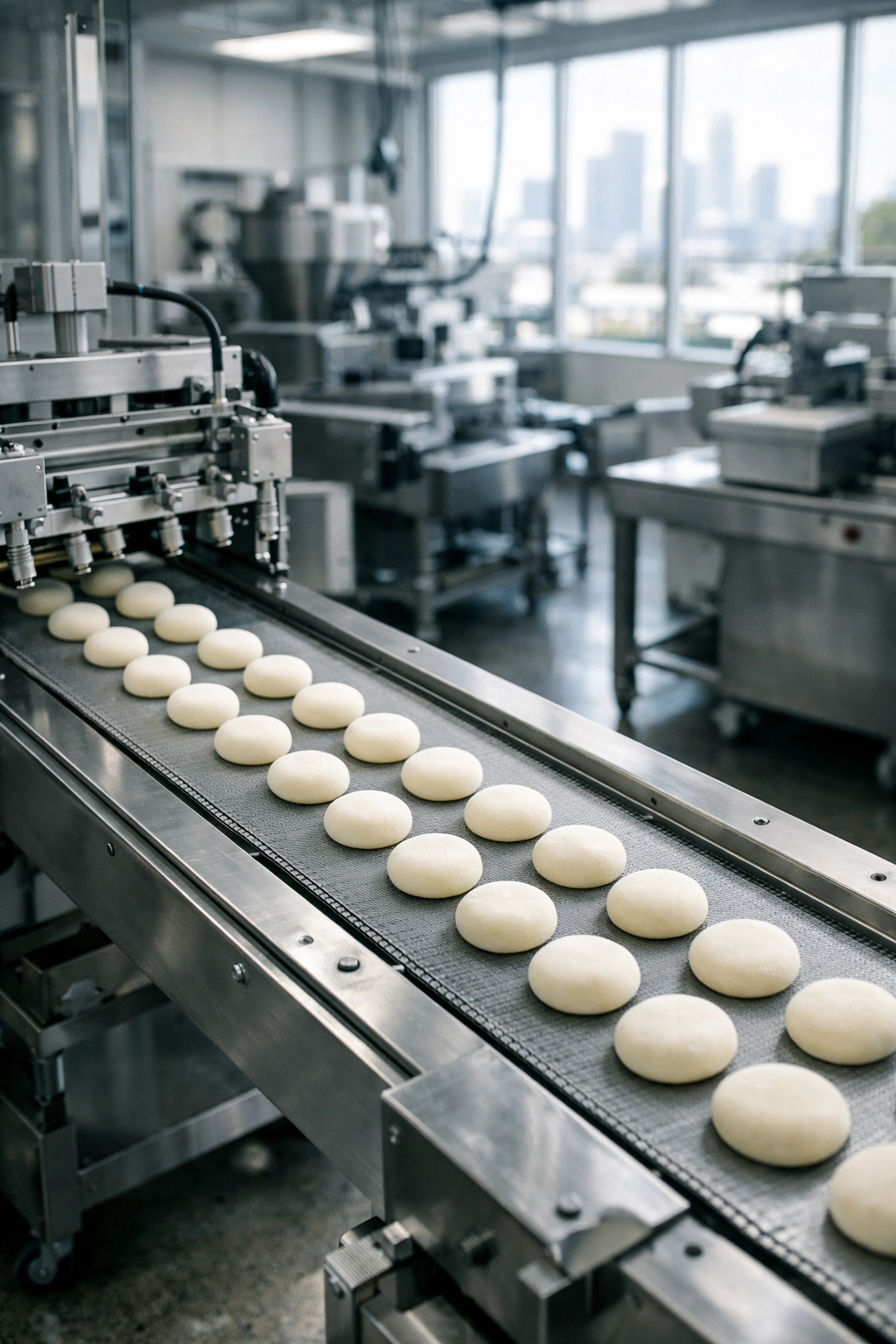
When a company like Morinaga moves into the U.S. market, they are bringing more than a recipe. They are bringing a specific methodology of "texture engineering." In Japan, the "chew" (or mochi-mochi texture) of the rice cake exterior is a science. In the U.S., many domestic mochi brands struggle with a "gummy" or "rubbery" mouthfeel after extended periods in a deep-freeze environment.
By acquiring a local factory, Morinaga can apply its proprietary freezing technologies and ingredient formulations directly to American-sourced dairy and rice flour. This eliminates the "frozen cargo" degradation that occurs during the three-week journey from a Japanese port to a California distribution center.
This is the essence of the bcdW Concept & Case philosophy: the most successful cross-continental moves happen when the intellectual property of one region is hard-wired into the physical assets of another.
The "Local-to-Local" Framework: Tokyo to Los Angeles
The geographic choice is intentional. While the specific facility locations often span the West Coast to tap into established supply chains, the strategic bridge remains anchored between Tokyo’s corporate R&D and the consumer testing grounds of Los Angeles.
Los Angeles serves as the ultimate "Future City" for Asian CPG brands. It is the site where cultural trends are validated before they are rolled out to the rest of the American heartland. Morinaga’s move allows them to use L.A. as a laboratory: tweaking flavors, sugar content, and portion sizes in real-time based on local data, then scaling production within the same time zone.
This mirrors the experiments we’ve seen in other sectors, such as San Francisco’s neighborhood experiment, where the goal is to revitalize local economies through direct intervention rather than waiting for global market forces to trickledown. Morinaga is revitalizing its own growth prospects by becoming a domestic American manufacturer.
The Mochi War: Competition and Consolidation
The U.S. mochi market is currently a battlefield. For years, Mikawaya (the originator of mochi ice cream in the U.S.) held the crown, followed by the meteoric rise of My/Mochi, which utilized aggressive Western branding to dominate retailers like Target and Costco.
Morinaga’s entry changes the calculus. Unlike private equity-backed domestic firms, Morinaga has the "patient capital" of a century-old Japanese conglomerate. They aren't looking for a quick flip; they are looking for category dominance.
Key advantages of the Morinaga acquisition include:
- Vertical Integration: Controlling everything from the rice dough formulation to the final packaging.
- Brand Authority: Leveraging the "Made by a Japanese Master" narrative to appeal to a more sophisticated, globalized consumer base.
- Operational Efficiency: Eliminating import tariffs and reducing the carbon footprint of their supply chain: a growing concern for American retailers.

Beyond Ice Cream: The CPG "Rainmaker" Effect
This $135 million acquisition is a signal to the entire CPG sector. We are entering a phase where the "middle-man" of the import-export business is being cut out by the creators themselves.
At bcdW, our Rainmaker Program focuses on connecting these very dots: showing how capital from Asian heritage brands can find a home in North American manufacturing assets. Morinaga is the case study of what happens when a company stops being a "foreign brand" and starts being a "global operator."
If you are a founder or an investor in the food tech space, the lesson is clear: the bridge between the Americas and Asia is no longer a shipping lane. It is a shared production floor.
The Strategic Catalyst: Why This Matters Now
Why did Morinaga wait until 2026 to make this move? The answer lies in the maturity of the American palate.
Ten years ago, mochi was "weird." Today, it is "premium." The American consumer has been conditioned by a decade of K-pop, J-beauty, and globalized culinary trends to seek out authenticity. But authenticity alone doesn't scale; availability does.
Morinaga Seika is betting $135 million that they can provide both. They are betting that the "Mochi King" of Tokyo can become the "Mochi King" of America by simply changing the zip code of their machines.
This is not a story about ice cream. It is a story about the dissolution of borders in the CPG space. It is about how the most successful companies of the next decade will be those that can "think in Tokyo" but "build in Los Angeles."
As we track the movement of capital across the Pacific, we expect to see more of these "heritage acquisitions." The question is no longer if an Asian brand can succeed in the U.S., but whether they have the courage to buy the ground they stand on.
For those interested in how these cross-continental deals are structured, we invite you to explore our Archive of market entry strategies. The dots are there; Morinaga just connected them with a 20-billion-yen line.
A New Map for Global Business
The Morinaga acquisition forces a re-evaluation of what "market entry" actually looks like in 2026. It is no longer enough to have a great product; you must have a localized system.
By prioritizing "Human Mobility" and "Digital Bridge" concepts: essentially moving the experts and the data to the site of production: Morinaga has effectively neutralized the risks of being an "outsider." They have bought their way into the local ecosystem, and in doing so, they have redefined what it means to be a global confectionery leader.
The "Mochi King" has arrived in America. And he’s not leaving.