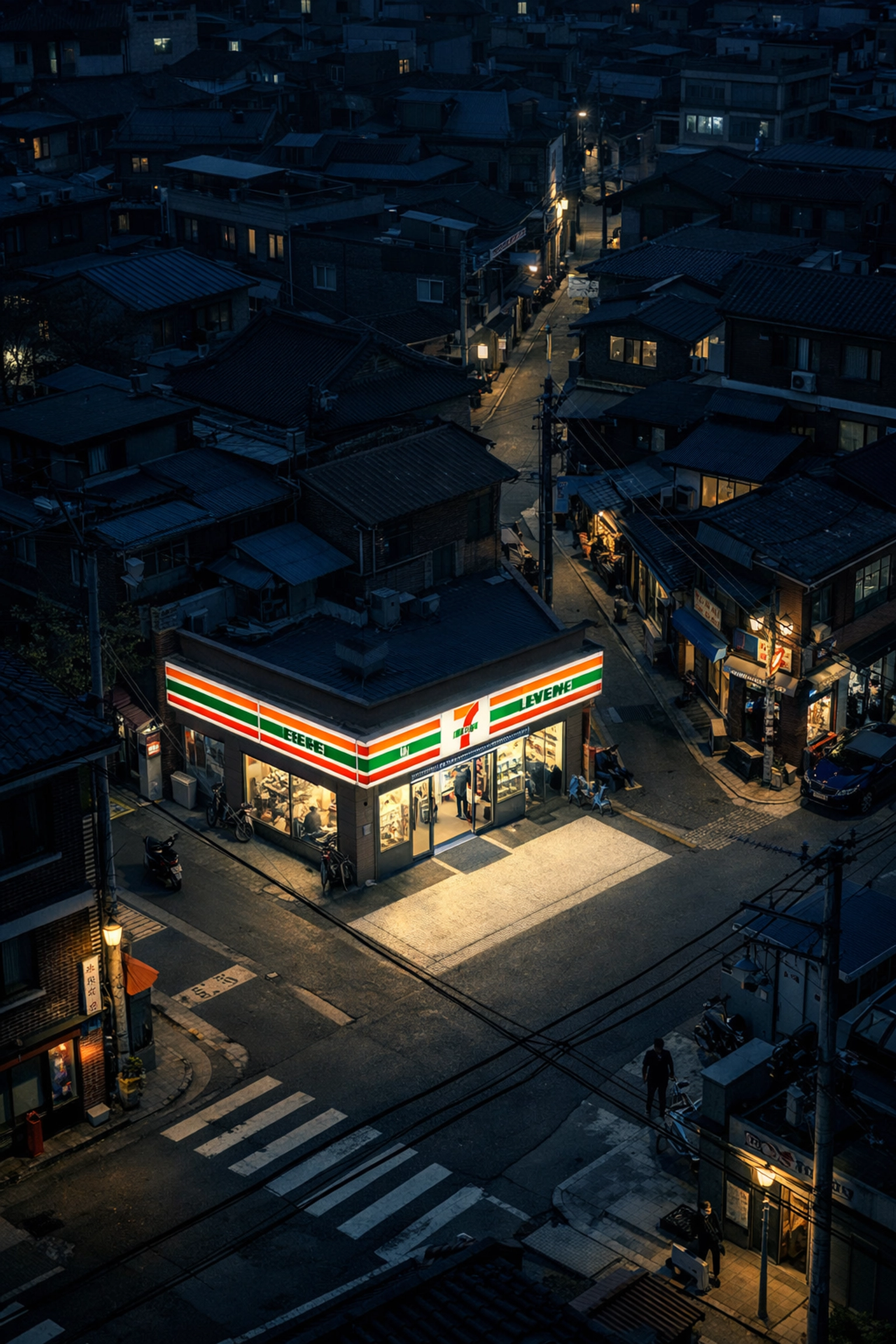
Walk into any 7-Eleven in Seoul today, and you are no longer just walking into a convenience store. You are stepping into a high-frequency data laboratory.
Between March 4th and 6th, 2026, the retail giant held its annual Product Exhibition in the heart of Seoul. The theme, "Moments of Surprise in Daily Life," sounds like marketing fluff until you look at the architecture of the strategy behind it. What 7-Eleven Korea is building isn't just a better way to sell triangle kimbap; it’s a hyper-localized, AI-driven infrastructure designed to capture the "Feel Economy": a market segment where consumer loyalty is driven by emotional resonance and aesthetic "wonders" rather than just proximity.
At bcdW, we often talk about the city as the unit of connection. Seoul is currently the world’s most advanced testing ground for the future of the convenience store (CVS). If you want to see what retail will look like in Manhattan, Mexico City, or Ho Chi Minh City in three years, you look at what happened last week in Seoul.
The Death of Generic Convenience
For decades, the convenience store model was built on "standardization." Every store looked the same, stocked the same products, and offered the same friction-less, albeit soul-less, experience. 7-Eleven Korea is officially declaring that era over.
The 2026 strategy centers on "My Daily Wonder." It’s an admission that in a world of instant delivery and e-commerce dominance, the physical storefront must provide something the algorithm cannot: a tactile, surprising, and localized "moment."
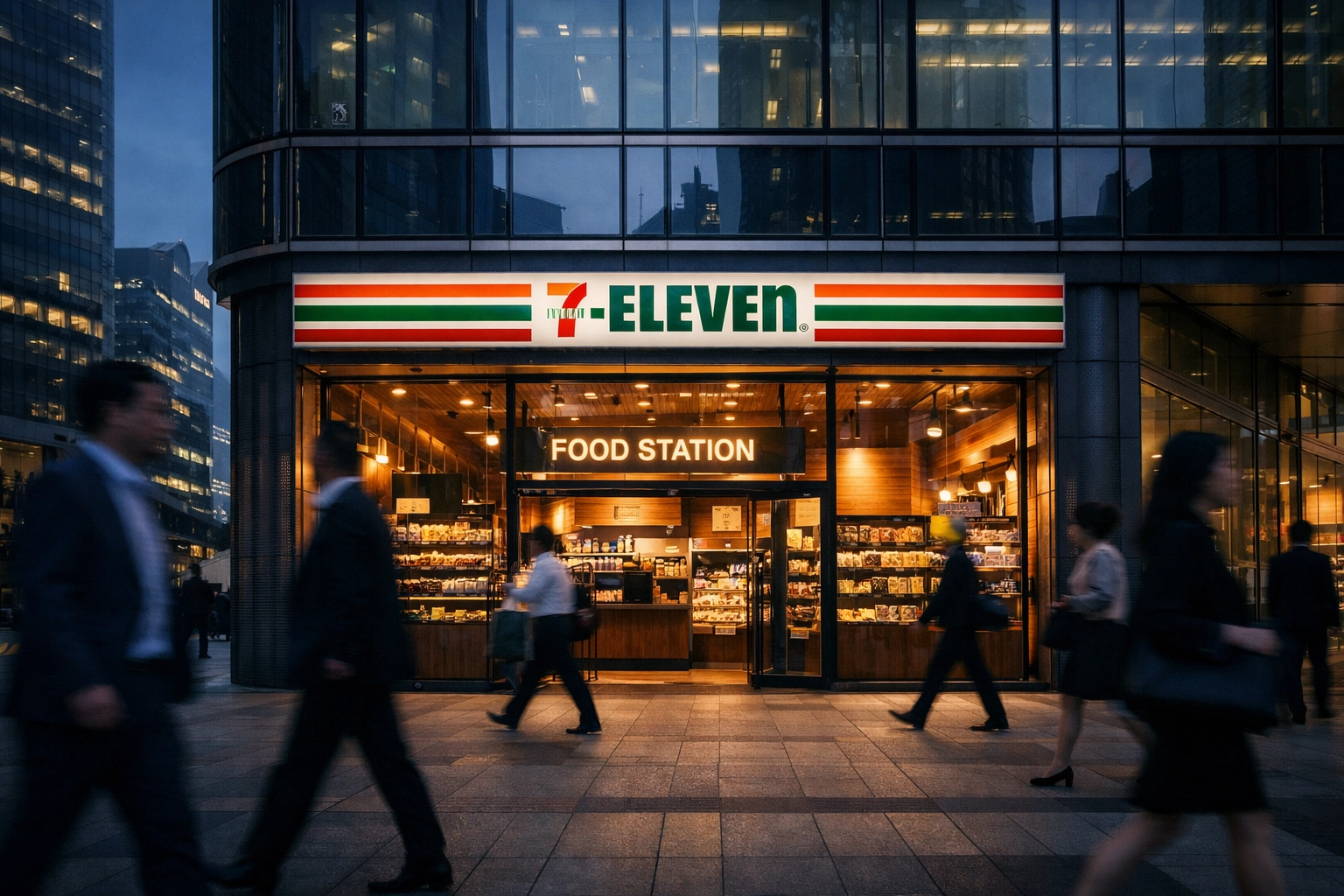
This isn't just about changing the decor. It’s about moving from a push-model (selling what the manufacturer makes) to a pull-model (stocking what the neighborhood’s specific data signature demands). Stores in office districts like Gangnam are being re-engineered as "Food Stations," while residential outposts are morphing into premium bakeries and dessert hubs.
Engineering the "Food Station": The New Civic Canteen
The most striking shift in the 2026 roadmap is the aggressive expansion of the "Food Station" concept. This isn't your grandfather’s hot dog roller. We are talking about integrated, food-court-style counters featuring instant fried chicken, designer pizzas, baked sweet potatoes, and barista-grade coffee.
Why the pivot? The data from 2025 told a clear story. 7-Eleven’s bakery category saw a 20% year-on-year sales increase. In a high-inflation environment, the "cost-effective meal" trend has evolved. Consumers aren't just looking for cheap calories; they are looking for high-quality, ready-to-eat (RTE) meals that feel like a "treat" rather than a compromise.
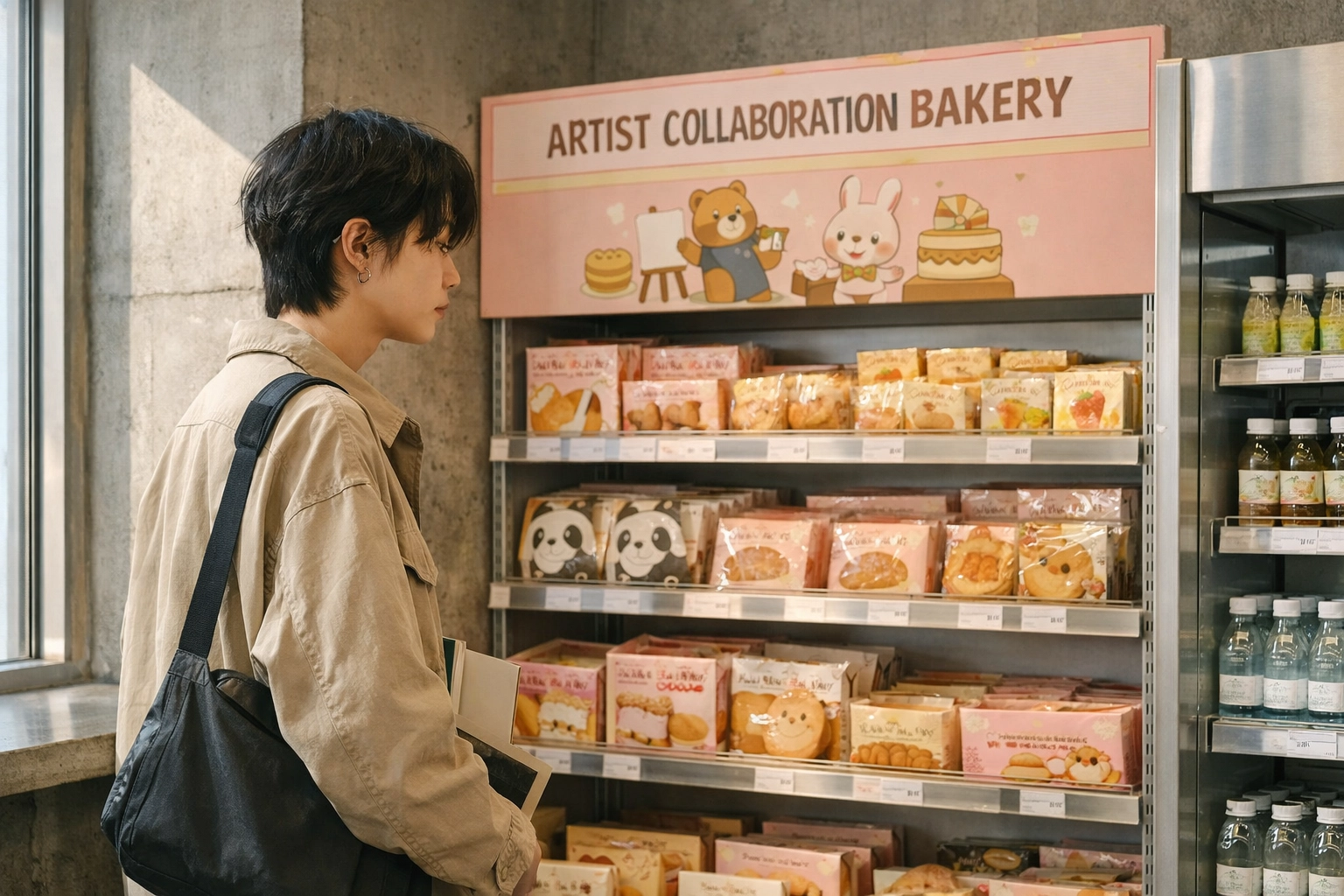
To meet this, 7-Eleven is upgrading the raw materials for its staple gimbap and sandwich lines. But the real "surprise" lies in the collaborations. By partnering with trendy IPs like Wiggle Wiggle, they are tapping into the "Feel Economy." Six new bakery items launched this month aren't just bread; they are social media currency. In Seoul, if a product isn't "Instagrammable," it effectively doesn't exist.
Global Sourcing as a Competitive Edge
One of the most interesting "dots" we’ve connected at bcdW is the way 7-Eleven Korea leverages its global network. While many retailers struggle with domestic supply chains, 7-Eleven is using its international footprint to bring "premium wonders" to the local corner store.
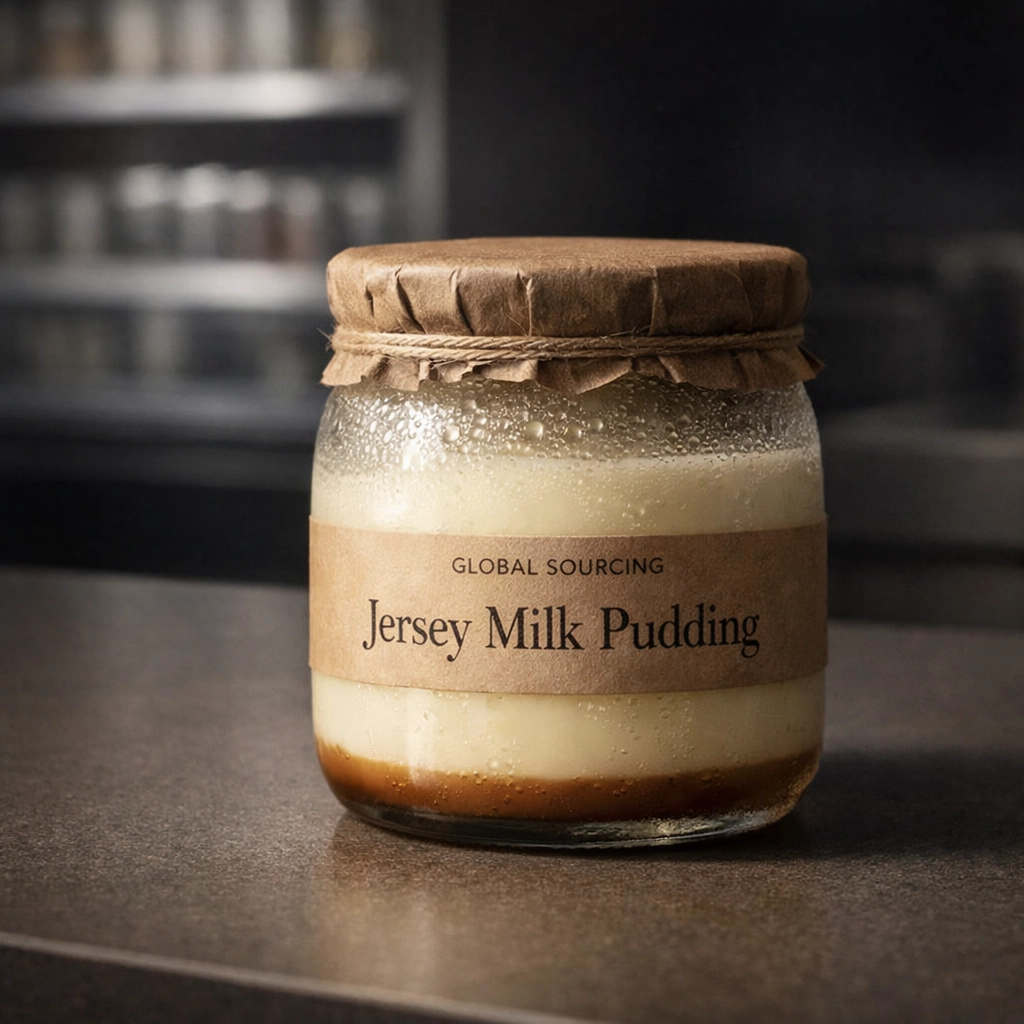
Successful imports like Jersey Milk Pudding and Raw Chocolate Pie have proven that Korean consumers have an insatiable appetite for global premium snacks. The 2026 strategy doubles down on this, expanding global sourcing to include exclusive PB (Private Brand) products from across the 7-Eleven global ecosystem.
This is a classic company-to-market signal. By curating items that were previously only available via expensive international shipping or specialty importers, 7-Eleven is positioning its 14,000+ locations as gateways to global trends. They aren't just a local shop; they are a global curator.
The Invisible Engine: AI and Cloud POS
Behind the "moments of surprise" is a very cold, very efficient machine. The 2026 exhibition highlighted a massive rollout of Android-based cloud POS systems and AI-powered inventory management.
In the past, a store manager’s intuition decided how many sandwiches to order. In 2026, the AI does the heavy lifting. The results are already in: stores that implemented these data-driven store improvement activities saw a 7 percentage point sales advantage over those that stuck to the old ways.
This isn't just about efficiency; it’s about survival. With labor costs rising and the SKU (Stock Keeping Unit) count becoming more complex due to hyper-localization, the "human" element of management is being redirected toward customer service and "experience," while the machine handles the replenishment.
This mirrors the digital bridge concept we advocate for at bcdW. It’s the marriage of virtual expertise (AI) with local coordination (the store manager). When the system knows that a sudden rainstorm in Mapo-gu will trigger a 15% spike in demand for specific comfort foods, and the inventory is already there, that is a "moment of surprise" for the customer: but it’s pure mathematics for the operator.
The "Feel Economy" and the Wiggle Wiggle Factor
Let’s talk about the Wiggle Wiggle IP collaboration. To a Western observer, a convenience store partnering with a colorful lifestyle brand might seem trivial. It isn't. It’s a sophisticated play for the "Alpha" and "MZ" generations who view consumption as a form of self-expression.
The 2026 strategy acknowledges that a store is a "space" first and a "shop" second. By integrating these aesthetics into the product design and store layout, 7-Eleven is fighting for "share of heart." They are competing not just with other convenience stores (like CU or GS25), but with cafes, bakeries, and even entertainment venues.
From Seoul to the World: The Strategic Ripple
Is the 7-Eleven Korea model exportable? At bcdW, we believe the answer is a resounding yes, but with a caveat: you can't export the products; you can only export the framework.
The "Seoul Model" works because of the city's extreme density and digital literacy. However, the core philosophy: data-driven hyper-localization and the "Food Station" pivot: is a blueprint for any urban center facing the "empty storefront" crisis. As we’ve seen in neighborhood experiments in San Francisco, filling retail space requires more than just "selling things." It requires becoming a "strategic catalyst" for the community.
The 7-Eleven 2026 strategy is a reminder that in the retail world, "convenience" is the floor, not the ceiling. The ceiling is "wonder."
The bcdW Perspective: Connecting the Dots
What 7-Eleven Korea has unveiled is more than a product roadmap. It is a declaration that the boundary between "convenience," "dining," and "entertainment" has dissolved.
The question for operators in the Americas isn't "Should we sell more pudding?" The question is: "Do we have the data infrastructure to surprise our customers tomorrow morning?"
As 7-Eleven Korea streamlines its next-generation services, they are creating a retail environment that feels less like a transaction and more like a service layer of the city itself. They are no longer just selling CPG (Consumer Packaged Goods); they are managing the "daily rhythm" of the urban population.
The most consequential business connections aren't always between boardrooms; sometimes, they are between a cloud-based POS in Seoul and a hungry commuter in Singapore or Santiago. The dots are there. 7-Eleven is just the first one to connect them with such precision.
The 2026 Strategy isn't just about surviving the next two years. It’s about redefining what it means to be "on the way." If your business is still treating convenience as a commodity, you aren't just falling behind( you're becoming invisible.)