Las Vegas has long been a city defined by the spectacle, but in 2026, the nature of that spectacle has undergone a fundamental transformation. The city is no longer merely a backdrop for business; it has become the primary laboratory for the "Experience-First" movement in the MICE (Meetings, Incentives, Conventions, and Exhibitions) industry. As global markets from Seoul to São Paulo look toward the United States for expansion, Las Vegas is positioning itself as the indispensable gateway, not through traditional hospitality, but through a radical redesign of the trade show infrastructure.
The shift is not a matter of aesthetic preference. It is a response to a global saturation of digital content. In an era where product specifications are available in an instant, the physical trade show booth has been forced to justify its existence. The result, visible across the 2026 calendar at the Las Vegas Convention Center (LVCC) and the Venetian Expo, is a move away from static displays toward immersive, documentary-style storytelling and interactive civic infrastructure.
The Death of the Static Display
For decades, the standard trade show model relied on a "booth and brochure" methodology. In 2026, that model is effectively obsolete. The leading exhibitors at major summits like CES 2026 are replacing plywood and plastic with digital skins and augmented reality (AR) overlays that prioritize narrative over inventory.
"A trade show is no longer a place to see products," notes one lead strategist at a major automotive exhibitor. "It is a place to experience the ecosystem those products create." This sentiment is reflected in the layout of the LVCC’s West Hall, where the traditional grid system is being disrupted by "experience zones." These are not just demo stations; they are hands-on training environments and live-streamed collaborative spaces where the distinction between attendee and participant is intentionally blurred.

Photo: Las Vegas News Bureau / Digital Infrastructure Division
The data from the first quarter of 2026 suggests that this "Experience-First" approach is driving record engagement. CES 2026 alone attracted over 142,000 attendees from 158 countries. What is notable, however, is not the volume of people, but the seniority. The shift toward immersive storytelling is attracting high-level decision-makers who previously delegated trade show attendance to mid-level procurement officers. When a booth becomes a strategic briefing center rather than a sales floor, the profile of the visitor changes.
Sustainability as Competitive Infrastructure
Beyond the visual shift, Las Vegas is redefining the logistics of MICE through a lens of aggressive sustainability. For a city that exists in a desert environment, resource management is not a marketing buzzword: it is a survival strategy. In 2026, the city’s major convention hubs have moved toward a circular logistics model designed to eliminate the "build-and-burn" cycle of trade show construction.
This involves a city-wide mandate for modular, reusable booth components and a rigorous waste-diversion protocol. Large-scale events like the LDI Show are now acting as case studies for zero-waste exhibitions. By utilizing local fabrication hubs that rent standardized, high-tech modular frames, international companies: particularly those from the Americas and Asia: can reduce their carbon footprint while simultaneously lowering the cost of U.S. market entry.
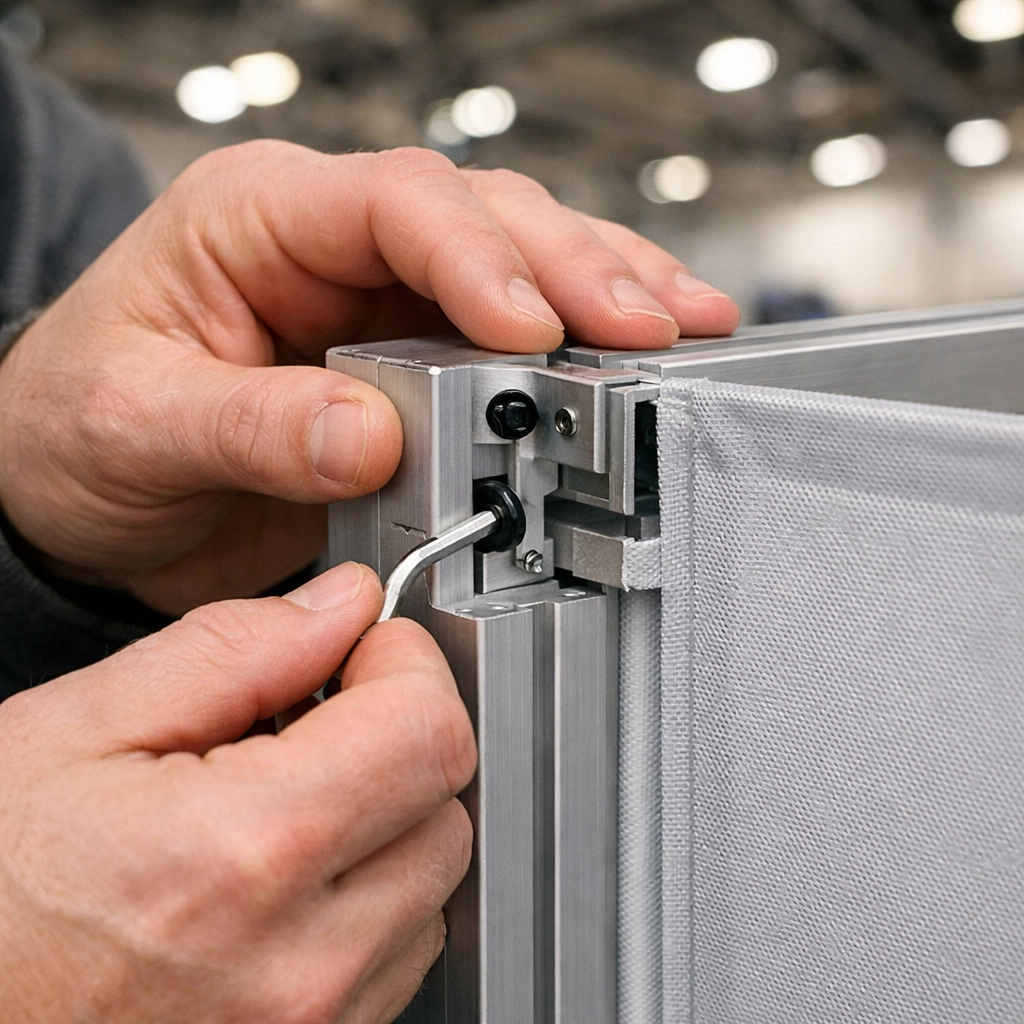
Photo: bcdW Internal / Sustainable Logistics Archive
This infrastructure serves as a "strategic catalyst" for international brands. For a firm based in Ho Chi Minh City or Medellín, the cost and environmental impact of shipping massive displays across the Pacific or through the Americas were once prohibitive. The new Vegas model allows them to "upload" their brand identity to local, sustainable hardware, facilitating a seamless entry into the North American market.
The Asia-Americas Bridge: A New Nexus
The most significant "dot" being connected in Las Vegas this year is the convergence of Asian technological prowess and the Americas' market appetite. The city is increasingly serving as the neutral ground where the supply chains of the East meet the capital of the West.
In 2026, we are seeing a record number of "Incentive" trips organized by Asian conglomerates for their Latin American partners, with Las Vegas as the anchor. These are not merely junkets; they are structured "Conversation" events where the future of cross-continental trade is negotiated. The city’s ability to house 150,000 people and provide specialized breakout spaces makes it a unique urban framework for these high-stakes interactions.
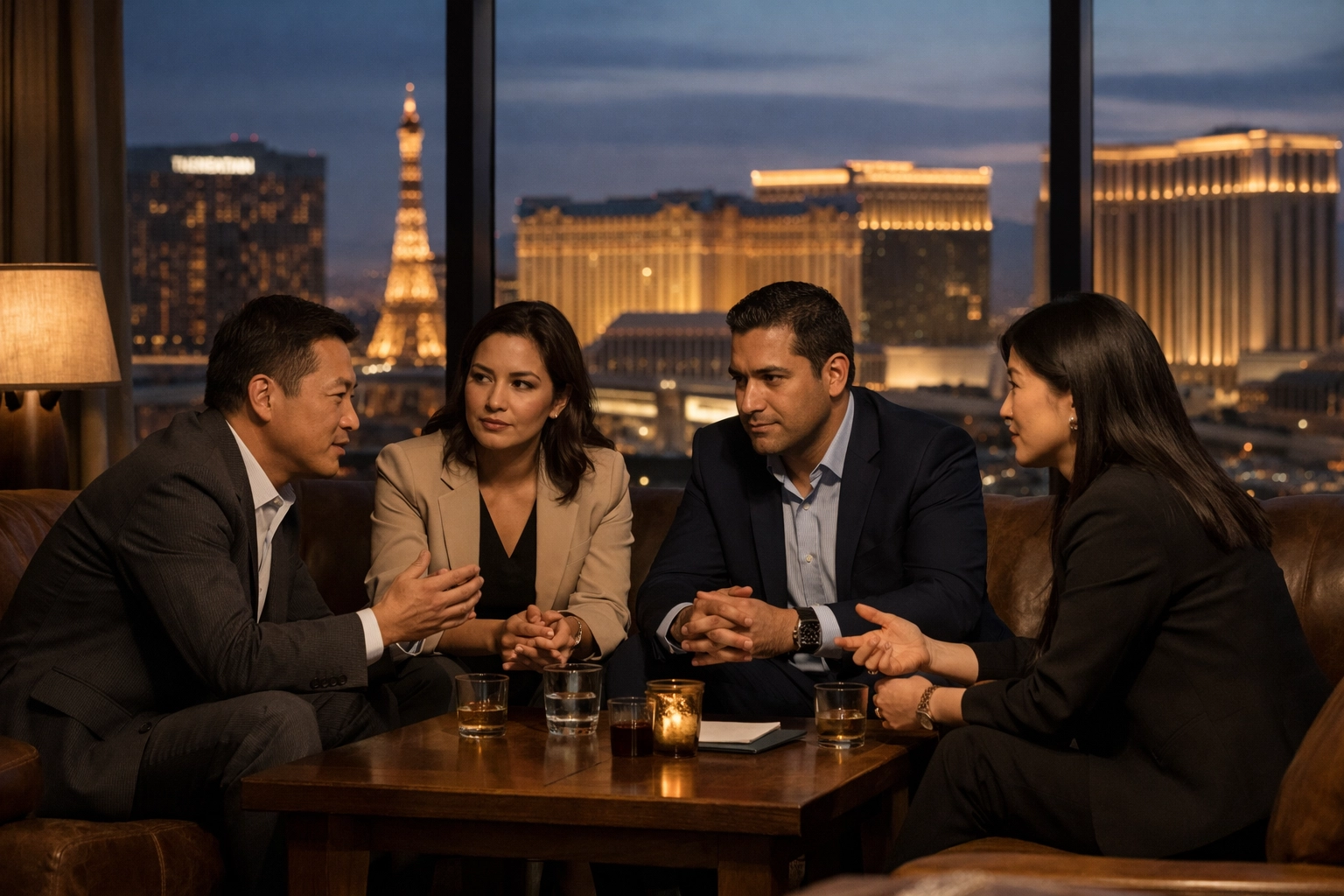
Photo: Las Vegas Convention and Visitors Authority / International Relations
The trend is clear: Las Vegas is no longer competing with Orlando or Chicago. It is competing with Singapore and Dubai. To win, it is leveraging its "Experience-First" innovations to prove that the most valuable business connections happen when the environment is as intelligent as the participants.
The Human Centricity of B2B Interaction
Despite the influx of AR, VR, and AI-driven logistics, the 2026 MICE trend in Las Vegas is rooted in a deeply human element. The city is realizing that the more digital our lives become, the more we crave authentic, physical presence. The "Experience-First" movement is, at its core, a human mobility strategy. It is about moving people across borders to solve problems that cannot be solved over a screen.
The trade show floor is being reimagined as a "civic space" where professionals from disparate worlds: a fintech developer from São Paulo and a hardware engineer from Shenzhen: can collide in a controlled, high-energy environment. This is the "Rainmaker" effect in action.
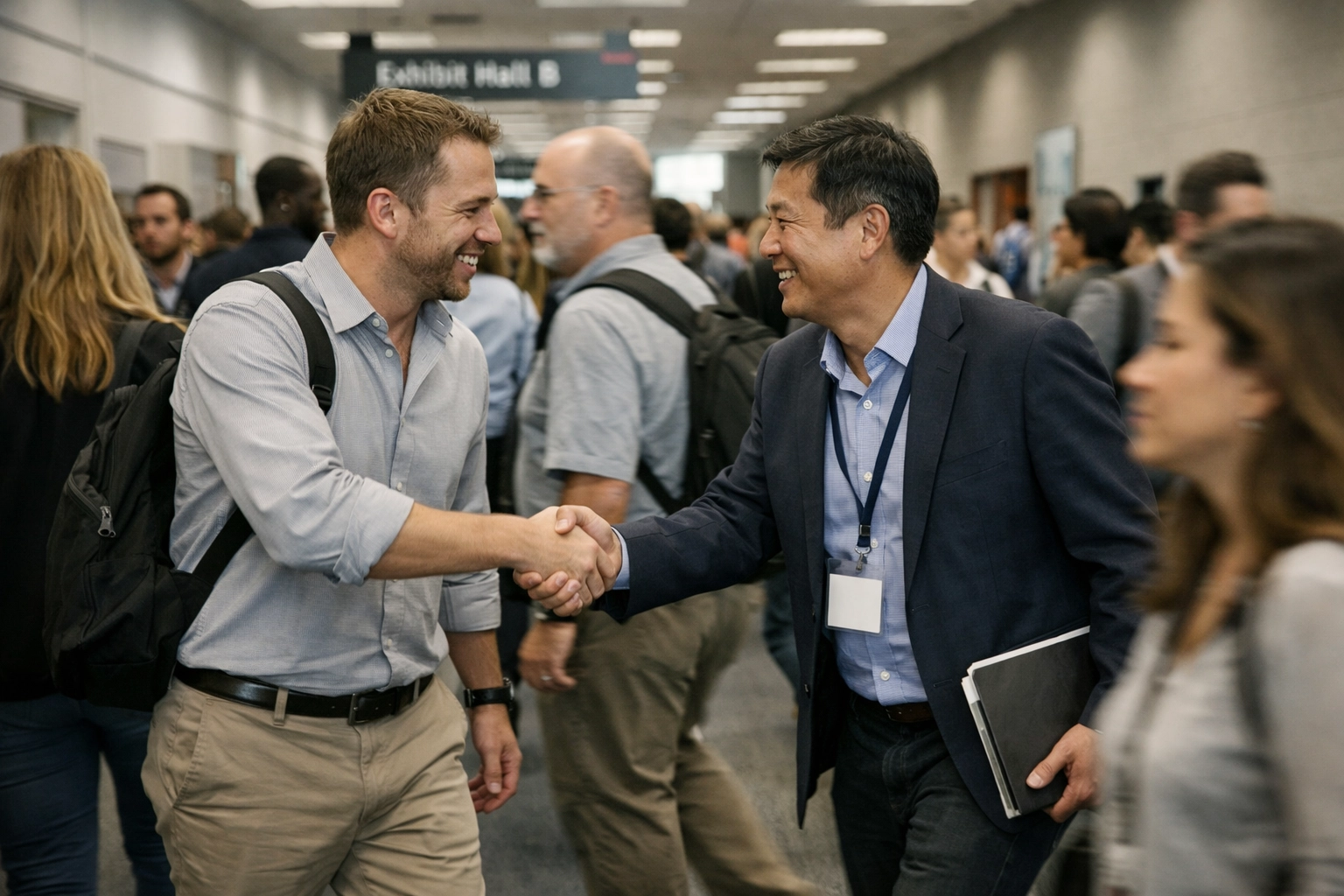
Photo: bcdW Internal / MICE Industry Trends
As we look toward the second half of 2026, the question for global firms is no longer whether to have a presence in Las Vegas, but how to utilize the city’s new experience-driven infrastructure to redefine their own brand narrative. The "familiar script" of the gambling capital is being rewritten into a manual for global business connectivity.
Redefining the U.S. Market Entry Strategy
For companies in the bcdW network, these shifts in Las Vegas offer a blueprint for U.S. market entry. The city’s new trade show format provides a low-friction, high-impact environment to test products and build partnerships. By moving away from "showing" and toward "engaging," companies can shorten the sales cycle and establish authority in the North American market more rapidly than through traditional regional expansion.
Las Vegas in 2026 is not just a destination; it is a tool. It is a sophisticated, tech-enabled platform designed to bridge the gap between the two most dynamic continents on earth. The dots are visible. The connections are being made. The only question is which companies will move first to occupy this new experiential territory.
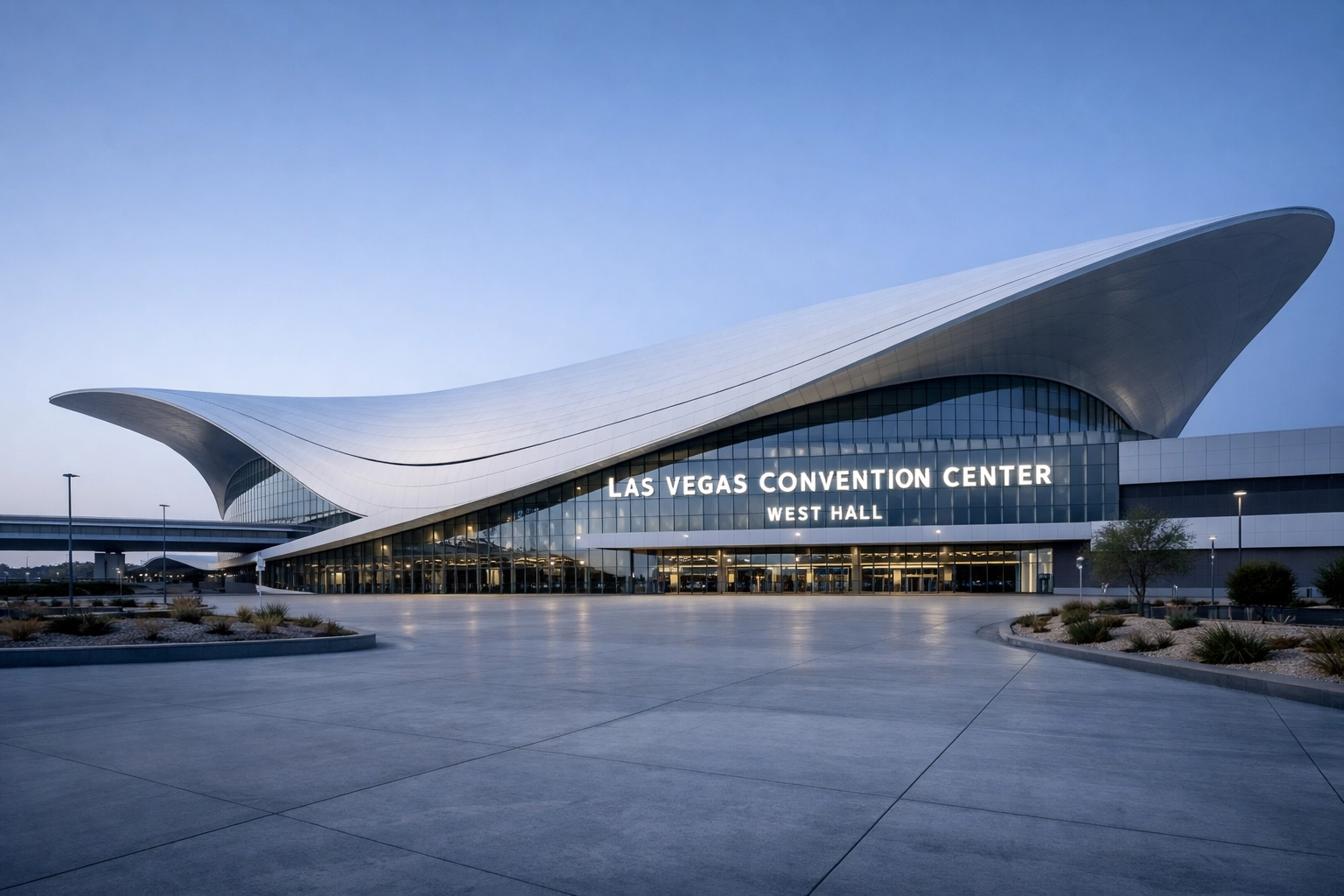
Photo: Getty Images / Business Industry Collection
Category: News, Americas
Tags: Las Vegas, MICE
Excerpt: Las Vegas is transforming the MICE industry in 2026 by shifting from static trade show booths to "Experience-First" immersive environments. This evolution is positioning the city as a critical sustainable infrastructure hub for companies from Asia and the Americas seeking U.S. market entry.
Source: Las Vegas Review-Journal (https://www.reviewjournal.com/business/conventions/)