On February 1, 2026, the quiet hum of servers in Jurong and the legislative halls of Brussels synchronized. This was the moment the EU–Singapore Digital Trade Agreement (DTA) officially entered into force, signaling more than just a bureaucratic milestone. It was the activation of a new operating system for global commerce.
In the old world, trade was about the friction of physical objects, the weight of containers, the ink on a bill of lading, and the physical walls of a warehouse. In 2026, Singapore has decided that friction is a relic. The city-state is not just updating its trade agreements; it is rewriting the fundamental laws of how value moves across borders. This isn't a mere policy tweak; it is a strategic catalyst designed to ensure Singapore remains the definitive gateway for the digital and green transitions of the mid-2020s.
The New Architecture of Trust
For years, the "digital economy" was treated as a sub-sector of traditional trade. We had rules for cars and rules for chemicals, and then we tried to squeeze software and data into the gaps. Singapore’s 2026 roadmap flips the script. The DTA is the EU’s first standalone bilateral digital trade agreement, and its implementation marks a shift where the digital framework is the framework.
The core of this upgrade lies in the architecture of trust. In an era where AI-driven analytics and cross-border data flows are the lifeblood of business, "trust" is not a soft concept, it is civic infrastructure. The agreement establishes binding commitments on online consumer protection and personal data privacy. But it goes further by addressing the "invisible" barriers that stall innovation.
By prohibiting unjustified data localization requirements, Singapore and its partners are ensuring that data doesn't have a "nationality." For a high-growth startup in Singapore looking to scale into European markets, or a Toronto-based firm using Singapore as its Asian launchpad, this means they no longer have to build duplicative, expensive server architectures in every jurisdiction they touch. It’s not just a cost-saving measure; it’s a removal of a structural ceiling on growth.

Photo: Unsplash / Hu Chen
Paperless Trade: Eliminating the Analog Ghost
We often talk about "digital transformation" as if it’s a future goal, yet until recently, much of global trade still relied on the "analog ghost", the physical signature, the paper invoice, the stamped document. The 2026 framework finally exorcises these spirits.
The new framework ensures the legal validity of electronic signatures, contracts, and invoices across borders. This is the "Business Facilitation" pillar in action. By removing the legal ambiguity surrounding electronic records, Singapore is essentially creating a frictionless corridor for services.
Think about the implications for logistics platforms and cloud providers. When electronic transmissions are exempt from customs duties, the "pixel tax" disappears. We are moving toward a reality where a line of code or a 3D printing file moves from a designer in Seoul to a manufacturer in Singapore as easily as an email. This interoperability of digital identity and trust services is the bedrock of the 2026 economic strategy.
AI and the Algorithmic Shield
One of the most sophisticated components of the upgraded framework is the protection of software source code and algorithms. In the previous decade, many firms feared that entering certain markets meant a forced transfer of their intellectual property, the literal "brain" of their operation.
The DTA prohibits these forced transfers. This is a crucial signal to the AI industry. As Singapore positions itself as a global AI hub, this protection acts as an algorithmic shield. It tells the world’s most innovative deep-tech companies that their proprietary models are safe within the Singaporean trade ecosystem.
This isn't just about protection; it's about invitation. By enshrining these protections into Free Trade Agreements (FTAs), Singapore is making a long-form argument that it is the safest, most predictable place to deploy high-value AI assets in Asia. It is a play for the "intelligence capital" of the next decade.
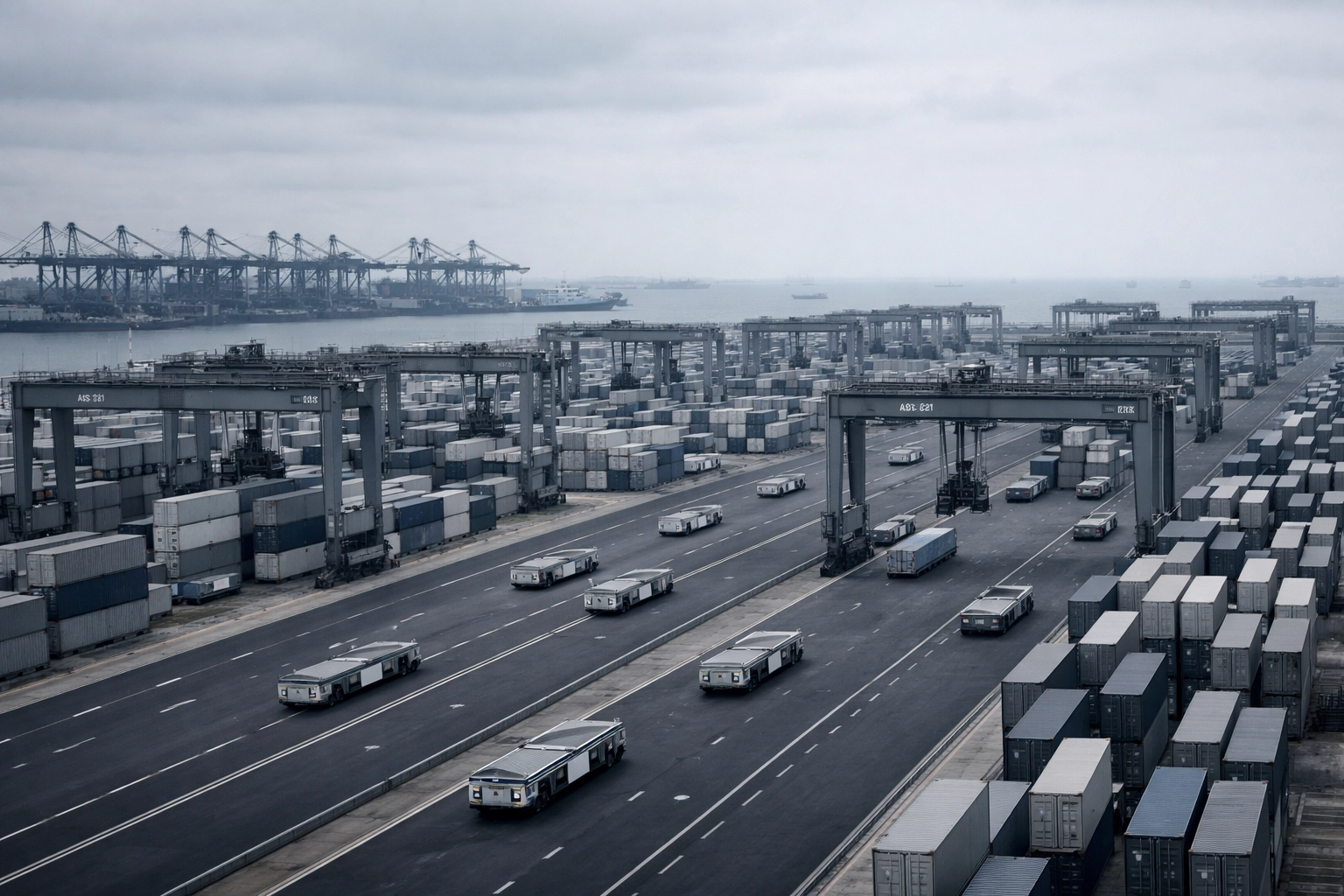
Photo: Pexels / Google DeepMind
The Green Transition: Energy as a Trade Asset
While "digital" takes the headlines, "green" is the silent partner in Singapore's 2026 roadmap. The upgraded trade frameworks are increasingly incorporating energy cooperation as a core component. For a city-state with limited natural resources, Singapore’s survival depends on being a hub for green energy finance and technology.
The focus is on creating "Green Economy Agreements" that mirror the Digital Trade Agreements. These frameworks facilitate the trade of environmental goods and services, promote investment in renewable energy projects, and set standards for carbon accounting.
We are seeing a convergence where digital tools are used to verify green outcomes. Blockchain-based carbon credits and AI-optimized energy grids are no longer experimental; they are being baked into the trade agreements themselves. It’s a systemic view of the future: you cannot have a sustainable digital economy without a sustainable energy framework.
Why the Americas Are Watching
Though the entry of the EU-Singapore DTA is a headline for Asia-Europe relations, the strategic ripples are being felt across the Americas. Investors from New York to Mexico City are looking at Singapore’s 2026 playbook as the gold standard for modern trade.
As the U.S. and Latin American markets grapple with their own digital regulations, Singapore is providing a clear, pro-business template. Firms operating in the Americas are increasingly looking to Singapore not just for its market size, but for its regulatory clarity. When the rules are transparent and the digital infrastructure is "always on," the risk of market entry drops significantly.
This is the essence of what we track at bcdW. We don't just see a trade agreement; we see a bridge being built. A bridge that allows a fintech founder in São Paulo to look at Singapore and see a mirror of the digital-first environment they are building at home.

Photo: Unsplash / Mike Enerio
The Strategic Implication: The End of "Wait and See"
For the C-suite and the strategic operator, the message of Singapore’s 2026 framework is clear: the period of "waiting to see how digital trade shakes out" is over. The frameworks are now in force. The legal precedents are being set. The infrastructure, both digital and legislative, is live.
The question for businesses is no longer if they should digitize their trade operations, but how fast they can integrate into these new, frictionless corridors. Singapore has set the pace. It has moved from being a port of ships to a port of data, and in doing so, it has redefined what it means to be a global trade hub.
Where do the living go to say goodbye to the dead? In a digital world, they go to the archives. But in the world of trade, they move to where the systems are most alive. Right now, that life is concentrated in the upgraded frameworks of Singapore.
The world isn't just getting smaller; it's getting faster. Those who understand the new rules of the Digital Trade Agreement won't just survive the transition: they will design the next one.
Category: News, Asia
Tags: Singapore, Trade, Digital Economy, FTA
Excerpt: Singapore has officially activated its 2026 economic roadmap with the launch of the EU-Singapore Digital Trade Agreement. This isn't just a policy update; it's a structural redesign of how digital assets and green energy move across borders in a post-analog world.
Source: European Commission (https://policy.trade.ec.europa.eu/news/eu-singapore-digital-trade-agreement-enters-force-2026-02-01_en)