Category: News, Americas
Tags: Honolulu, Technology
Excerpt: Hawaii is shedding its image as a vacation destination to become a high-stakes bridge between Asian innovation and Silicon Valley capital. The "East Meets West" summit demonstrates how the Pacific’s mid-point is now the critical infrastructure for cross-border startup growth.
The prevailing narrative of the Pacific suggests a vast, empty blue space separating the two most consequential economic engines of the 21st century: the Americas and Asia. For decades, the flight from Seoul to San Francisco or Tokyo to Los Angeles was treated as a necessary endurance test: a literal "overlook" of the geography in between. But in March 2026, that narrative is being redefined in the streets of Honolulu.
The Startup World Cup’s "East Meets West" event in Hawaii is not just another pitch competition. It is a strategic catalyst. By positioning Honolulu as the ultimate "neutral ground" and "soft landing" site, organizers are proving that the most efficient path from an R&D lab in Osaka to a venture capital office on Sand Hill Road runs directly through the mid-Pacific. This is not about the beach; it is about the bridge.
The Geography of Innovation
For the founders gathering at this year's summit, the choice of Hawaii is a matter of tactical advantage. In the startup world, friction is the enemy of scale. Expanding a Korean or Japanese startup into the U.S. market usually involves a culture shock that many companies don’t survive. The regulatory frameworks, the aggressive hiring culture of Silicon Valley, and the sheer distance often result in a "lost in translation" failure.
Honolulu offers a different framework. It is a city that speaks both languages, literally and metaphorically. The "East Meets West" summit leverages Hawaii’s unique civic infrastructure to serve as a laboratory for U.S. market entry strategy. It provides Asian entrepreneurs with a low-stakes environment to pressure-test their business models before facing the brutal scrutiny of Northern California’s investment ecosystem.
As Tim Draper, the legendary venture capitalist and a headline speaker at the event, often points out, innovation doesn't happen in a vacuum. It happens at the points of convergence. Draper’s presence in Honolulu underscores a shift: the "smart money" is no longer waiting for talent to arrive in San Francisco. They are meeting it halfway.
The $1 Million Path to San Francisco
At the heart of the "East Meets West" event is the regional qualifier for the Startup World Cup. The stakes are clear: a $1 million investment prize and a direct line to the grand finale in San Francisco. But for the participants, the prize money is almost secondary to the human mobility and the network density the event provides.
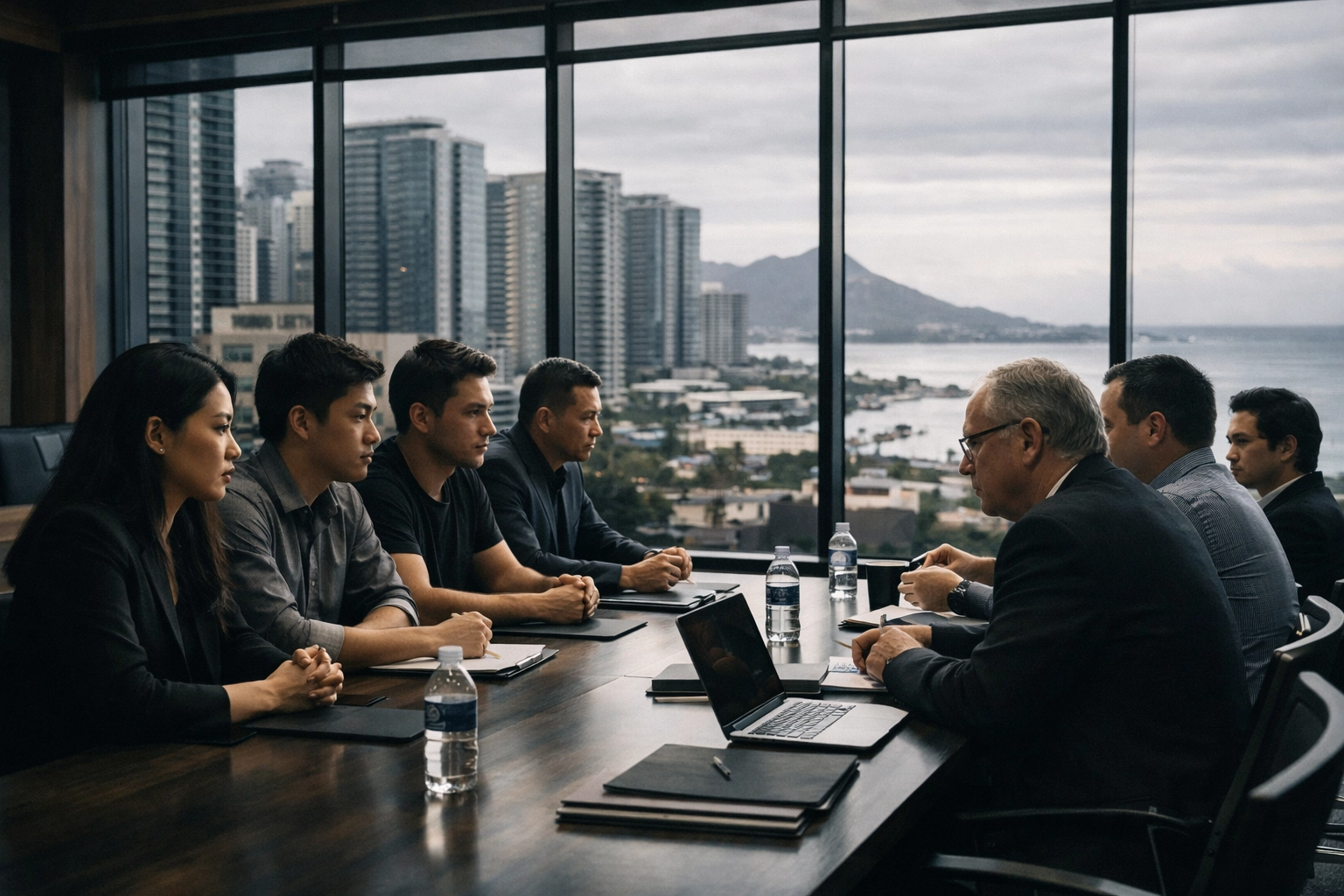
Photo: Startup World Cup / Pegasus Tech Ventures
The competition focuses on companies that are inherently cross-continental. These aren't just local startups; they are entities designed to bridge markets. We are seeing AI-driven logistics firms from Singapore, biotech innovators from Tokyo, and fintech disruptors from Seoul, all competing for the chance to be integrated into the U.S. tech stack.
The path from Honolulu to San Francisco represents a vetted pipeline. When a startup wins here, they aren't just winning a check; they are gaining a stamp of approval that resonates in both the Americas and Asia. They are being recognized as "Pacific-fluent."
The Return of the Silicon Valley Talent
One of the most overlooked elements of Hawaii’s rise as a tech hub is the reverse migration of talent. For years, the story was one of "brain drain": Hawaii’s brightest leaving for the mainland. Today, that flow has reversed.
Leaders like Meli James, who spent over a decade in the heart of Silicon Valley before returning to Honolulu to co-found HVCA and Mana Up, are the architects of this new ecosystem. They are bringing "Valley" standards to the islands, creating a high-performance culture that retains local talent while attracting global founders.
This isn't a retreat from the world; it’s a strategic repositioning. In the post-2020 era, where distributed work is the norm, the "why" of a location has changed. If you are a founder building a company that serves both the Japanese and U.S. markets, being based in Honolulu isn't a lifestyle choice: it's a competitive edge. It allows for overlapping business hours with both Tokyo and New York, a feat that is nearly impossible from either coast.
Bridging the Pacific: The bcdW Perspective
At bcdW Magazine, we believe that the most consequential business relationships are forged between cities. The "East Meets West" summit is a prime example of the Honolulu-San Francisco corridor in action. But it goes deeper. This event is a signal for the entire Pacific Rim.
The connection between Hawaii and the mainland U.S. is a well-traveled road, but the connection between Hawaii and Asian innovation hubs like Seoul’s Creative Economy Innovation Center or Tokyo’s Venture Cafe is where the real growth lies. This is the "Digital Bridge" in its most physical form: a site where capital, talent, and regulation meet to negotiate the terms of the next decade of trade.
When we look at the bcdW Rainmaker Program, we see exactly this type of synergy. It’s about taking a project that was conceived in a lab in Asia and finding the right execution partners in the Americas. Hawaii is the showroom for these partnerships.
Beyond the Pitch: A New Urban Framework
A startup competition is not just a collection of slides and speeches. It is an act of urban design. By hosting events like "East Meets West," Honolulu is redefining itself as a "Future City." It is moving away from a tourism-dependent economy and toward one built on high-value services and intellectual property.
This shift requires a new kind of civic infrastructure. It requires the Global Human Mobility programs that allow founders to move between jurisdictions without the friction of outdated visa processes. It requires a consulting layer: much like our Digital Bridge service: that can translate local market needs into global scale.
The question for investors and founders is no longer if they should look at the mid-Pacific, but when they will establish their presence there. The signals are clear. The "East Meets West" summit isn't just an event on the calendar; it is a preview of the new Pacific economy.
The Implication for Cross-Border Growth
As the 2026 Startup World Cup grand finale approaches in San Francisco, the eyes of the venture world are on the winners from the Hawaii regional. These companies represent a new breed of "born-global" entities. They are comfortable in the boardroom in Tokyo and the accelerator in Palo Alto.
The success of "East Meets West" tells us that the future of the Asia-Americas connection isn't just about trade in goods; it's about the trade in ideas. It’s about creating a seamless ecosystem where a founder in Manila can access capital in New York by way of a meeting in Honolulu.
The dots are being connected. The bridge is built. Now, the only question is who will cross it first.
For those looking to understand how these shifts impact their own market entry strategies, exploring our Concept & Case studies can provide the data-driven insights needed to navigate this new terrain. The Pacific is no longer a barrier; it is the most important platform in the world.
Source: Hawaii Tech Bridge (https://www.hitide.org/news/east-meets-west-2026-honolulu-startup-paradise)