AI Summary
This report analyzes the strategic expansion of South Korean MedTech innovator Noul into the Latin American healthcare sector, specifically focusing on its recent deployment of AI-driven cervical cancer diagnostic tools in Mexico City. By decentralizing complex pathology through its miLab platform, Noul is not merely selling hardware; it is redesigning the civic infrastructure of diagnostic access. This move serves as a primary case study for the convergence of Asian artificial intelligence and the Americas' evolving public health demands.
The familiar script of global healthcare suggests that innovation flows from the center to the periphery: from high-capacity university hospitals in the Global North to the underserved clinics of the South. However, a new pattern is emerging, one that bypasses traditional geographic hierarchies to link two specific dots on the global map: Seoul and Mexico City. This is the narrative of Noul, a South Korean AI diagnostics firm that has moved beyond the laboratory and into the logistical reality of Mexican healthcare.
The challenge of cervical cancer in Mexico is not merely a medical one; it is a failure of distribution. While the technology to detect early-stage cellular changes has existed for decades, the infrastructure to deliver those results consistently to millions of women has remained fractured. In this gap, Noul has identified an opportunity to act as a strategic catalyst. By bringing its miLab (Micro-Intelligent Laboratory) platform to Mexico, the company is attempting to prove that the most consequential business connections of the 21st century are those that solve human problems through the seamless integration of Asian R&D and American urban frameworks.
The Diagnostic Bottleneck as a Design Flaw
To understand why Noul’s entry into Mexico City matters, one must first confront the current limitations of diagnostic infrastructure. Traditionally, a Papanicolaou (Pap) smear or a tissue biopsy requires a chain of custody that is both fragile and slow. Samples are collected in local clinics, transported to centralized laboratories, processed by technicians, and finally interpreted by specialized pathologists. In a sprawling metropolis like Mexico City, where traffic and administrative friction can delay results by weeks, this centralized model is not just inefficient; it is a barrier to survival.
Noul’s intervention begins with the rejection of this centralized script. Their miLab platform is a compact, "all-in-one" diagnostic device that utilizes AI to automate the staining and analysis of blood and tissue cells. It eliminates the need for large-scale laboratory equipment and, crucially, the continuous presence of a highly specialized pathologist at every site. This is not about replacing human expertise, but about augmenting it. It is an example of what bcdW defines as a "Digital Bridge": using technology to collapse the distance between a patient in a neighborhood clinic and the diagnostic certainty required to begin treatment.
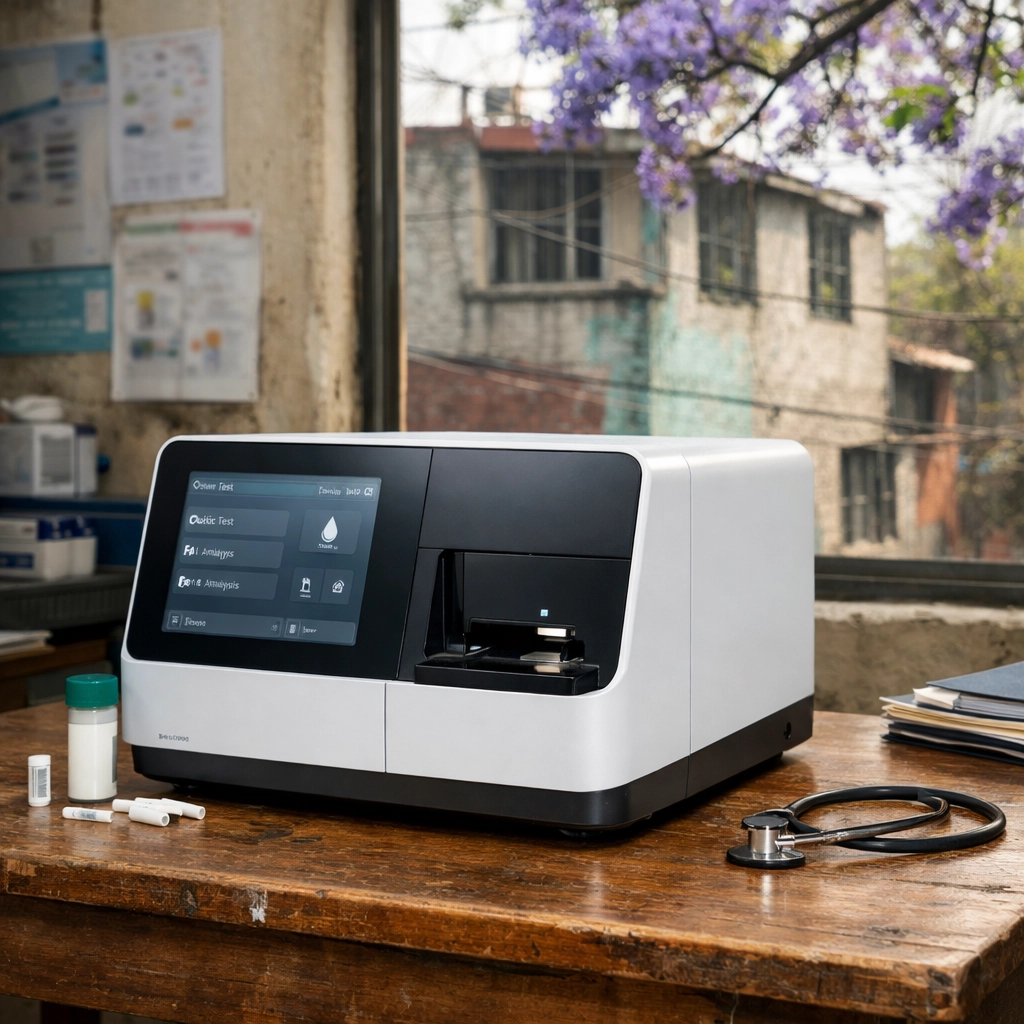
Photo: BusinessKorea
The deployment in Mexico focuses specifically on cervical cancer, the second most common cancer among women in the country. The data indicates a stark reality: early detection has a survival rate of nearly 90%, yet late-stage diagnosis remains the norm due to the diagnostic bottleneck. By integrating Noul’s AI, local healthcare providers can generate digital slides and receive AI-assisted interpretations in a fraction of the time required by traditional methods.
Why Mexico City? The Strategy of the Gateway
Noul’s decision to prioritize Mexico City over other global hubs was not incidental. In the ecosystem of the Americas, Mexico City serves as a "Future City": a laboratory for scale. It possesses a unique combination of high-density population centers, a growing middle class with a demand for better healthcare, and a government increasingly open to digital transformation within public services.
For a Korean firm, Mexico City represents more than a market; it represents a validation ground for the K-Dash initiative, where Korean technology is tested against the rigorous demands of a different cultural and regulatory landscape. If an AI platform can successfully navigate the complexities of the Mexican healthcare system, it gains the "Americas credential" necessary to expand into Brazil, Colombia, and eventually the United States.
This expansion is part of a broader trend we are tracking at bcdW: the rise of the "middle-market bridge." While the United States and China often capture the headlines, the real momentum is found in the bilateral agreements between emerging technological leaders in Asia and high-potential markets in the Americas. Noul is following a path blazed by other Korean MedTech firms like Lunit, but with a specific focus on decentralized, point-of-care solutions that are uniquely suited to the geographical challenges of Latin America.
Redefining Civic Infrastructure Through AI
At bcdW, we argue that a diagnostic device is not just a tool; it is a form of civic infrastructure. When we talk about infrastructure, we often think of roads, bridges, and power lines. However, the ability to accurately identify a life-threatening illness at the point of care is equally fundamental to the stability of a city.
The miLab platform uses a proprietary "Solid-in-Liquid" (SiL) technology, which allows for staining and analysis without the massive water consumption or hazardous waste typical of traditional labs. This environmental consideration is a strategic advantage in urban centers like Mexico City, where water scarcity is an ongoing structural challenge. This is where the "dot-connecting" becomes most visible: a Korean startup’s R&D decision regarding liquid waste management directly addresses a municipal crisis in the heart of the Americas.
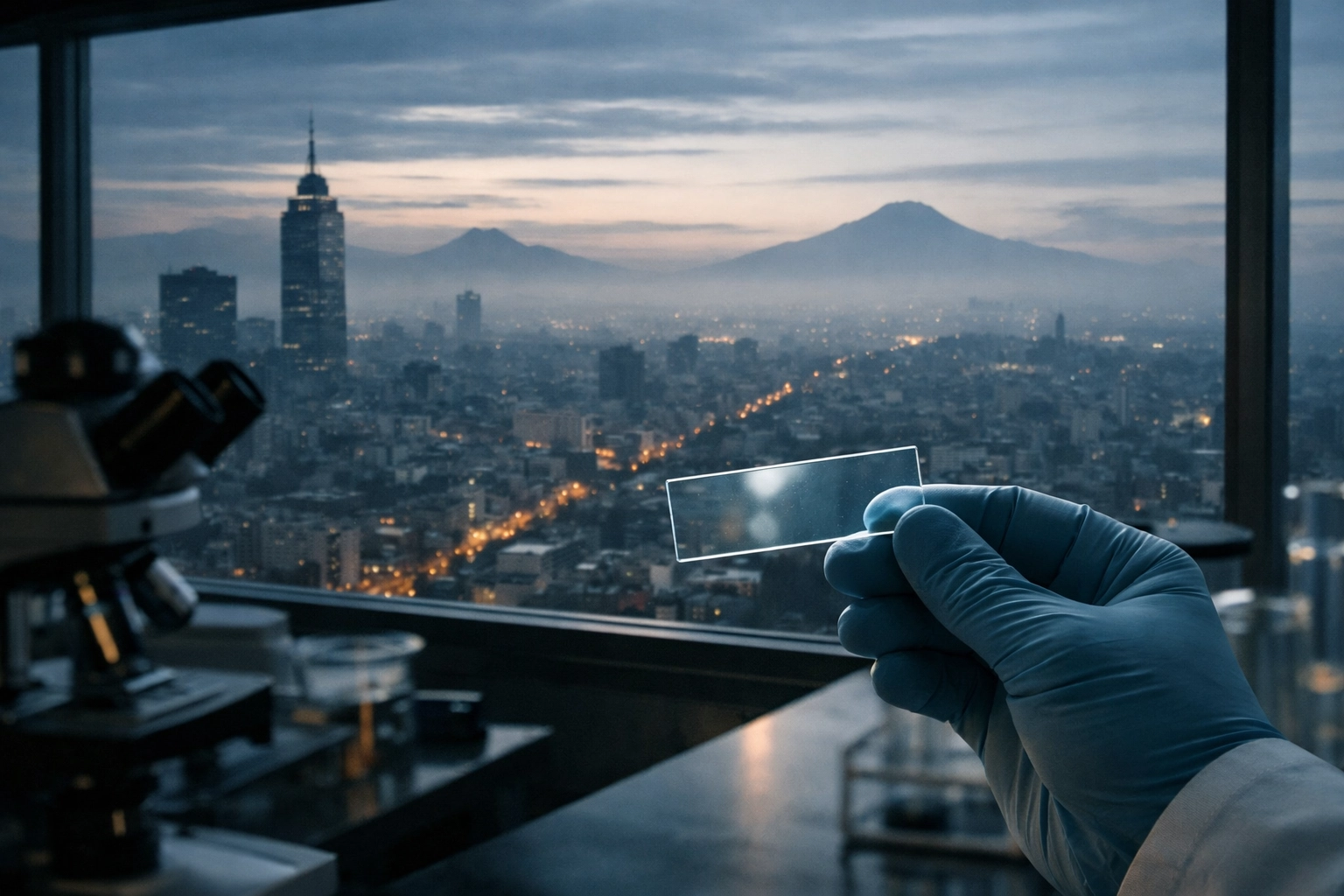
Photo: BusinessKorea
Furthermore, the "Conversation" between Seoul’s software engineers and Mexican clinicians is creating a feedback loop that refines the AI’s accuracy. As the system processes more data within the Mexican demographic, the algorithm becomes more attuned to local variances. This is not the passive export of technology; it is the active co-creation of a healthcare solution.
The Convergence of Two Hemispheres
The entry of Noul into the Mexican market is a definitive Concept & Case for the bcdW philosophy. It demonstrates that the most successful companies are not those that simply "go global," but those that "go local" with global tools. Noul has recognized that the value of their AI lies not in its complexity, but in its ability to be deployed in a clinic in Iztapalapa or a hospital in Polanco with equal efficacy.
This move also signals a shift in the Korean corporate mindset. For decades, the focus was on consumer electronics and automotive exports. Today, the focus is on "human-centric technology": solutions that address the aging populations of Asia and the healthcare access gaps of the Americas. The common thread is the search for efficiency in systems that have traditionally been defined by their waste.
As we look toward the remainder of 2026, we expect to see more of these "city-to-city" technological handshakes. The question for operators and investors is no longer whether Asian AI will play a role in the Americas, but which cities will act as the primary ports of entry. Mexico City has raised its hand.
Moving Toward the Future City
The implications of Noul’s Mexican expansion extend beyond the healthcare industry. It serves as a signal to the broader business community that the Pacific is getting smaller. The barriers that once prevented a Korean startup from competing with European or American giants: distribution networks, regulatory hurdles, and cultural distance: are being eroded by the sheer utility of AI-driven solutions.
For the residents of Mexico City, the arrival of Noul represents a tangible shift in the quality of the urban framework. It is the promise that the benefits of the global technological revolution are not reserved for a distant elite, but are being woven into the fabric of the neighborhood clinic.
As we continue to monitor these developments through our Rainmaker Program, it becomes clear that Noul is not an outlier. It is a precursor. The bridge between Seoul and Mexico City is now open, and the traffic is increasingly composed of ideas that have the power to redefine what it means to live in a modern, connected city.
The connection has been made. The challenge now is to see who follows the path Noul has cleared. In the world of bcdW, we don’t just report the news; we show you where the next bridge is being built.
Source: BusinessKorea (https://www.businesskorea.co.kr/news/articleView.html?idxno=212450)