AI Summary
CES 2026 serves as a definitive turning point for South Korean startups, moving beyond domestic accolades to establish a permanent footprint in the Americas. With over 470 companies showcasing under a unified national banner, the event reflects a sophisticated shift in Korea's globalization strategy, prioritizing Las Vegas as the premier gateway to both North American and LATAM markets through a lens of city-to-city connectivity and integrated technological infrastructure.
The center of gravity for Korean venture capital didn't shift in a boardroom in Gangnam. It shifted on the floor of the Las Vegas Convention Center during the first week of January 2026. While the world watched the predictable unveiling of transparent displays and autonomous shuttles, a more profound structural realignment was taking place. Over 470 South Korean startups: the largest contingent in the event’s history: were not just exhibiting; they were executing a coordinated pivot toward the Americas.
This is not a story about gadgets. It is a story about a "strategic catalyst." For the Korean ecosystem, CES has transitioned from a showroom into a high-stakes launchpad. The goal is no longer just "global exposure." The goal is the systematic capture of market share across two continents, using Las Vegas as the neutral ground where Seoul’s engineering meets the distribution networks of Mexico City, São Paulo, and Silicon Valley.
The Unified Banner: Brand as Infrastructure
In previous years, Korean participation at CES was fragmented. Individual companies vied for attention in disparate halls, often lost in the noise of global giants. CES 2026 marked the arrival of the "K-Startup" unified branding effort: a massive, coordinated push led by organizations like KOTRA and the Ministry of SMEs and Startups.
But to view this as merely a marketing exercise is to miss the point. This unified branding is a form of civic infrastructure. By consolidating 470 startups under one narrative umbrella, Korea has created a recognizable ecosystem brand that lowers the barrier to entry for individual founders. For an investor from Bogotá or a retail buyer from Toronto, the unified pavilion provides a vetted, curated experience. It signals that these companies are not isolated actors but part of a robust, state-supported pipeline of innovation.
At bcdW, we have long argued that the country sets the rules, but the city makes the deals. Las Vegas, for four days in January, becomes the most important Korean city outside of Asia. It is here that the "Digital Bridge" is actually built: not in the cloud, but in the physical handshakes between founders who built their products in Pangyo and operators who understand the specific logistics of the North American market.
Beyond Silicon Valley: The LATAM Connection
The most significant "dot" connected at CES 2026 was the one most analysts ignored: the bridge to Latin America. While conventional wisdom suggests that Korean startups go to Las Vegas to find American partners, the 2026 data shows a sharp increase in engagement with LATAM delegations.
The logic is simple, yet overlooked. The urban challenges facing Seoul: high-density living, the need for efficient health diagnostics, and advanced last-mile delivery: are mirrored in the growing hubs of Mexico City and Medellín. A Korean startup specializing in AI-driven traffic management finds a more immediate and scalable use case in the congested arteries of São Paulo than in the sprawling, car-centric suburbs of the United States.
We are seeing a convergence where Korean "deep tech" is being repositioned as "urban solutions" for the Americas. It is not about selling a product; it is about exporting a methodology. When a Seoul-based biotech firm showcases its remote diagnostic tools in Las Vegas, they aren't just looking for a distributor in New York. They are looking for the strategic partners who can navigate the regulatory frameworks of the Southern Cone.
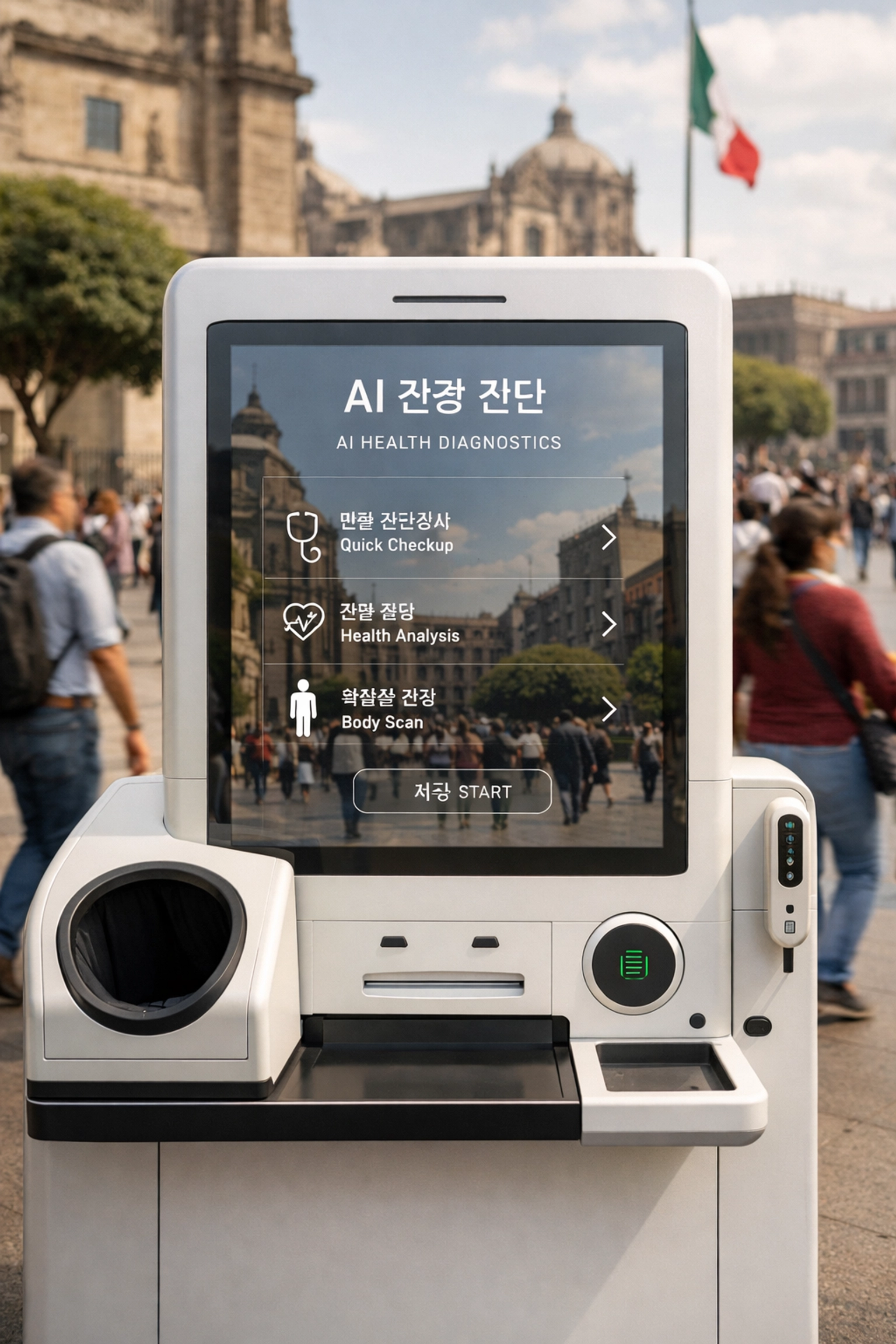
Photo: KoreaTechDesk
The "Digital Bridge" of Innovation
The sheer volume of Korean startups: nearly 500: highlights a domestic reality: the Korean market is saturated. Globalization is no longer an ambition; it is a survival requirement. However, the path from East to West is paved with structural barriers that no pitch deck can solve on its own.
This is where the bcdW philosophy of the Digital Bridge becomes actionable. Market entry is not a single event: like a trade show: but a three-mode progression.
- Virtual Expertise: Understanding the American regulatory landscape from afar.
- The Connector: Using CES to vet local institutions and service providers.
- The Coordinator: Moving from a booth in Las Vegas to an office in a target city.
The startups that succeeded at CES 2026 were those that treated the event as the "Connector" phase. They didn't just collect business cards; they initiated the specific city-to-city relationships that define the modern economy. They recognized that a deal made in Las Vegas is often a deal that will be executed in a third city, whether that is the logistics hub of Laredo or the fintech center of Mexico City.
The Mobility Factor: People Over Products
One of the recurring themes in our Conversation series is that markets don't move: people do. The success of the 470 Korean startups at CES 2026 is inextricably linked to human mobility. The "K-Venture" push wasn't just about shipping hardware to Nevada; it was about the 2,000+ founders, engineers, and strategists who landed in the U.S. to build a presence.
The structural barriers to this movement: visas, residency, and work authorization: remain the silent killers of global deals. At bcdW, we see these as design challenges. A startup from Seoul can have the most advanced AI in the world, but if their lead engineer cannot secure a visa to oversee a pilot program in California or Mexico, the technology is effectively grounded.
The "Korean Launchpad" at CES 2026 was a visible manifestation of a massive talent transfer. We are witnessing the rise of the "Global Korean Founder": professionals who are equally fluent in the cultural nuances of Gangnam and the business etiquette of the Americas. They are the human dots that connect our two continents.
The Rainmaker Effect: From Booth to Boardroom
In the wake of CES 2026, the question for these 470 startups is one of momentum. How does a four-day exhibition translate into a multi-year revenue stream? This is the core mission of our Rainmaker Program. Every connection made on the show floor is a potential "revenue event," but only if it is nurtured through a structured pipeline.
We have observed that the most successful Korean firms are those that stop viewing themselves as "exhibitors" and start seeing themselves as "ecosystem partners." They are looking for more than a sale; they are looking for an entry into a value chain. Whether it’s a mobility startup partnering with a U.S. charging infrastructure provider or a K-beauty tech firm integrating with a Brazilian retail platform, the goal is long-term integration.
The "Rainmaker" logic suggests that the value of CES isn't found in the number of leads generated, but in the quality of the "dots" connected. A single introduction to a strategic partner in Mexico City can be worth more than a thousand casual inquiries from window-shoppers.
The New Map: Seoul to Las Vegas to the World
As the dust settles on Las Vegas, the map of global innovation has been redrawn. We no longer live in a world where the U.S. is the sole destination for Asian tech. Instead, we are entering an era of "cross-continental convergence."
The 470 startups that transformed CES 2026 into a Korean launchpad are the vanguard of this shift. They have proven that with unified branding, strategic city-to-city focus, and an emphasis on human mobility, the gap between the Americas and Asia is closing faster than anyone expected.
The question is no longer whether Korean innovation will dominate the next decade. The question is which cities in the Americas will move first to capture the opportunity these 470 companies represent. The dots are on the table. The lines are being drawn. The only thing left is to see who connects them first.
For more insights into how cities are shaping the future of global business, visit our City category or explore our Concept Case Studies.
Source: bcdW Editorial Team (https://bcd-w.xyz)